
“Before 2012, I always thought nothing happened in Leicester”, Joe, an employee at the King Richard III centre in the city, told us.
But in August 2012, the body of King Richard III was discovered under a car park in Leicester. All of a sudden, this midlands city was the focal point of Medieval history in the UK, leading to a dramatic rise in tourism over the next few years.
But some 14 years later, I’d not heard much else about Leicester and what it has to offer tourists. Until I was invited as a plus one on a press trip with my partner, and we spent two days in Leicester.
And what did we discover? History spanning from the Roman era, through the Medieval period and into the early modern days. A modern cafe scene and diversity reflected in the city’s phenomenal restaurants. And an eye on the future with the space centre just outside the centre.
Leicester really surprised me. So here are my favourite things to do in Leicester, so you can plan a trip too!
Visit the King Richard III Visitor Centre
This is the main attraction for a lot of tourists to Leicester, and it’s easy to see why. Richard III’s discovery in the city has become legendary, but his Medieval story is equally fascinating.
Richard III was the last British king killed in battle, as well as the last Plantagenet king and the last of the house of York. He died at the Battle of Bosworth in 1485, in which Henry Tudor (yes, Henry VIII’s father!) claimed victory.
After his death, Richard III’s naked corpse was brought back to Leicester and displayed to prove he was dead. But before 2012, it was debated what happened after that. Some thought he’d been thrown into the River Soar, but others argued that a king would be given a proper burial, even if he was killed so somebody else could take the throne.
Today, the Richard III discovery centre explains the Wars of the Roses, the backstory behind the Battle of Bosworth and the discovery of Richard III in 2012. You can also see the excavated grave where he was discovered (no longer under a car park!).
This is one fo Leicester’s most important visitor attractions because it connects the city to a huge turning point in English history. If it wasn’t for Richard III dying in the Battle of Bosworth, we wouldn’t have the monarchy we have now, and our entire history would look very different!
You can find the Richard III centre here (Google Maps location). For up-to-date ticketing information and opening hours, check the website.
See Leicester Cathedral

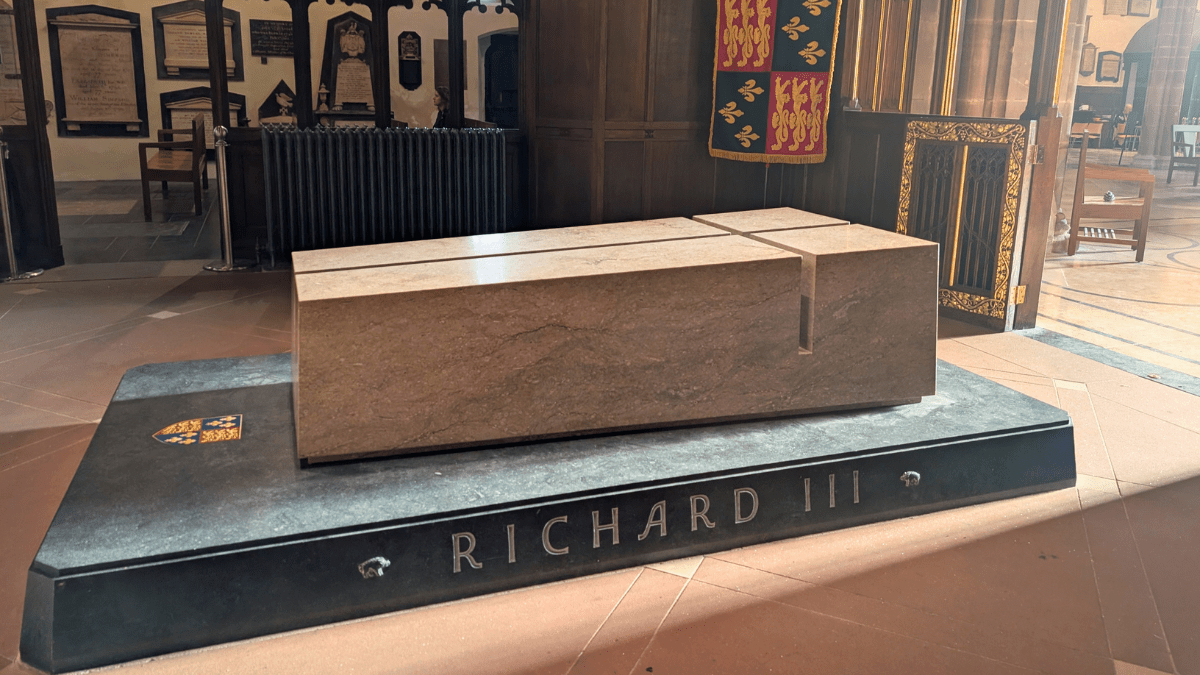
Once you’ve finished in the Richard III centre, walk across the road to Leicester Cathedral. This city cathedral isn’t quite as striking from the outside as those in say, Exeter, but inside it is a patchwork of architectural styles and is a focal stop for Leicester locals of all faiths. And its’ where Richard III is now buried.
After the discovery of the late king, post-mortem work was carried out with DNA testing of his likely descendants. Nine months after the discovery, it was confirmed that this body was Richard III.
In 2015, he was finally given a king’s funeral. There was a procession from Bosworth to Leicester and a formal ceremony, with representatives from the royal family. Nowadays, anybody can enter (for free, donations appreciated) and see his tomb.
The building has parts dating from the Norman era, although the majority of the building was constructed in the Middle Ages and remodelled in Victorian times.
We had a quick chat with the dean while we were there, who told us about the importance of the cathedral to modern Leicester. “We’re the most diverse city in England”, she told us. “But this cathedral is open to anyone of any faith, you don’t need to be a Christian to use the space. Leicester’s Muslim and Hindu communities still think of it as their cathedral, which is something we want to encourage”.
Walk around the old town
The city that Henry III’s corpse was returned to doesn’t really survive. There was a prosperous Medieval city here, but over the centuries importance shifted to cities like Birmingham and Nottingham, which grew during the industrial revolution.
Leicester wasn’t really touched during WW2, but it was developed after the war, and 1960s town planning destroyed the old Medieval city layout.
That said, it’s worth taking a stroll around the streets by the Cathedral. There are a few independent shops to stop at, including:
And our favourite, Cocoa Amore!
Stop at Cocoa Amore for hot chocolate
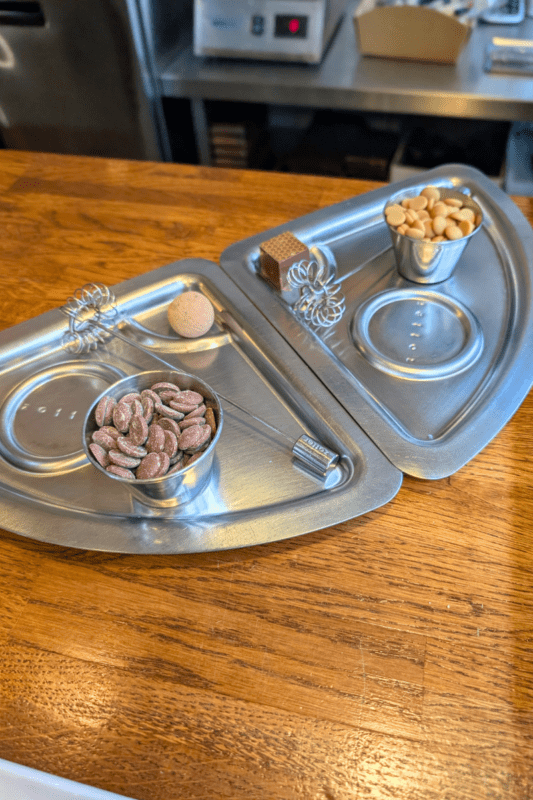
Cocoa Amore is the perfect place to stop after an afternoon’s exploring.
Run by Peter Gardner, who’s sometimes called the “Willy Wonka of Leicester”, this chocolate cafe sells handmade chocolate, and hot chocolate which you whisk yourself.
We ordered a hot chocolate each, mine with oat milk and Rich’s with dairy. We chose the type of chocolate you’d like (white, milk, dark or caramel) to mix in and a chocolate on the side. I went for milk chocolate to mix and a salted caramel chocolate on the side. The milk’s heated up, and then you tip the chocolate in and whisk it to create a creamy, rich drink.
As well as selling hot chocolate and individual chocolates, Cocoa Amore also runs chocolate making workshops in the upstairs area. For more information about the business, check their website.
Stroll down the New Walk
Forget Bath, if you want to feel like you’re in Bridgerton just head to the New Walk in Leicester!
The New Walk is a rare example of an intact Georgian promenade, and it connected the hotel we stayed at (The Belmont) to the city centre. Even if you’re not staying in this part of town it’s worth a stroll (or a jog) down!
Leicester Museum and Art Gallery
We didn’t have time to pop into the Leicester Museum and Art Gallery on this trip, but my partner had been before and enjoyed. It’s a city museum with local history and artworks.
See more information about it here and the Google Maps location here.
Explore Roman Leicester at the Jewry Wall Museum
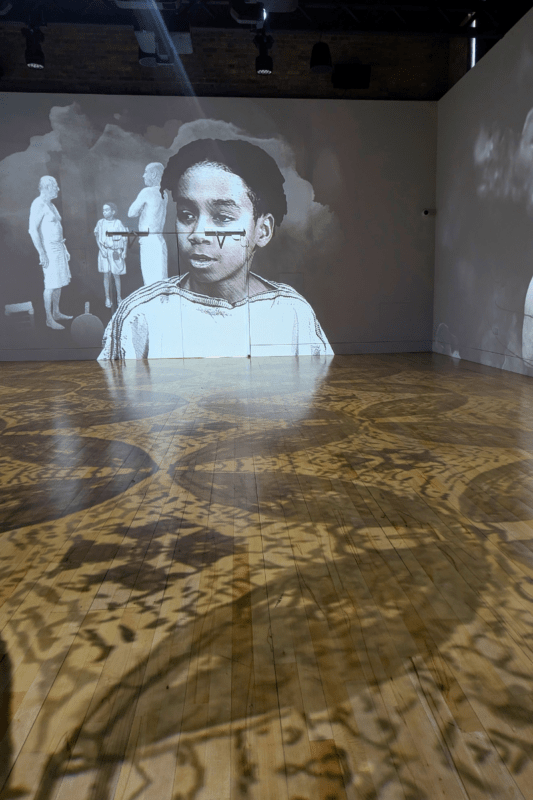
The next morning, we set out to explore Roman Leicester at the Jewry Wall Museum. Many people do not think of Leicester when they think of Roman Britain – but it was one of the most important Roman cities.
We visited the Jewry Wall site and the remains of the Roman Bath complex; Jewry Wall was a part of the Roman Baths.
The Jewry Wall Museum is an interactive exhibit brimming with information about the city’s Roman past. We learned about the Roman Empire and Leicester’s (Roman name) part in that, then walked amongst the old bathhouse site.
See the Google Maps location here.
See the Roman bathhouse remains
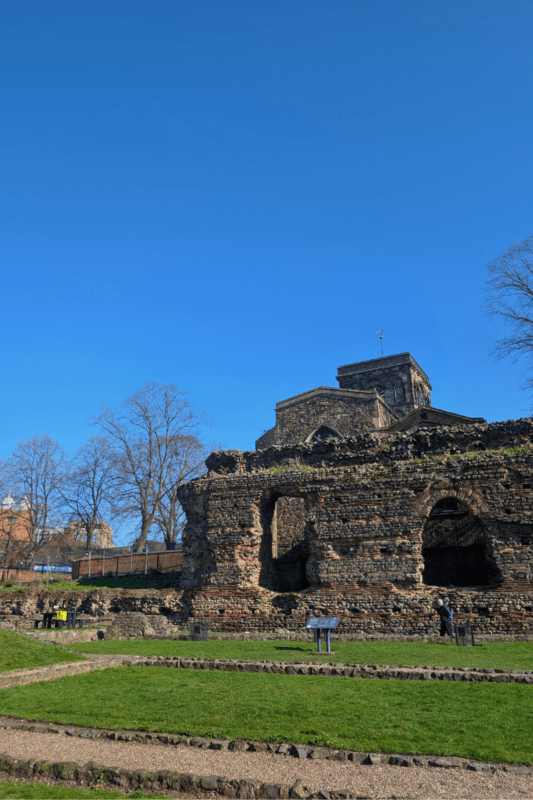
I’d highly recommend a trip to the Jewry Wall Museum, but you can see theinterconnecting 2,000 year old foundations from a vantage point from the road side. Seeing this made me wonder what else is hiding beneath British cities!
Google Maps location for the vantage point here.
Walk by the River Soar
It was a beautiful spring day when we went to Leicester, so we enjoyed a stroll by the River Soar. This river has been crucial to the development of the city, once marking one of the boundaries of the Roman city.
For a short walk, head to Castle Gardens (Google Maps link).
Climb the motte and bailey castle mound
There’s a free-to-visit Norman motte and bailey castle in Leicester, which was built from after the Norman Conquest in 1066.
Like all motte and bailey castles, it consists of a mound (motte) with a moat area (bailey) around it. As it’s elevated, it would have looked over Leicester and its surrounding countryside.
The motte and bailey castle would have been constructed before the main development into medieval Leicester, which cumulated in it being a prosperous city in Richard III’s time.
Here’s a Google Maps link for the motte and bailey castle.
Visit the Guildhall
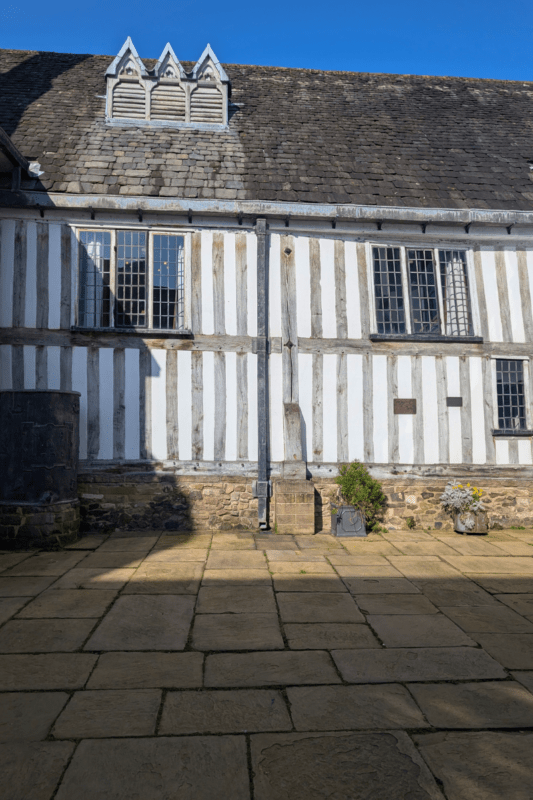
Leicester’s Guildhall is a timber-framed building dating to 1390, and has been the city’s town hall for around 600 years. Nowadays, it works as a museum detailing everyday life behind modern Leicester.
It’s one of the only surviving medieval buildings of the city, so is worth popping into!
Entry is free, and you can find its Google Maps location here.
Thomas Cook Statue
By Leicester station, you’ll find a statue of Thomas Cook. Yes, the Thomas Cook who the holiday brand is named after!
His very first package holiday left from Leicester Station in 1841, transporting followers of the temperance movement to Loughborough on a chartered train. What followed were other temperance trips, then general tours around the UK, then Europe and finally to Egypt, the Holy Land and North America.
Here’s a link to my full video about the journey!
Over the years, Thomas Cook & Sons developed to become one of the world’s most famous package holiday providers! If you’re by the station, it’s worth stopping by the statue. Google Maps location here.
Enjoy Leicester’s café culture
There are a few charismatic cafes in Leicester where you can get a decent brew!
My favourite was Bread and Honey. This city-centre cafe serves delicious coffee with plant-based milk options and local bakes. We popped in twice, but it seemed to be a bit of a community hub with leaflets on the walls and a few people working on their laptops.
Pop into the Buddhist Centre
The Leicester Buddhist Centre is an enterprise offering meditation sessions and Buddhist education. It has a small shop and cafe, where we grabbed pistachio carrot cake and matcha lattes.
Visit the Corn Exchange
Leicester has one of the most interesting Wetherspoons in the country; it was once the city’s historic Corn Exchange. A striking building from the outside, like all Wetherspoons there’s information on the walls inside. It’s worth popping in for a look! Google Maps location here.
Browse Leicester Market
For around 650 years, until the last few decades, Leicester’s commercial scene has revolved around its market.
Today, it still functions as a market – although obviously a lot of shoppers favour the high street these days!
Today, you’ll find a fruit and veg section, an area with spices and a fabric/ clothes are with saris and hijabs as well as western clothes.
I thought the market, with its range of clothing and food, was a bit of a microcosm of Leicester – long history and tradition intertwining with modern multicultural life!
See the food hall and surrounding food stalls
Close to the market, there’s a food hall selling fish, cheese, meat and much more. We saw a Polish deli and a Chinese noodle soup stall, which transported my straight back to China with its aroma and atmosphere (it was so authentic that there were zero veggie opinions!).
Grab a curry!
Leicester isn’t called the curry capital of the UK for no reason!
We had a few opportunities to try curry on our trip to the city.
Varanasi
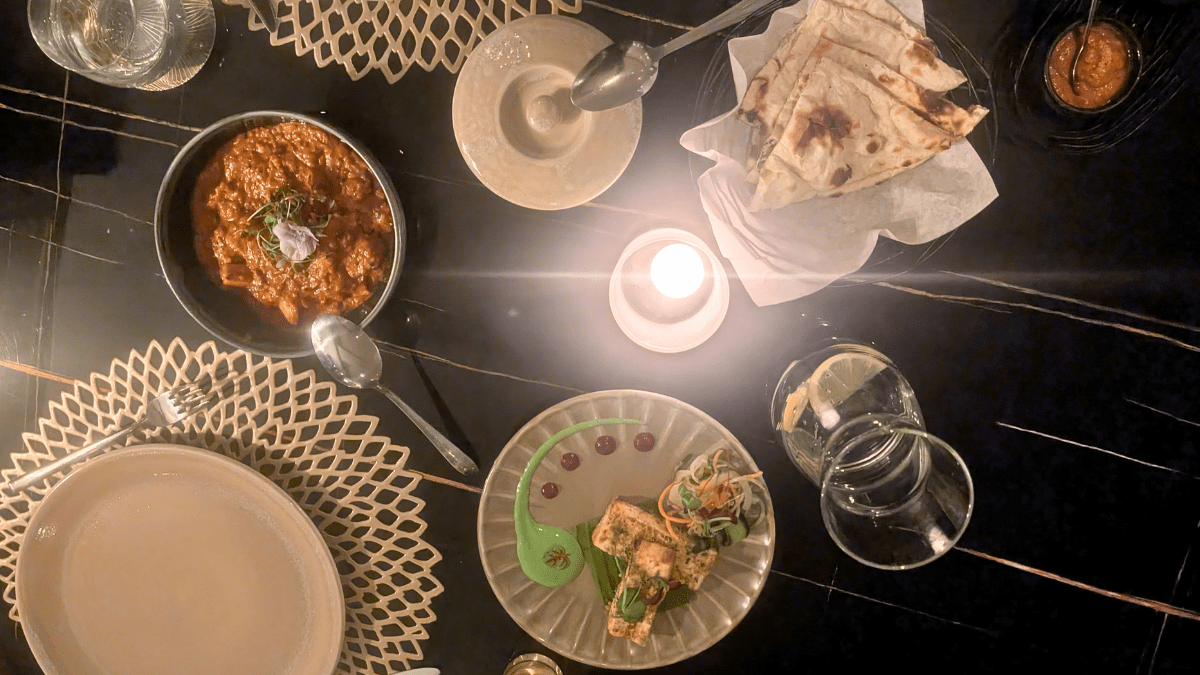
We dined here on our first night. It’s a high-end curry restaurant that’s very atmospheric inside. The menu was a little different to most curry houses, with more of an emphasis on fine dining with Indian ingredients.
Desi Pubs
We didn’t get the chance to go into any this desi pubs this time, but Rich had previously visited a couple on another trip to Leicester. Desi pubs are effectively old pubs that were at risk of closure, but have been bought by members of Leicester’s Indian community and now operate as part-pub, part-Indian restaurant. There are quite a few of them in the Golden Mile.
Mirch Masala
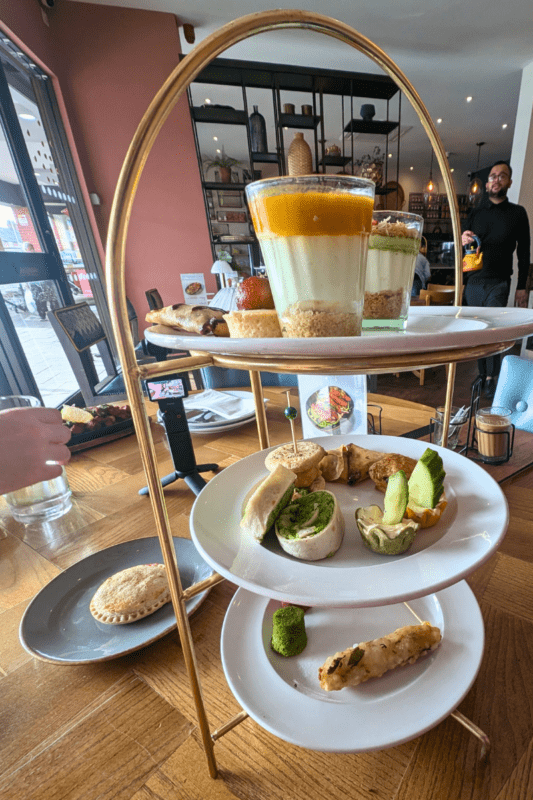
We loved this friendly restaurant where we tried Indian afternoon tea. This consisted of a range of sandwiches, savory snacks and cakes. They also have a full curry menu. The owners here were wonderful and told us all about the history of the Golden Mile and the Indian community in Leicester.
Which brings me onto my next thing to do…
Explore the Golden Mile
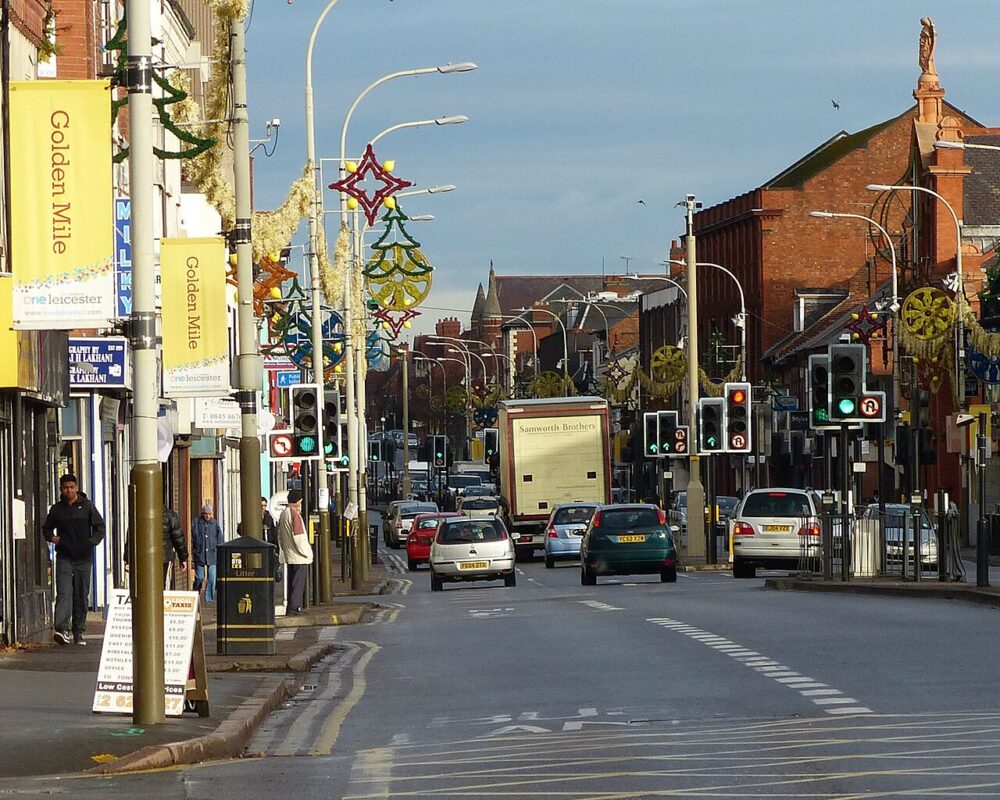
The Golden Mile is a mile-long section of Belgrave Road that’s home to the majority of Leicester’s Indian community. Many think that the Golden Mile is a moniker given to the amount of jewellery shops in the district, but it’s actually apparently due to a high concentration of yellow/ amber traffic lights in the 1970s!.
At this time, this area of Leicester was all but deserted. The city had a thriving textiles industry, but it waned during the Industrial revolution, and by the 20th century many had left the city.
At the same time, Indian people were being told to leave Uganda, when it was ruled by the dictator Idi Amin. Indians had moved to Uganda under the British to work on the railways there. But once the country had declared independence, dictator Idi Amin evicted South Asians from the country, despite the fact that most had been born there and lived there their whole lives, many having never been to India.
They had a type of British post-Imperial citizenship, so the UK was the obvious choice to move to. Despite many of these families being wealthy in Uganda, they were only permitted to take £50 with them and arrived in the UK as destitute refugees. Many settled in Leicester as the Belgrave Road area was empty and needed people to fill the houses.
Over the years, many of Leicester’s refugees thrived and opened successful businesses on the Golden Mile. We had a walk around with Pradeep Popat, the owner of Mirch Masala, who showed us an Indian supermarket, a sari shop, a decorations shop and a gold shop – many businesses that have been going for 20+ years. It was such an interesting area to explore and we were really grateful to hear the backstory behind the Indian community in Leicester.
Abbey Pumping Station
By the National Space Centre, you’ll find the Abbey Pumping Station!
This free to visit attraction focuses on Leicester’s industries and technologies. It’s most famous for its in depth look at the city’s sewage museum!
It’s free to visit, so it’s worth popping in when yo go to the space centre. That said, it was closed when we were there so we didn’t get the chance to go in!
Visit the National Space Centre
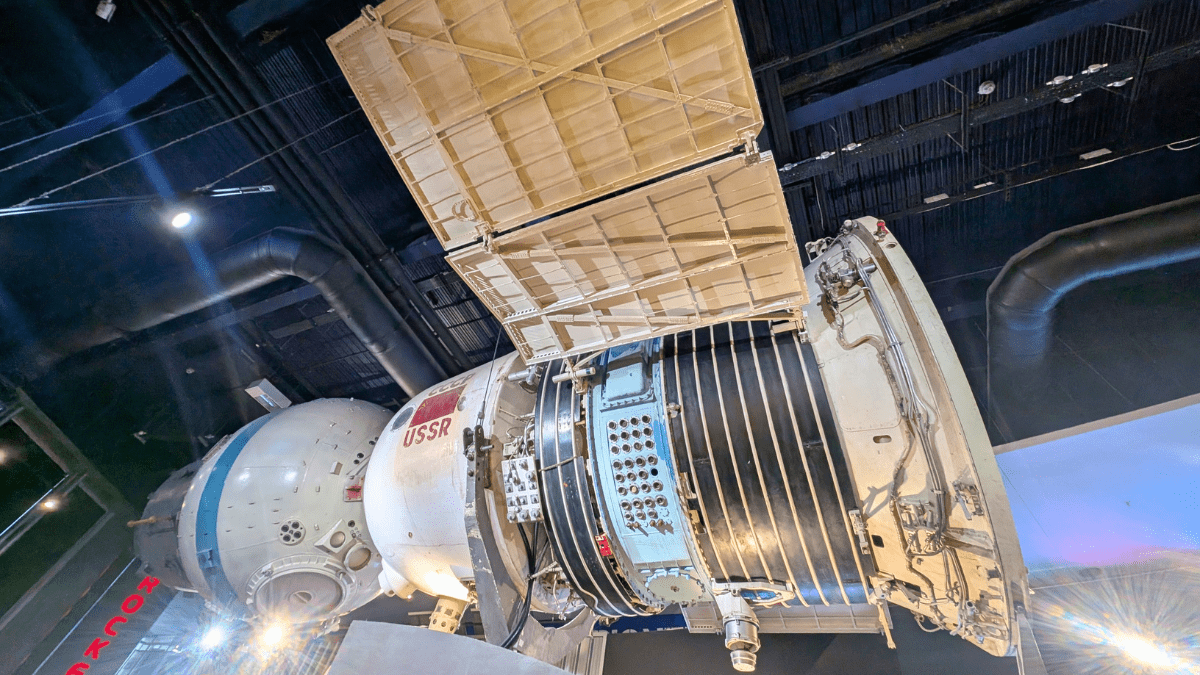
And finally, a futuristic part of Leicester!
The National Space Centre, which is linked to the university of Leicester and its role in space studies, goes into the concept of space and the history of space exploration.
The idea was put forward in the 1980s, and the museum was established in 1995, although didn’t open until 1999 as part of the University of Leicestger. It was moved to its current site in 2000.
The centre is a multi-floor interactive museum. My favourite part was our visit to the observatory where we watched a short film about the possibility of exploration on Mars.
See up-to-date ticketing info and opening hours on their website. We took an Uber from the centre to the National Space Centre.
Where we stayed in Leicester
We stayed in Belmont Hotel when we were in Leicester.
It looked a little dated from the outside and in the communal areas, but we liked our room, which had a huge comfy bed and well-stocked bathroom.
The breakfast was also fantastic, with some tasty a la carte options. Click here for more information.
Conclusion
Before my trip, I’d heard very about Leicester’s wonderful attractions. I’d not seen it on any UK bucket lists or “must-visit cities” posts!
But after two days here, I loved the city. Sure, there are parts which could do with a makeover, but the history, multiculturalism and forward-thinking residents supercharged it to the status of one of my favourite cities in the country!
If you want to see more of Leicester, be sure to check out my YouTube video about the city!
