
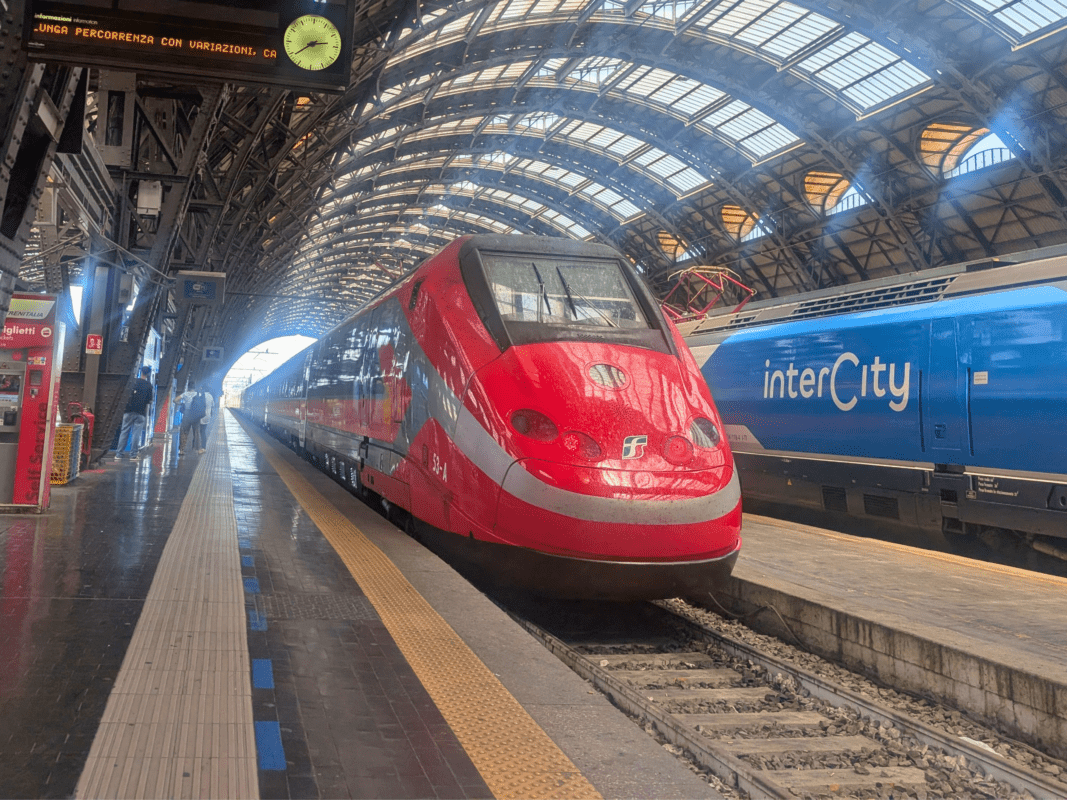
I recently used an Interrail pass to travel to, around and from the Balkans (from the UK). I noticed huge cost savings in some ways, and smaller savings in others!
So this post is going to be my full list of Interrail tips, including some things that I wish I’d done to save money – as there were so many things that I picked up that I should have implemented!
My pass was comped by Interrail. All opinions are my own.
What is Interrail?
Interrail is a Europe railway pass that covers up to 33 countries. As of 10th September 2026, Interrail will be the pass for both European and non-European travellers – for non-Europeans, Eurail used to be the pass for non-Europeans; but after 10th September, all travellers use Interrail!
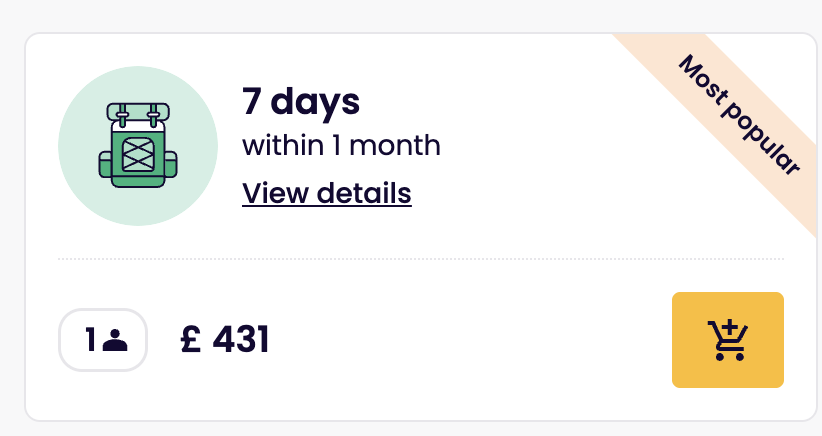
There are a few different pass types; you can choose from global or one-country and continuous or flexi. I had a global 7 days in 30 flexi pass; the cost of this is £431 for a first-class pass and £331 for a standard pass.
If you’re under 27 (a youth) or over 60 (a senior), discounts apply.
Why choose Interrail?

There are so many reasons why I travel by train in Europe. I adore train travel and find it such an adventure, but also love seeing the scenery and avoiding airport hassle. It’s also much more sustainable than hopping around on Ryanair flights!
For Interrail specifically, there are two main reasons:
- If you do it correctly (follow the tips later in this post!), it is likely to work out cheaper.
- You’ll have a bit more flexibility than booking standard tickets.
How to use an Interrail pass
Once you’ve bought an Interrail pass and downloaded the Rail Planner app, there are two ways you can use it. For both ways, you’ll want to nominate an interrail pass day by adding a journey to your itinerary in the app.
For tickets that don’t require a reservation, simply board a train and show your Interrail pass for that journey. You won’t have a pre-reserved seat.
For tickets that require a reservation, you’ll need to select the journey, and then go onto “reserve a ticket”, which will take you to their online reservation portal. Here, you can make your payment. I then received reservations to my email, and when I showed the train attendant, they sometimes asked for the reservation and Interrail pass for that day.
High-speed, international and night trains typically require a reservation. Others may not – but do check before planning a trip each time. I also found, when organising my trip from Paris to Boulogne-sur-Mer, that some journeys require reservations for certain days and times, whereas they might not for other times.
If you’re travelling with others, book together so your seats will be allocated as a group! And make sure you screenshot everything as soon as you get it, and save it on your phone in an “interrail” folder; I really should have done this so I wasn’t scrabbling around with poor internet connection each time.
Money-saving tips I wish I’d known
There are three main ways you can save BIG with Interrail – and I’m a little embarrassed to admit I didn’t make the most of any of them!
Stack multiple trains into one day
Ok, I kind of did this when I travelled from Milan to Paris and then Paris to Boulogne – this day ended up being great value with the pass.
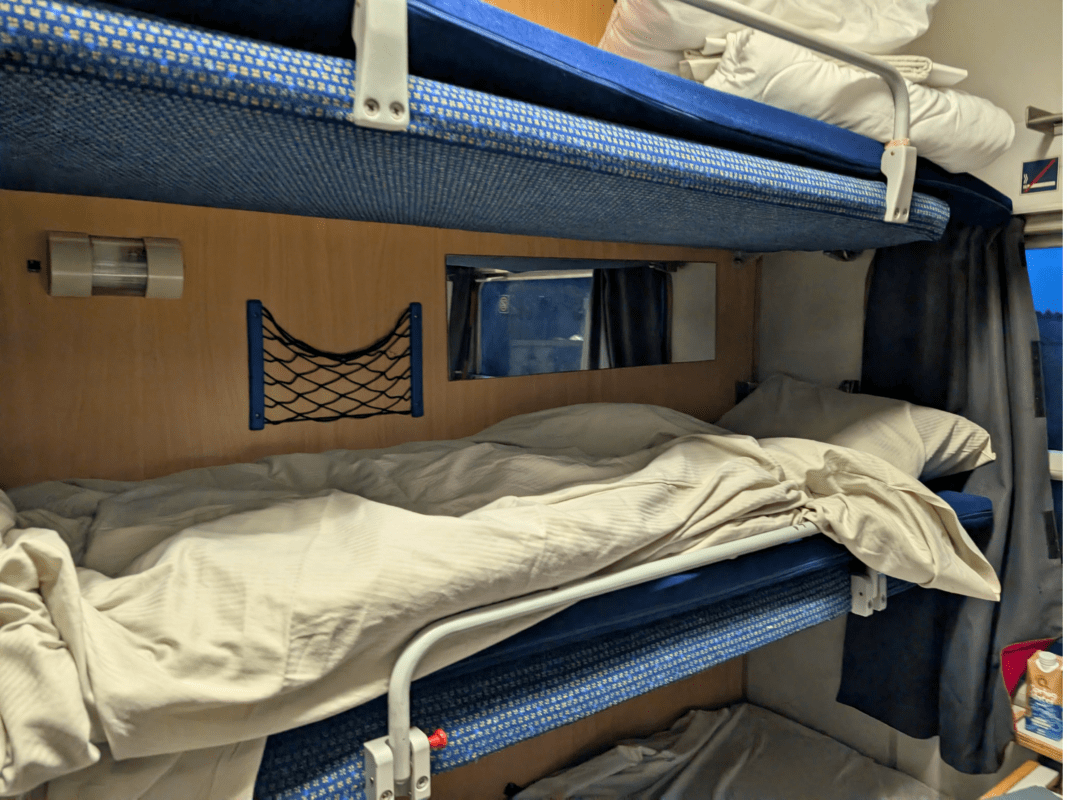
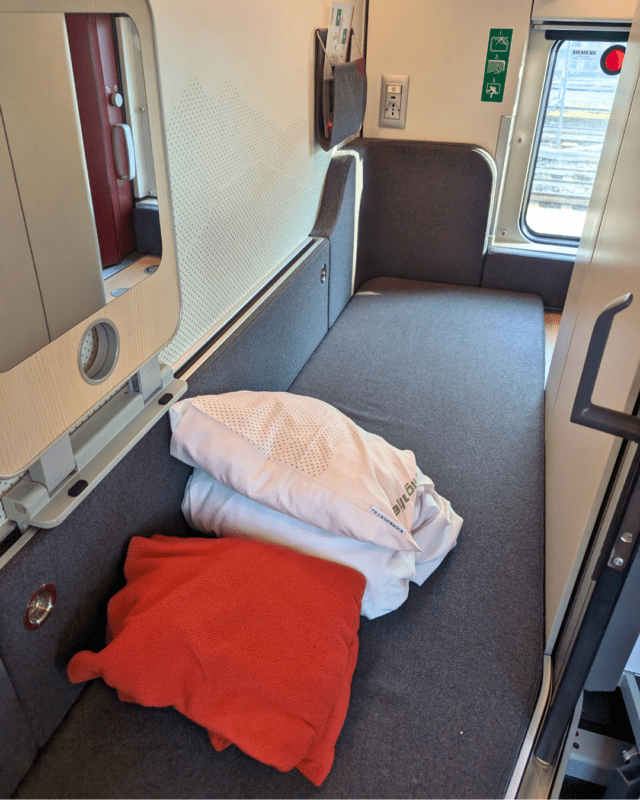
But the biggest hack is that you can travel on trains all day and then board a night train, and it still only uses one day! You’ll likely need to pay for reservations, but it will bring the overall cost way down.
A few ways you can do this include (please note this is just off the top of my head, there will be more!)
- Train from Madrid or, at a push, Malaga to Barcelona in the morning, then a train to Latour-de-Carol-Enveitg and then an Intercities de Nuit night train to Paris
- Train from Oslo to Trondheim and then a train crossing the Arctic circle to Bodø
- Paris to Zurich and then a night train to Zagreb
- Paris to Milan and the night train to Sicily
Make the most of your domestic travel day
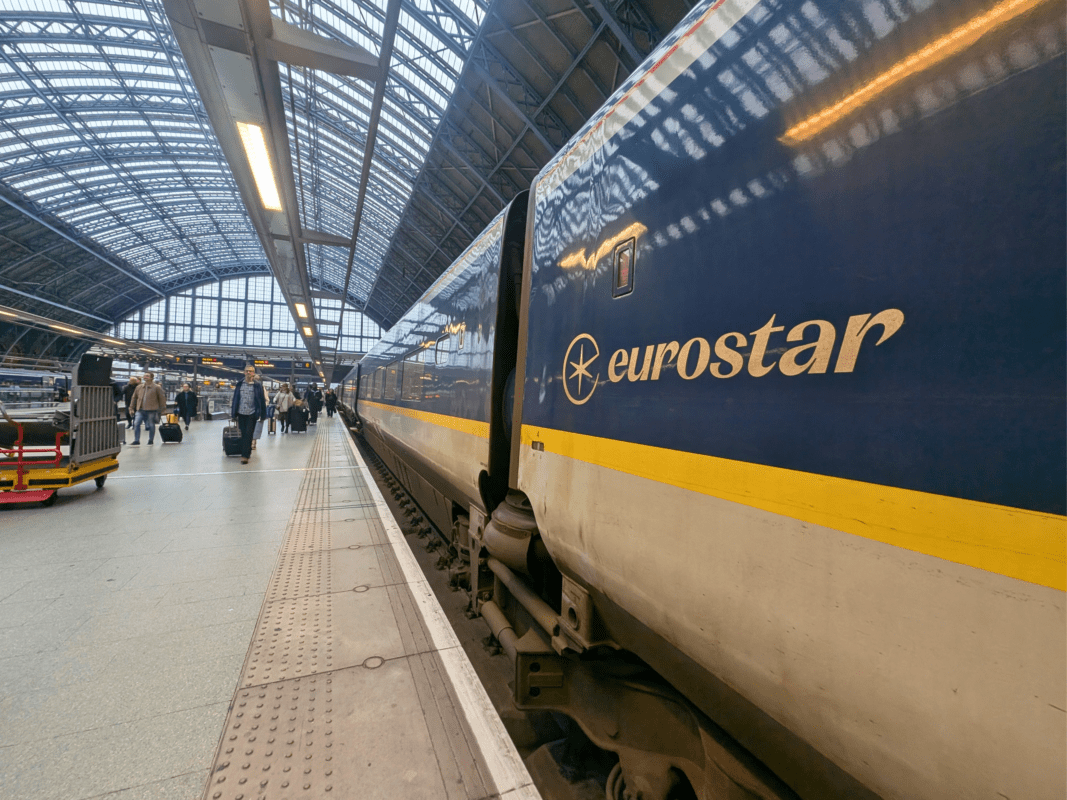
You can use two of your Interrail days as domestic travel days, to get from your country to elsewhere in Europe. This works well for Brits like me (who don’t live in London!) as it includes travel from anywhere in the country, as long as it’s one day.
So I could book a ticket from Exmouth, where I live, to Paris, and all I’d need to pay is a €35 reservation fee for Eurostar! I could do this for my outgoing and returning journey.
Use partner discounts
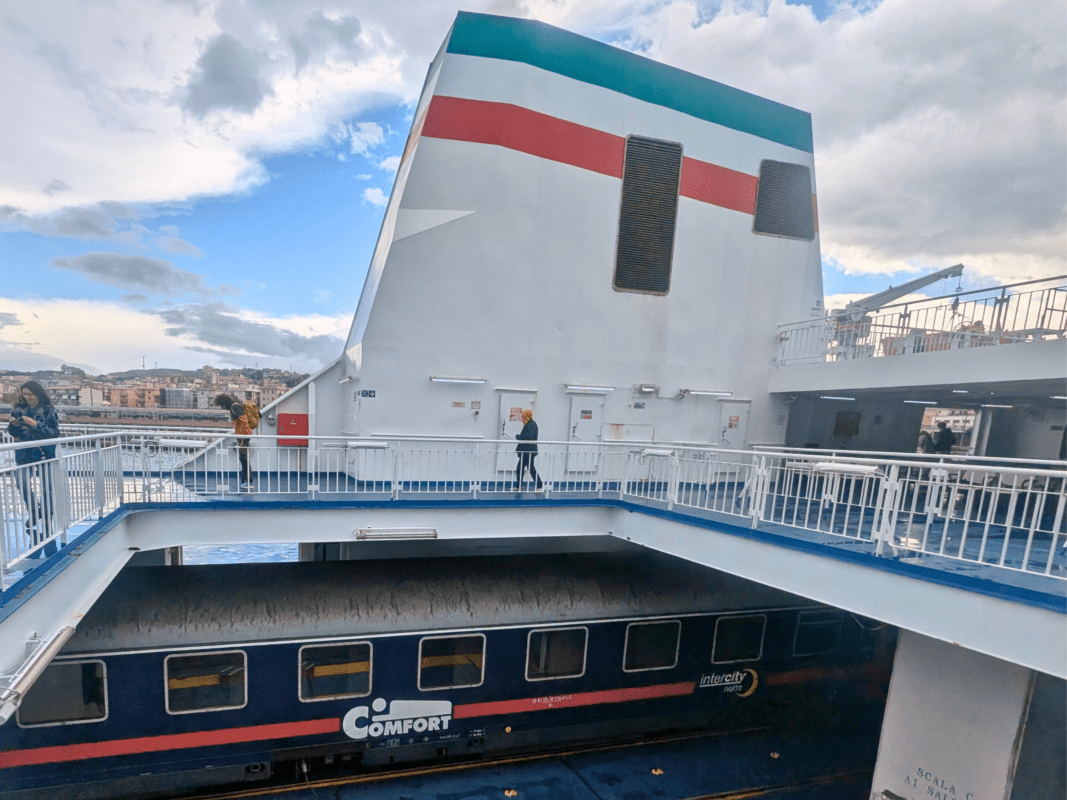
I felt so silly when I found out, after booking an SNAV ferry at full price, that I could have got 20% off with my Interrail pass! Another that caught my eye was 50% off Stasher luggage storage. There are many more discounts, all available in a tab on the Rail Planner app.
Cost Breakdown: was it worth it for my trip?
In all honesty, I wouldn’t recommend the exact pass I used for a Balkans-focused trip. This is because the pass cost was around £61 a day (this is for first-class), and Balkan train tickets are already cheap – I paid €6 for my Sarajevo to Mostar train. I used my Interrail pass as I had days on it, but this isn’t good value for money.
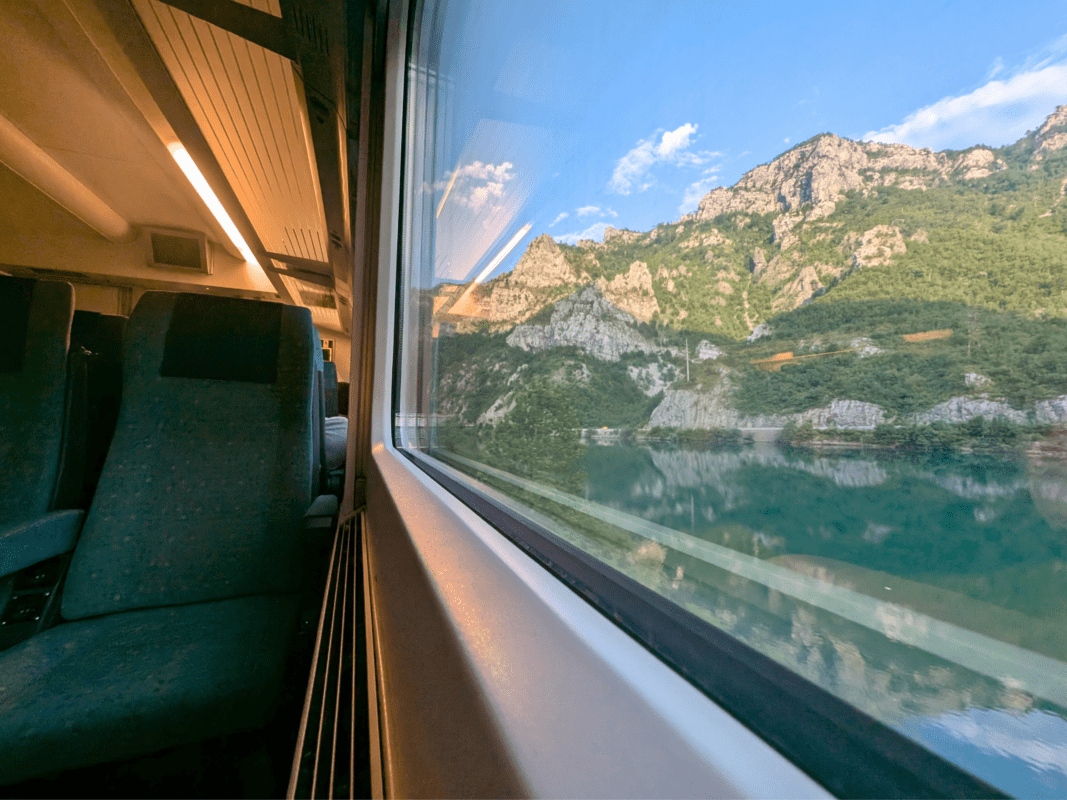
Instead, I’d recommend using the four day pass within a month and saving pass days for the expensive high-speed legs. For the Balkans train travel, I’d just buy individual tickets.
This is the hypothetical itinerary I’d use for this trip:
- Interrail day: Devon to Paris outbound day
- Interrail day: Paris to Zuirch to Zagreb (night train)
- Non-interrail day: Belgrade to Bar train (Serbia and Montenegro)
- Non-interrail day: Bar to Podgorica train (Montenegro)
- Non-interrail day: Pristina to Peja train (Kosovo)
- Non-interrail day: Sarajevo to Mostar train (Bosnia and Herzegovina)
- Interrail discount: 20% off with SNAV ferries
- Interrail day: Ancona to Paris train
- Interrail day: Paris to Devon inbound day
You can see all of my videos from this trip on my YouTube Balkans playlist, or articles about the Balkans here.
Here’s a table with the savings from this specific itinerary:
| Standard | First | |
| 4-day pass | £184 | £239 |
| Reservations | £126 | £126 |
| Ferry discount | −£17 | −£17 |
| Pass total | £293 | £348 |
| Booked individually | £494 | £584 |
| YOU SAVE | £201 | £236 |
When Interrail Is (and Isn’t) Worth It
So, when is it cheapest to use an Interrail pass?
The best value is for expensive, high-speed routes, usually in Western or Central Europe.
The worst value is in regions with trains that are already lower prices, such as the Balkans – the most expensive train I found there is the Belgrade to Bar train, which costs €23 and still requires a reservation.
That said, there is more flexibility with non-reserved trains; which is an added benefit!
So, is Interrail worth it?
I will definitely use Interrail again for specific train trips in Europe, and there are many I’ve done, such as London to Sicily, where I probably should have had one!
That said, I’d look at the costs of trains in the country I’m going to to double-check it’s worth the money ahead of time – considering all pass options and working out the per-day fee and possible reservation fees.
It’s sometimes cheaper, sometimes not – it’s not a one-size-fits all policy, so do have a look at the Interrail website and play around with it before your trip!
