
It was already 32 degrees at 7:30am as I walked from Pristina Center Hostel, where I was staying, to the station. This station, which used to connect Kosovo to cities all over Europe, is now kept open for just two daily trains. Both journey along the same railway line, to the western city of Peja, near the Montenegrin border.
Today, I was going to take the Pristina to Peja train, Kosovo’s last train.
Until the day before, I didn’t even know if it was running. Here’s everything you need to know about my trip; which will hopefully be useful if you’re planning a visit yourself!
Quick Facts: Pristina to Peja by Train 🚂
- 💶 Price: €3 (first class – I ended up in first without realizing; second class price unconfirmed, may be cheaper)
- ⏱️ Duration: ~2 hours
- 🔁 Frequency: Twice daily
- 💵 Payment: Cash only, bought on board – there is no ticket office or machines at Pristina station
- 🛤️ Route: Pristina → Peja (Kosovo’s only remaining passenger railway)
- 🎒 Where to stay/ leave bags in Peja: I booked a bed at Guest House Sky and just used it for baggage storage for the day. Click here for more information.
About the trains in Kosovo
The Balkan countries – which have Ottoman and Austro-Hungarian influences – saw some railway lines springing up during the 19th century.
However, after Yugoslavia’s establishment post WW1, the railways developed. The Pristina to Peja line, while not the first in Kosovo, was part of this early adoption.
But, at Yugoslavia’s train travel pinnacle, Pristina to Peja was the equivalent of a tiny branch railway. Pristina was at the centre of a vast multinational line, the Acropolis Express, which spun from Munich all the way down to Athens.
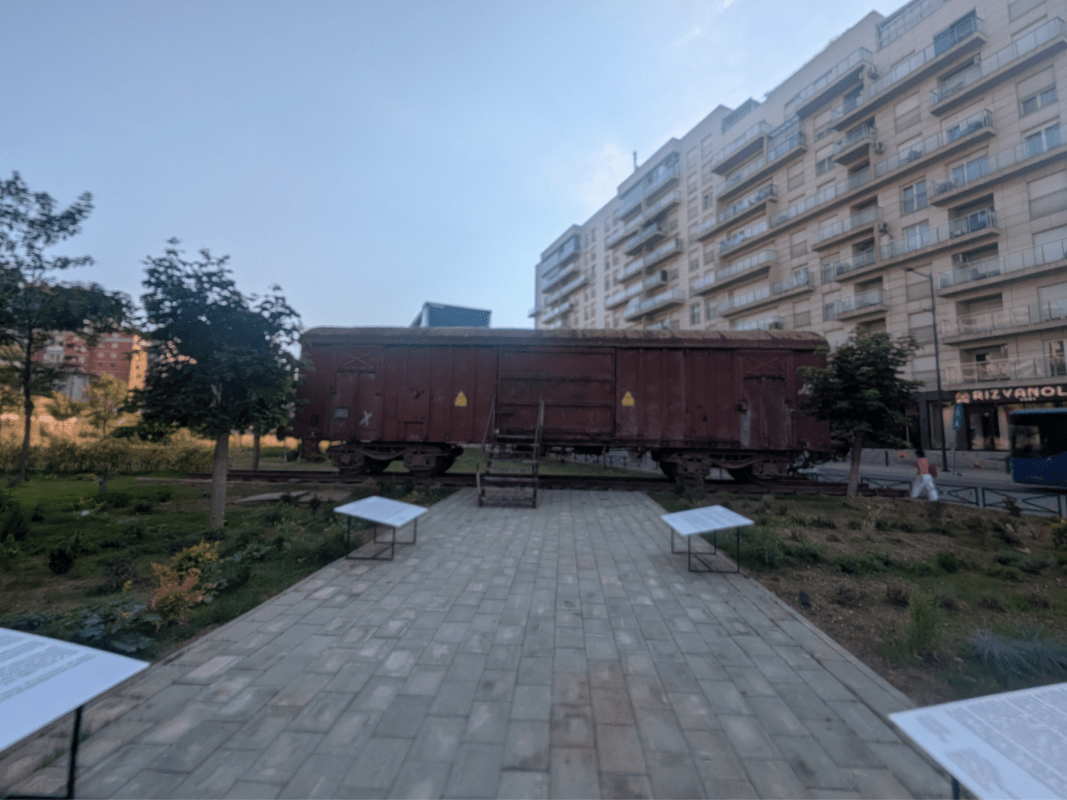
More recently, there have been trains to Serbia – although these have periodically closed due to border tensions, most notably in 2017 when a train with “KOSOVO IS SERBIA” written on it was not allowed over the border. All trains on this line ceased in 2020.
There was a train from Pristina to Skopje, too – but this hasn’t operated since 2025. There is hope that it will reopen, but for now, Pristina to Peja is Kosovo’s only railway.
It runs at a loss, but is kept open as it’s a lifeline for small communities on the route.
How I found out information about the Pristina to Peja train
Before visiting Kosovo, I searched for “Pristina to Peja train times” in Google.
Rome2Rio and various Google reviews of Pristina Station suggested there was a train at 07:50am – although other reviews had alluded to several times of the year when the train had been suspended.
I was pretty much travelling to Kosovo for the train (although did spend a fun day in Pristina – see everything I got up to here!) so I hoped it wouldn’t be a wild goose chase! When I arrived, I checked at my hostel (Pristina Center Hostel, which I really recommend) and with the walking tour guide I had. Both confirmed that the train departed at 07:50 every morning.
Arriving at the station
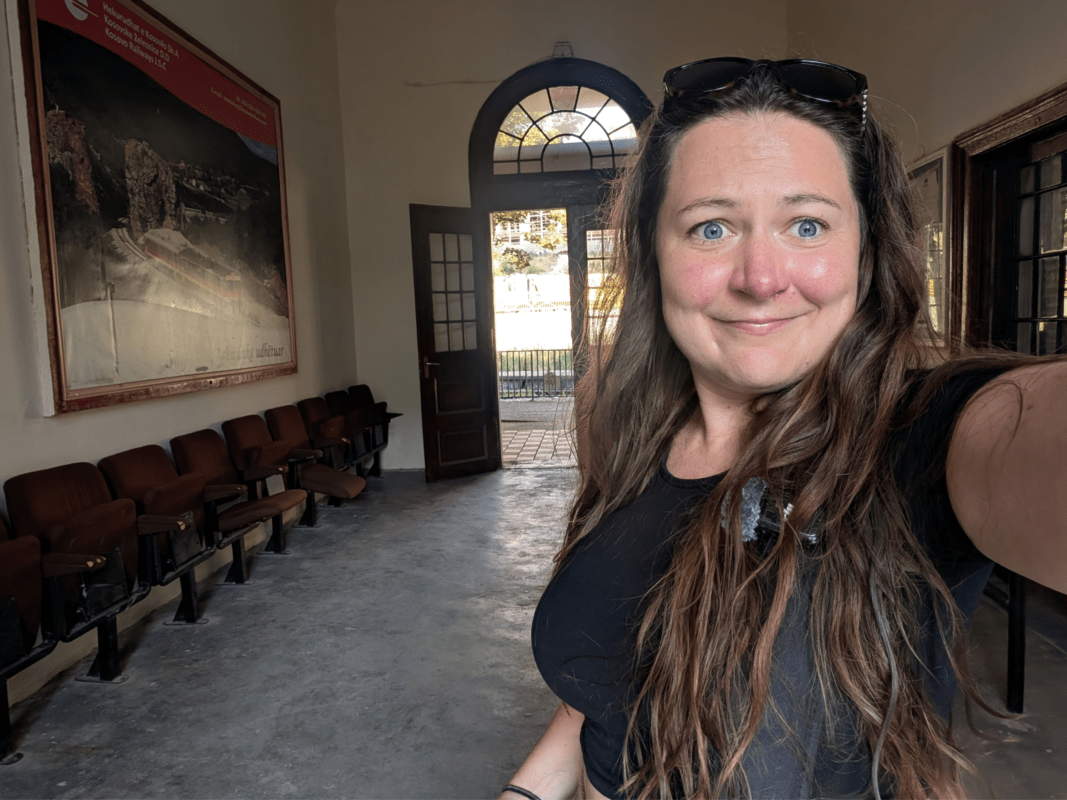
Here’s a Google maps link of the station. It took me about 20 minutes to walk from Pristina Center Hostel, which is right by Mother Teresa Square.
From the outside, the station seems pretty underwhelming. There’s a disused railway carriage out the front of a white building. Inside, there’s a row of broken chairs, shuttered up windows that lead to the historic ticket offices – now with a timetable of Kosovo’s last train blu-tacked on. Tickets are purchased on the train. On the wall is a dusty poster of a train navigating its way through Kosovo’s scenery.
I walked out to the platforms, where there was a little more life – a few passengers milling around, and a conductor in very smart uniform. Passengers were walking over the tracks to the second platform (yes, there are two platforms still!), so I followed suit and waited for the train.
It rolled in just before 07:40am; it departs Peja very early in the morning and presumably picks up commuters en-route.
What was the train like?
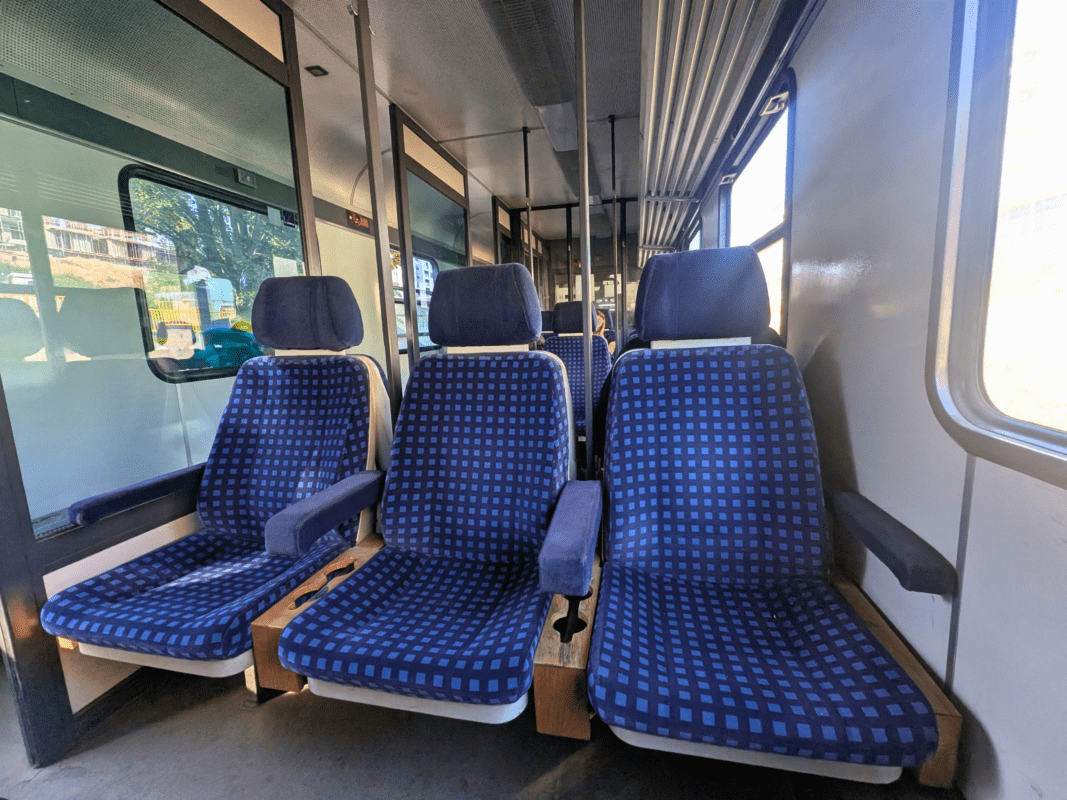
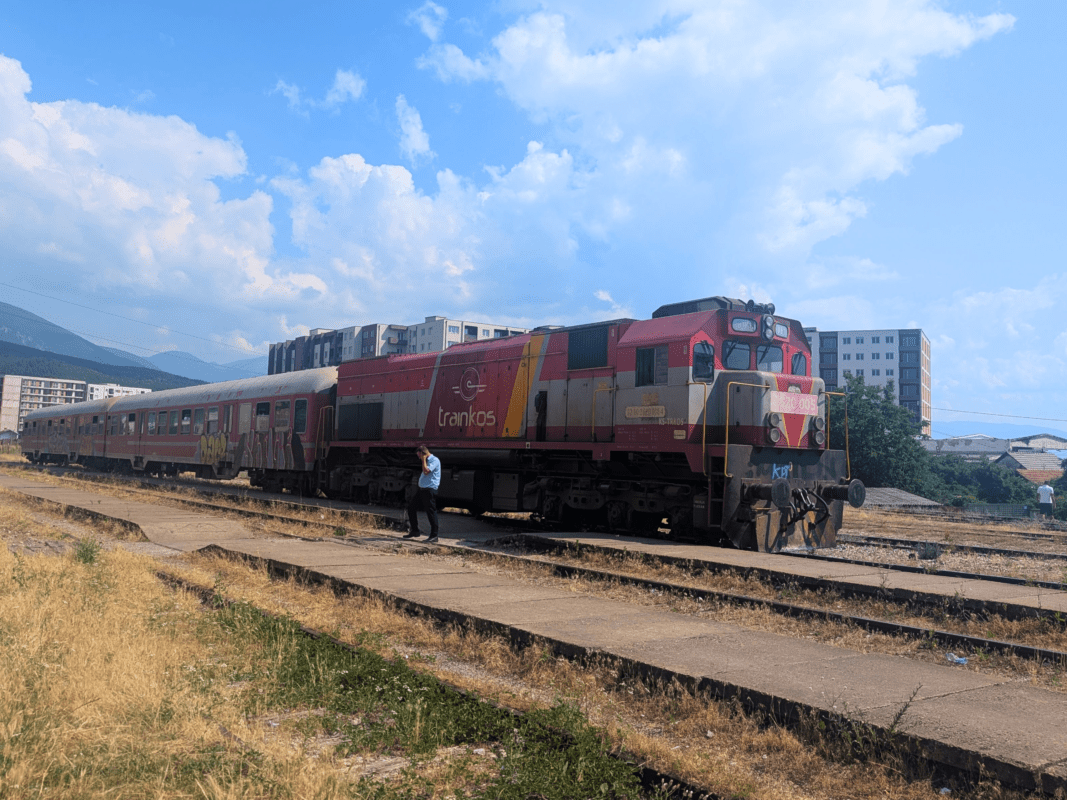
The train I was on was a Norwegian/Swedish-built Nohab diesel locomotive from the 50s/ 60s, along with old DeutscheBahn carriages – mine had a map of trains in Bremen on the wall!
I clambered up the steps (they are quite steep on these old Balkan trains – someone offered to help me with my bag, which was very kind!) and turned left, dragging my bag into a compartment.
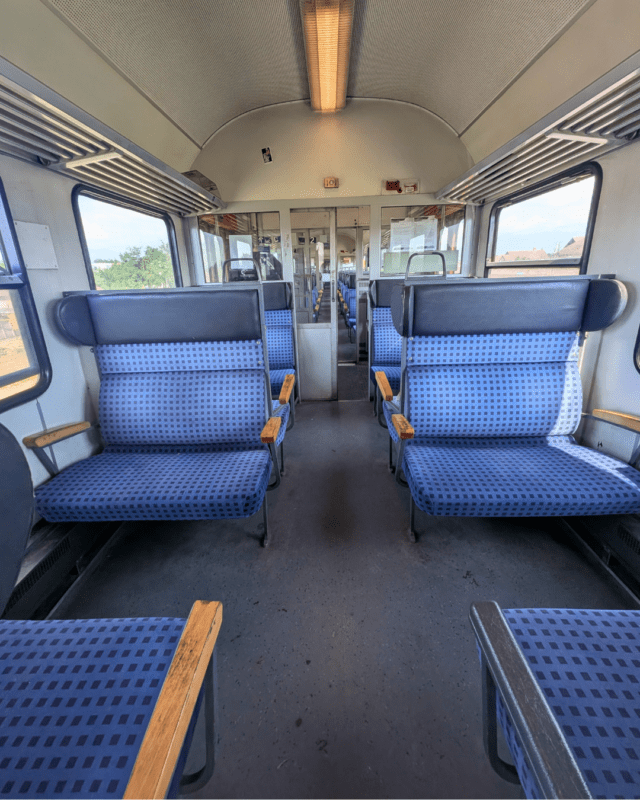
These had six seats in (three facing each other), with the aisle on the left-hand side. I didn’t realise initially, but I’d sat in first class – the second-class seats were in the other carriage and were open-plan, a 2-2 configuration.
There are toilets on board, and I used them successfully – but I’d seen in reviews that they’re often out of order.
The journey from Pristina to Peja
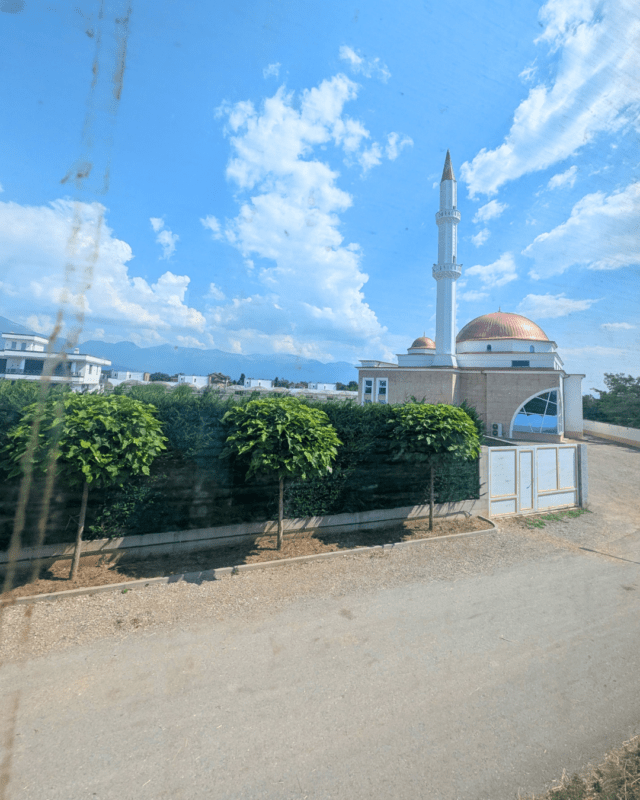
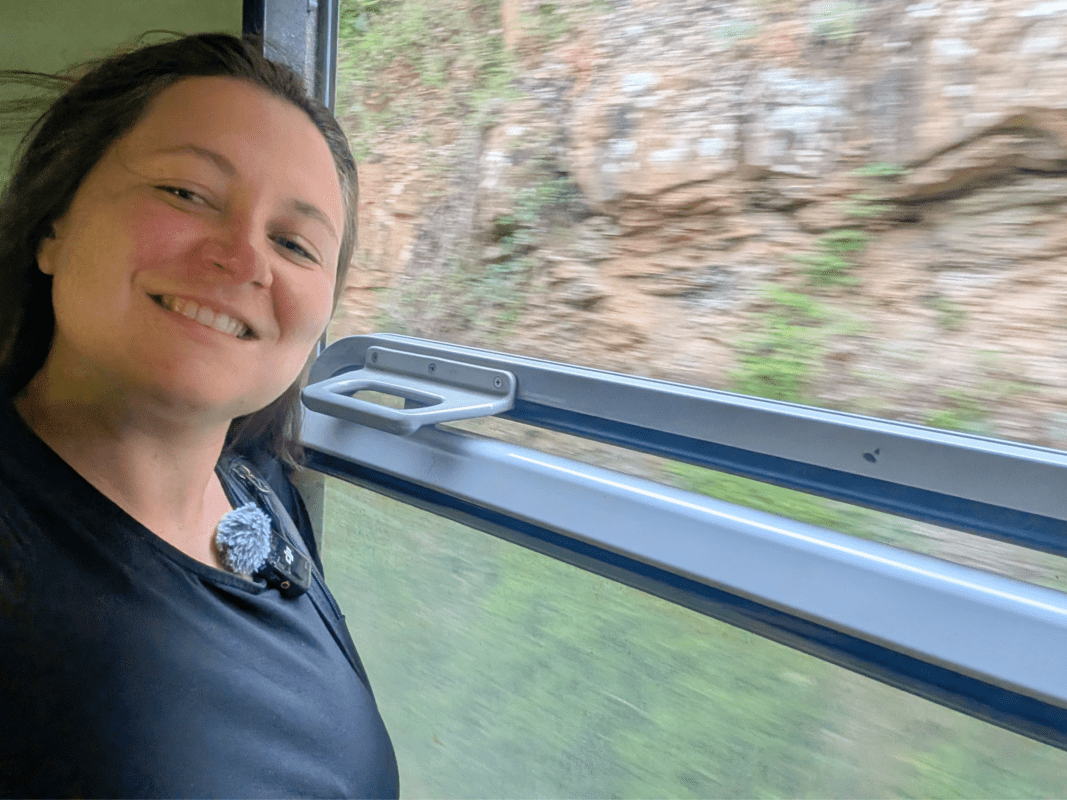
We departed Pristina (on time!) and trundled westwards. Most of the journey spanned through Kosovan countryside – rolling green hills, farms, fields – it was very pleasant scenery, although nowhere near as jaw-dropping as the Belgrade to Bar train I’d taken a few days earlier!
A few of the stations we stopped at looked near-abandoned, but a few people got off and on, and each one had a conductor in pristine uniform.
As we approached Peja, the hills gave way to the Accursed Mountains. Peja is most visited by tourists for its surrounding scenery – the Bjeshkët e Nemuna National Park is just west of the city, with Rugova Valley where you can try adventure sports and canyoning. Sadly, I didn’t have time to enjoy its hikes and canyons on this trip!
Arriving in Peja
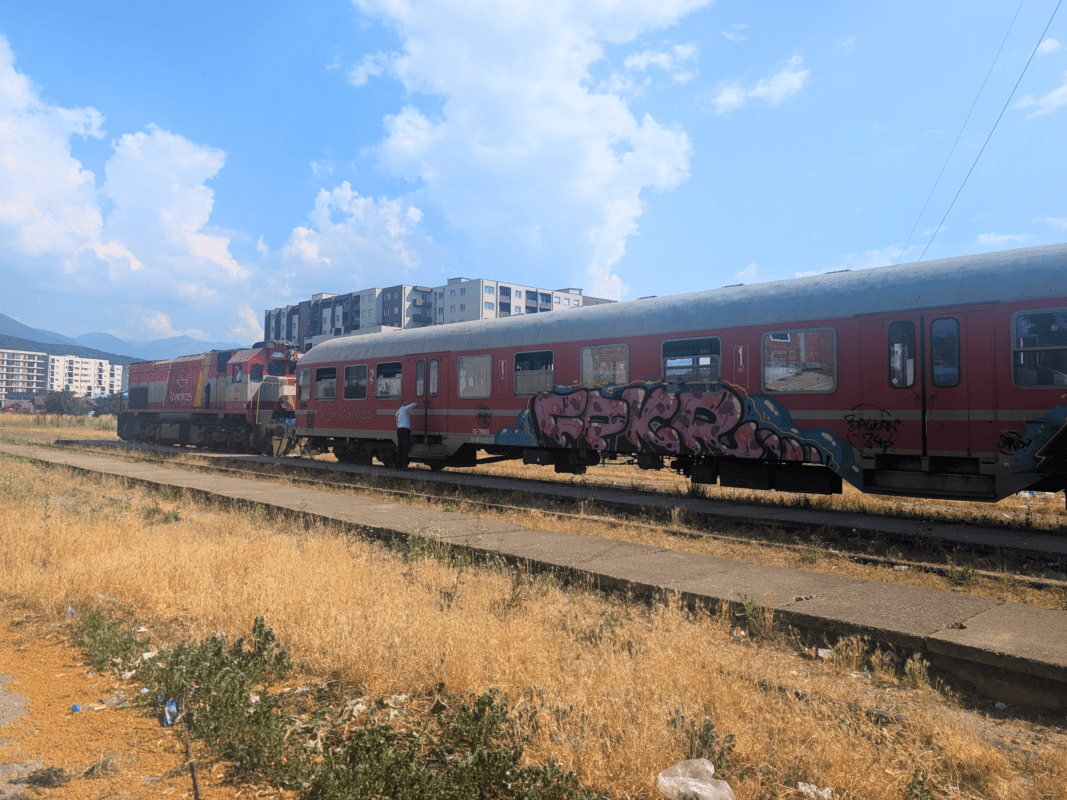
After the train arrived in Peja, I stuck around to see the locomotive change ends (like the trainspotter I am!). Then, I took a taxi to Guest House Sky.
This took a bit of negotiating – the taxi driver didn’t know where I was going and three very helpful locals who spoke English ended up all translating – but we got there in the end! It cost me five euro for a nine-minute drive. Kosovo is very affordable, although I think they have local and tourist rates for taxis.
I paid for a night at Guest House Sky, although only used it for baggage storage for the day and to sit in the AC at the end of the day, as I was taking the 8:00 pm bus to Podgorica in the evening!
My tips for Peja
I was only in Peja for a day, but here’s what I picked up!
I really recommend Guest House Sky. The owner was lovely – really chatty and helpful and spoke good English – it was clean and spacious with balconies and strong AC and the WiFi was great! I just booked a bed in a dorm (as I wasn’t actually sleeping there) but they have private rooms too. Take a look at it here. Click here to read more about it.
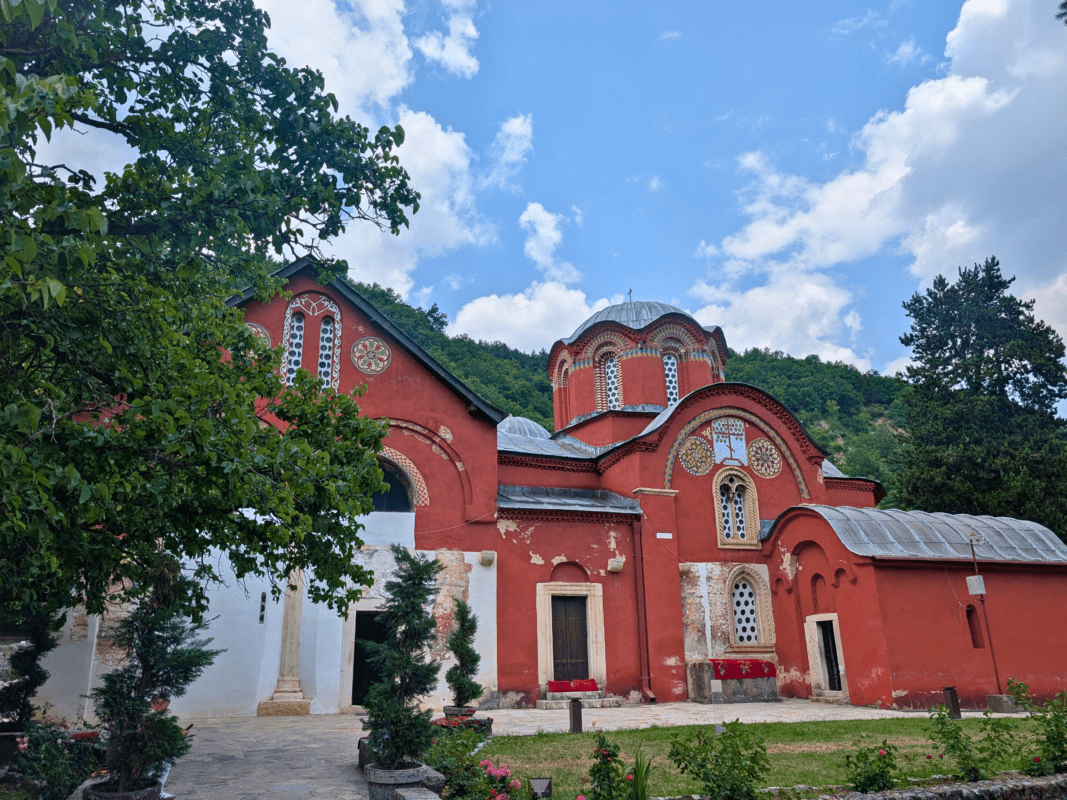
I walked to the Patriarchate of Peć Monastery – it’s a stunning walk along the river, with mountains in the background. This is a 13th century Serbian Orthodox Monastery, and I had to show my passport before I could enter. As well as four Serbian Orthodox Churches, there are ruins and a tower in the middle of the complex.
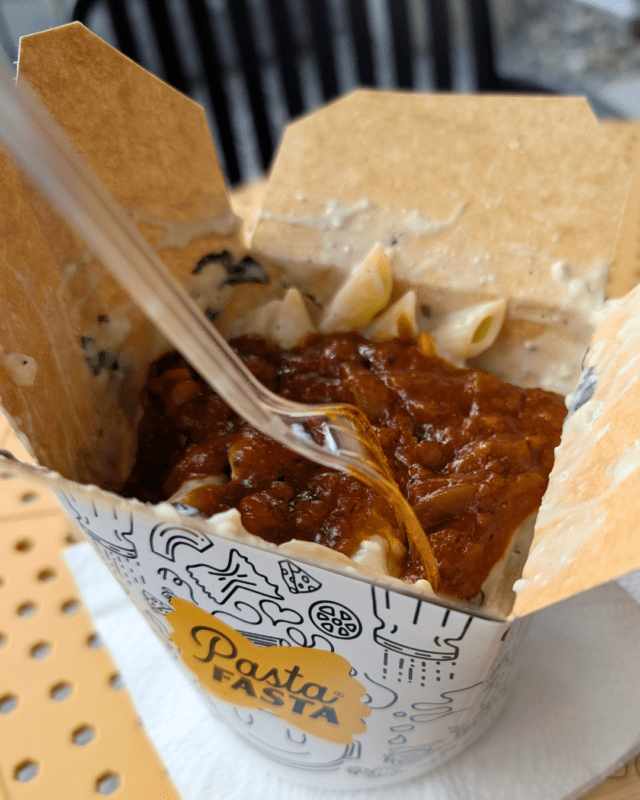
In town, I ate at NONA coffee house, which did a tasty mushrooms on toast (but no oat milk for coffee!). For dinner I went to Pasta Fasta, which is a Kosovan fast food pasta chain.
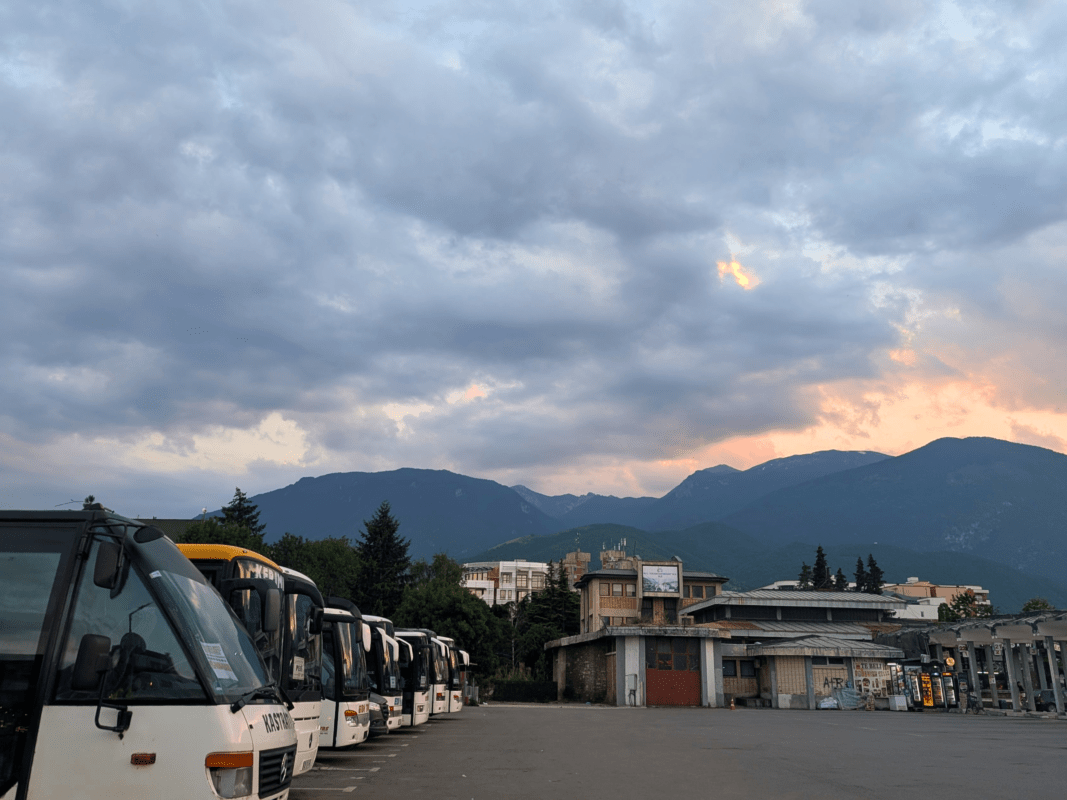
One of the best reasons to visit Kosovo is the amazing hiking around Peja. I didn’t get any time for any, but the mountains from afar were beautiful!
I then took a bus at 20:30 to Podgorica. It was half an hour late (which was a little unnerving as the bus station was all but deserted and there was no information about it anywhere!), but it turned up in the end! I arrived back to Podgorica at 02:00 and stayed at Hotel Evropa, which is just two minutes from the bus station!
If you want a more immersive look at the Pristina to Peja train, check out my YouTube video below!
