
I recently took the bus from Sofia to Istanbul, and it prompted me to think of all the times myself and my partner had travelled between Bulgaria and Turkey (three, between us!).
Sitting in far Southeastern Europe (and in Istanbul’s case, spanning into Asia), these two cities look relatively close on a map. The drive time, with no delays or border hold-ups, is just six hours – which isn’t far for two major cities that feel very culturally different!
However, if you don’t have a car, you might be wondering how to get from Sofia to Istanbul. It can be a bit of a long journey – even if you fly! In this post, we’ll go into the three main ways to travel from Istanbul to Sofia and vice versa, and what I think is best.
How to get from Sofia to Istanbul: 3 ways
| Option | Time | Cost | Notes |
| Train | About 11 to 17 hours, overnight | From €38 (couchette) to €78 (single-berth sleeper) | Leaves from Halkalı, around 25km from the city centre |
| Bus | 8 hours | I paid around €38 | There are day bus options – mine ran from 11am to about 7pm |
| Flight | 1h15 | From €35 – but this is before any travel to/ from airports | Pegasus and Turkish Airlines are the main carriers |
1. Taking the train from Sofia to Istanbul
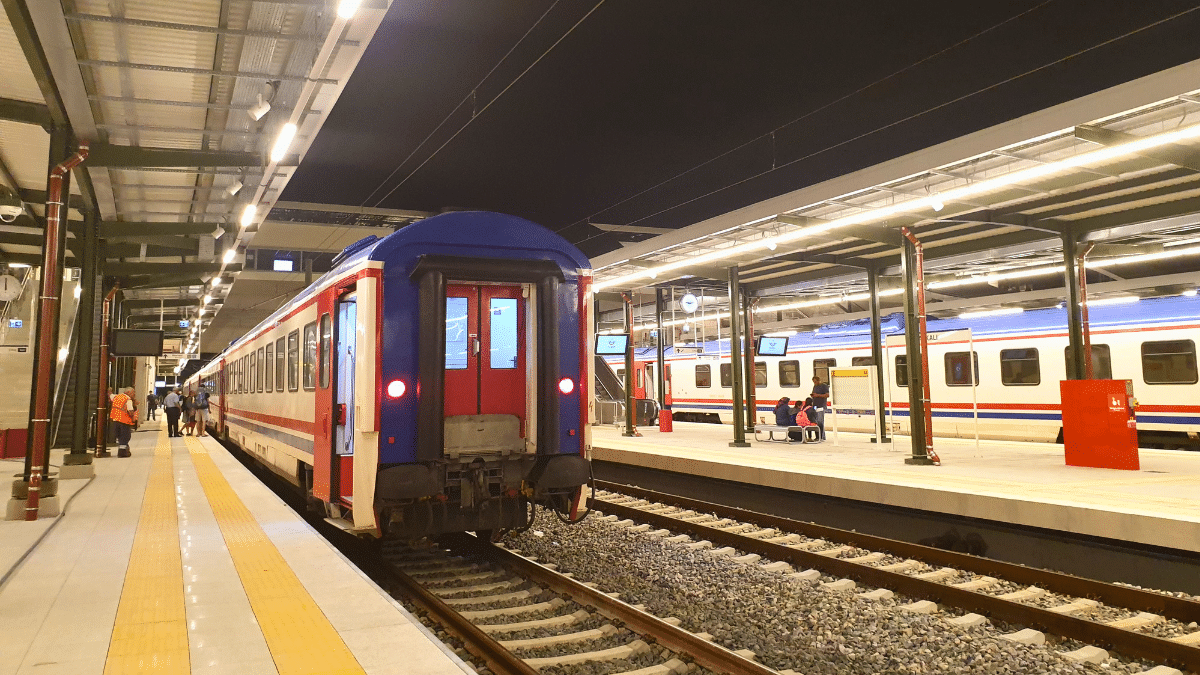
I haven’t taken the Sofia to Istanbul train, but I did take a train from Istanbul to Bucharest, which is connected to the Sofia train for much of the journey. It splits in Buglaria, with part going on to Romania and the rest turning toward Sofia.
Rich, my partner, took the Istanbul to Sofia train earlier this year – so part of this is his experience too!
The train, imaginatively called the Istanbul-Sofia express, covers 571km. However, it usually takes around 12 hours – sometimes up to 15 – because of the long border procedure.
When I took this train, I was delighted to see that it was all sleeping carriages, with no seats in sight! I booked a couchette in a shared cabin (this was my 2019 Bali to London overland trip, and I was budget backpacking!), but the only woman in my cabin ended up moving (not because of me, I think she knew someone in another cabin…).
This particular train started in 2017, and replaced the old Balkan Express, which used to go onto Belgrade! However, this ceased to exist from 2013.
Travelling between Turkey and Bulgaria? Don’t forget your eSIM!
I used Holafly when I was travelling between these countries to connect seamlessly.
I sorted the Bulgaria eSIM before I went, and made sure my Turkey eSIM was pre-downloaded.
Then, all I had to do was make sure it was turned on before I crossed the border, and it connected automatically!
Click here to get 5% off Bulgaria eSIMs and here to get 5% off Turkey eSIMs.
How to get tickets
Getting tickets is a bit complicated! They either have to be booked at the station or with a company in advance.
When I took the train, I booked my ticket in-person at Sirkeci Railway Station a few days prior. When Rich took it, he didn’t have time, so he used a company called Amber Travel. They’re easy to deal with – you just need to send them an email with your dates and details, and they’ll explain how to pay etc and secure your tickets.
We also used them for Eastern Express and Mesopotamia Express tickets in Turkey. My contact is [email protected]
Rich paid €140 through Amber Travel for the whole cabin – if I’d been travelling with him, this price would have been split in two. He did notice when he got his ticket that there was a big markup, and it’s always cheaper if you buy it at the station. So if you’re around in Istanbul for a few days, it might be worth holding on and buying them in person.
You could book this train with an Interrail pass. See my Interrai tips here.
How to get to the station in Istanbul
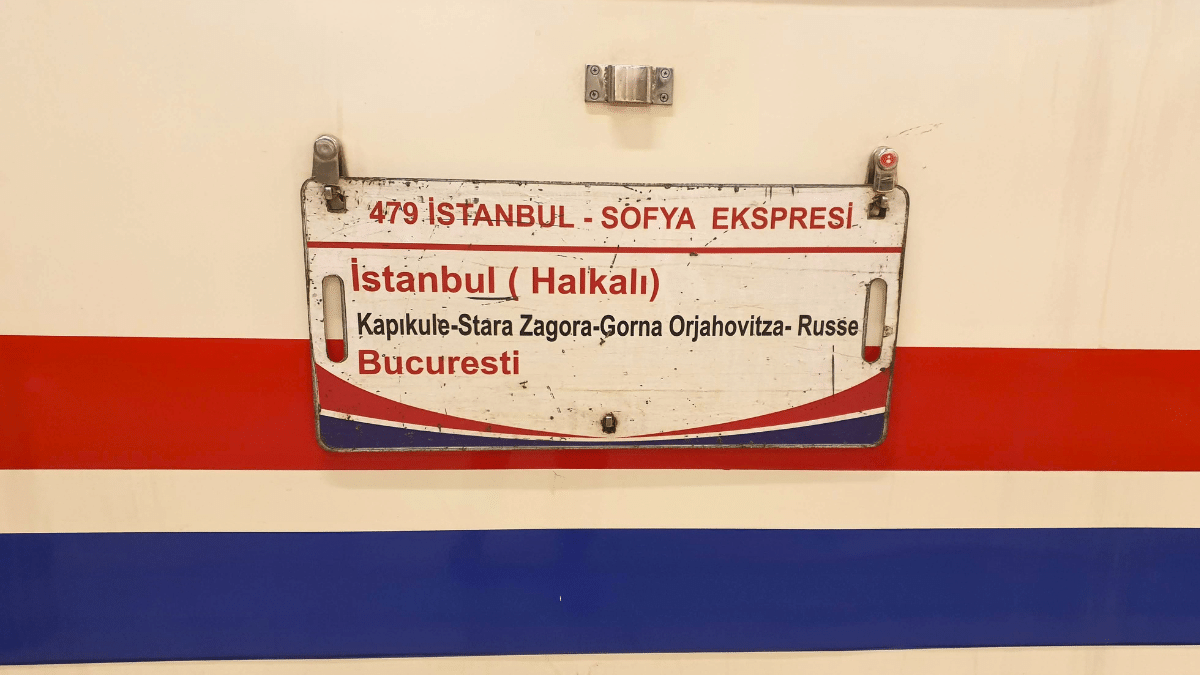
The Istanbul-Sofia Express departs from Halkalı station. This is about 25km west of Istanbul’s centre; Rich used his Istanbulkart to take the T6 light rail from Sirkeci to Kazlıçeşme, then the Marmaray Line. Be conscious that you may well be travelling in rush hour, and it can be busy!
Rich left about three hours, in case of delays, and it took one hour.
When I took the train, I went to Sirkeci Railway Station and took a minivan from there to Halkalı. I think this is because I booked my ticket at the station’s ticket office, but it didn’t seem to be an offering when Rich took this train more recently!
As Halkalı is in the suburbs, there aren’t that many facilities. Stock up on food and drink before you travel there – and remember on this train, there’s no dining car!
Don’t forget your travel insurance!
On this trip, I used SafetyWing travel insurance. They’re super flexible, and you can turn your policy on and off as you go – even if you’re already travelling. They cover 180+ countries and have add-ons for extreme sports and adventurous activities. Plus, they have 24 hour support and can help you out right away!
Take a look at them here.
On the train
On Rich’s train, there were only three carriages and the engine. His cabin had pull-down beds, a ladder, wash basin and a bin. PLUS, he got a fridge with snacks, water and juice. I wasn’t so lucky when I took the train back in 2019!
It was very warm (as trains in Turkey often are) – when he boarded it was set to 27°C, but he was able to turn it down! He got a TCDD-branded packet of sheets and had to make the bed up. Rich had booked a private cabin; when I took the train I ended up with a private cabin, but only because there was space!
There are toilets at either end of the cabin, usually one western and one squat.
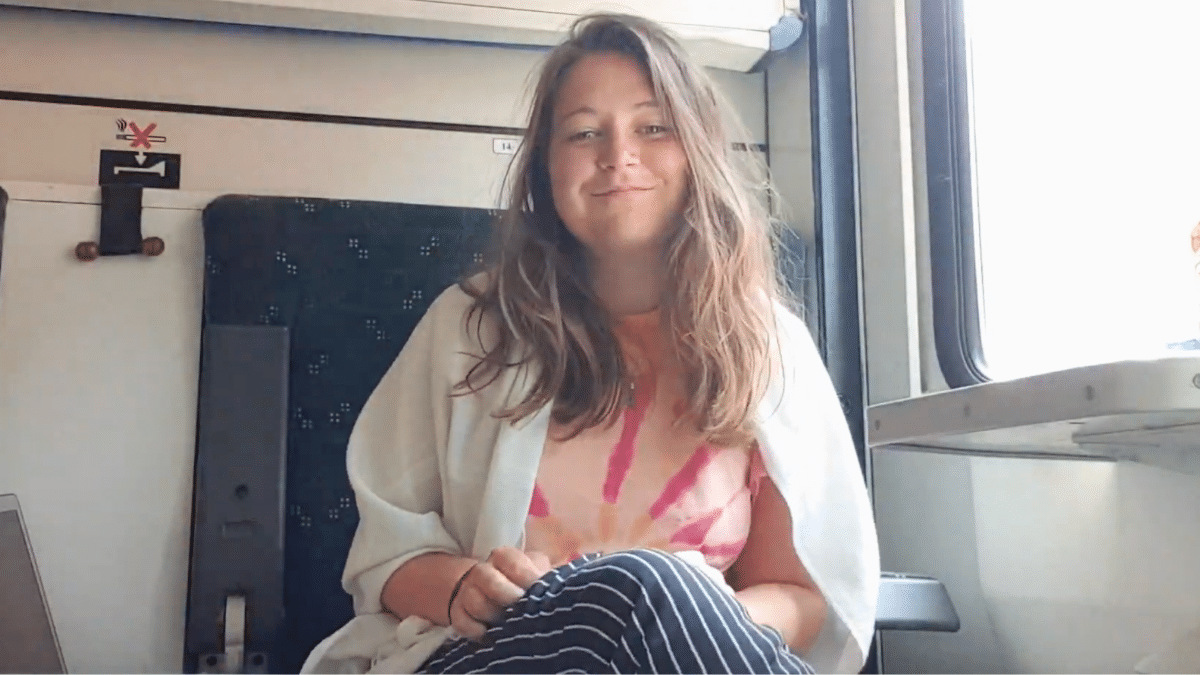
Turkey/ Bulgaria border
Turkish passport control is at Erdine, and both when Rich took the train and when I did, we arrived at about 2:30am. There’s a small passport control booth with baggage check.
We both had long experiences at the border; it took me two hours (this was pre-Schengen days), but Rich took three hours, as the train had to do EES procedures. Depending on the time of year, you might be outside in the cold for a while!
Arriving into Sofia
The train travels through Bulgaria for the rest of the night and then arrives at the border, officially just after 10:00 but it could be earlier or later! I’d recommend not booking any onward travel that day.
The station is about a 20 minute walk from the centre, and the M2 metro goes straight to Serdika II station. You can see my full guide to transport in Sofia here, and here’s why I think Sofia is worth a visit!
In a rush? Here are my favourite hotels in Sofia
⭐⭐⭐ Maison Sofia – MGallery – Click here for rates & availability
⭐⭐ WorkNomads LAB Hotel – Click here for rates & availability
⭐ BG Hotel – Click here for rates & availability
2. Taking the bus from Sofia to Istanbul
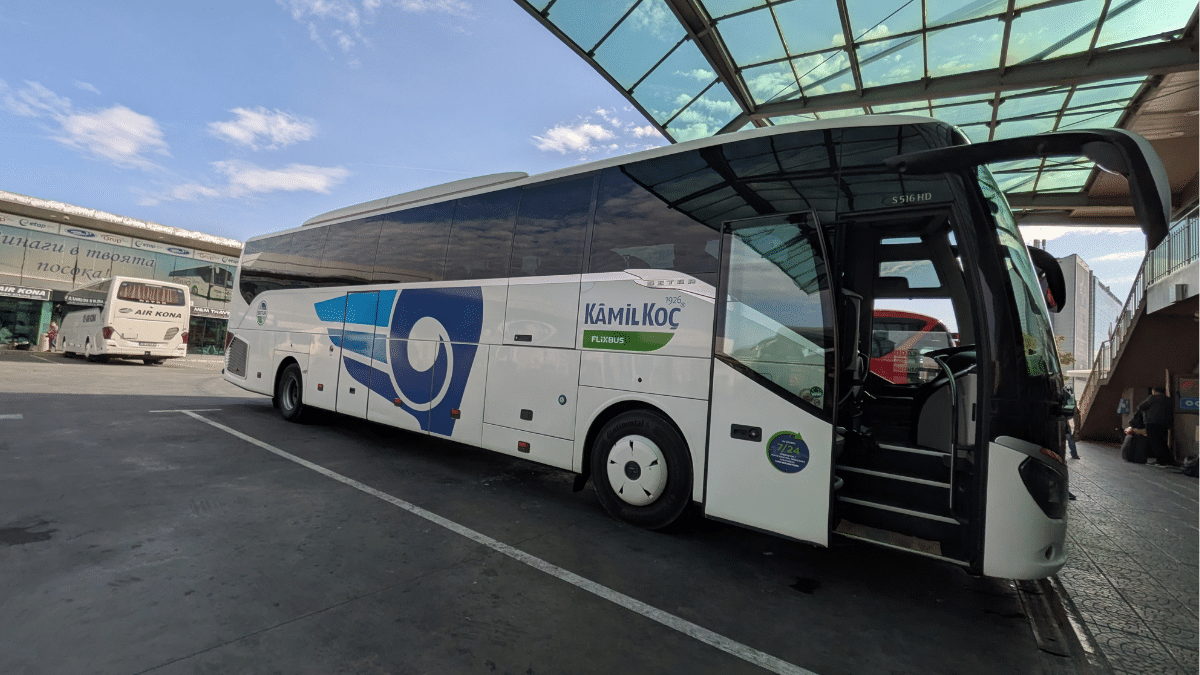
I recently took the bus from Sofia Serdika Bus Station to Istanbul. I chose the day bus, which left at 11:00 am and arrived at around 7:00 pm. While the bus isn’t quite as comfortable as the train, it takes less time and there are day routes, which mean you don’t sacrifice sleep!
I booked on the Flixbus app, but the bus company was Kamil Koç, who work with Flixbus. I much prefer Kamil Koç to standard Flixbus, but you can see my full Flixbus Europe review here!
When I booked my ticket, I was able to pre-reserve my seat for free. As I was a woman travelling solo, I could choose any seats where both were vacant, or any next to another woman. Turkish buses do not allow women and men who don’t know each other to sit next to one another, although this doesn’t apply if you’re travelling with someone of the opposite gender.
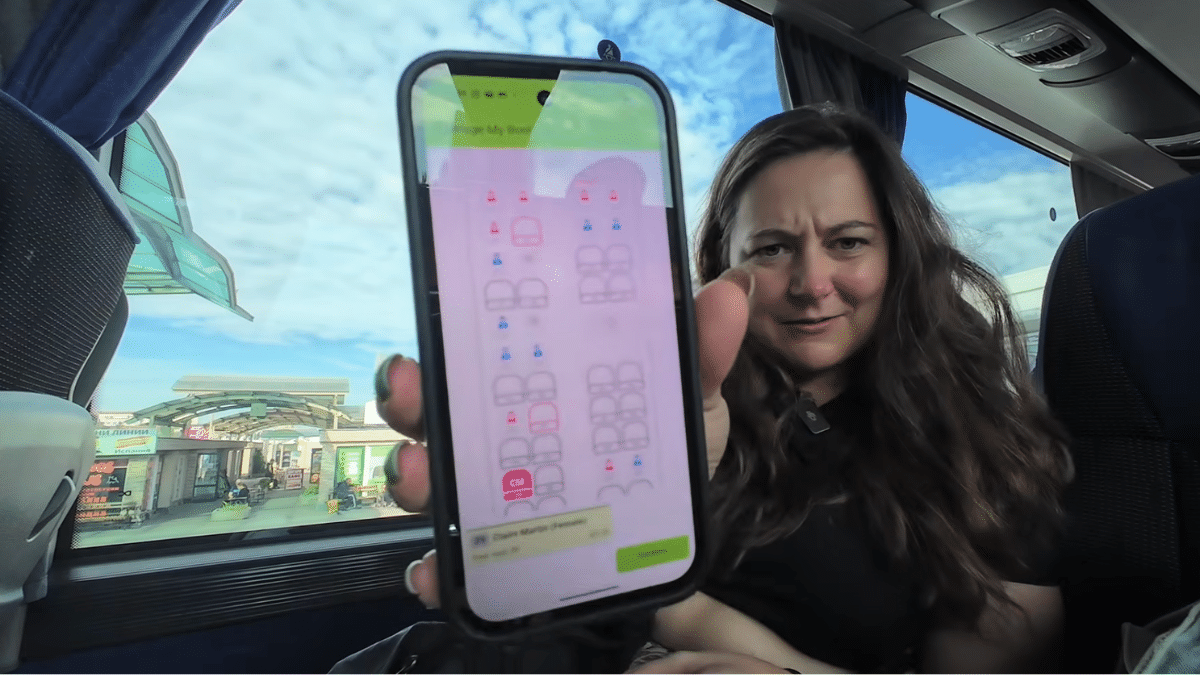
I was lucky, and ended up with two seats to myself – and I changed it last minute (for free), because someone was already in my seat!
The bus journey
After seeing all of Sofia’s top attractions the day before, I walked to Sofia Serdika Bus Station from the city centre, which took about 20 minutes.
The bus had charging outlets, tray tables and mesh pockets for storage. The toilet was out of order, so I used the one at Serdika bus station before leaving – this cost €1 in cash.
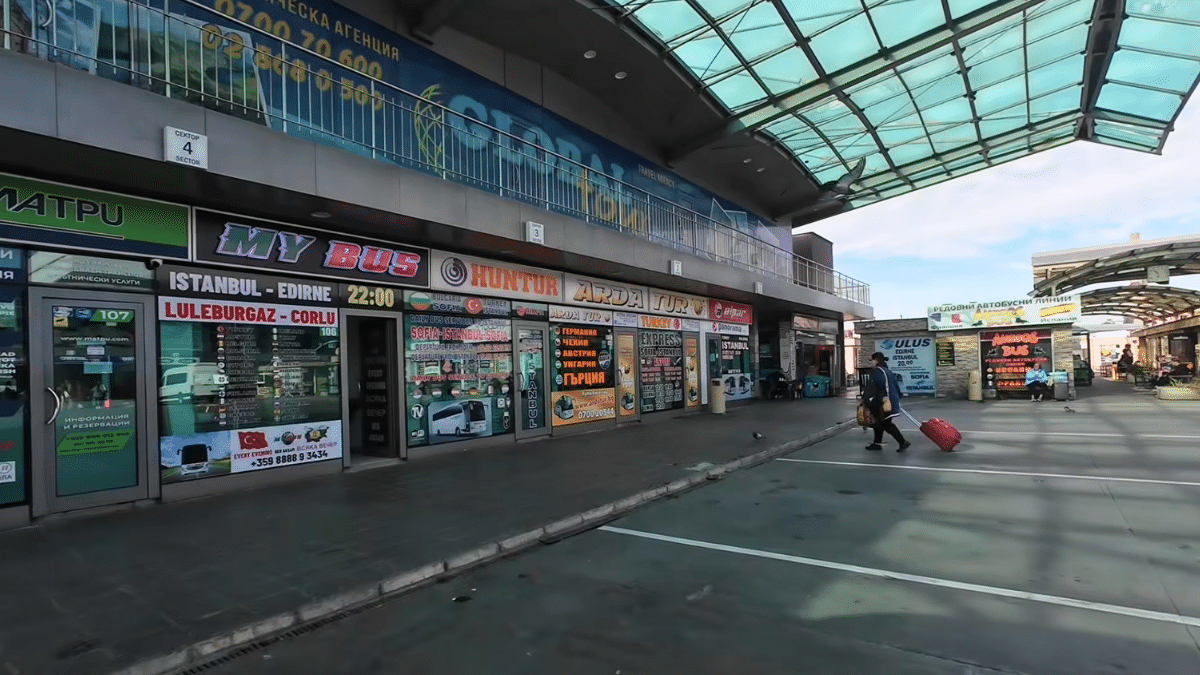
We departed just after 11am, and the lack of toilets started to pose a problem shortly after, as the coffee I’d just had went straight through me! So we pulled into Plovdiv around 90 minutes later, and I had to run off the bus in search for the loos (which set me back another Euro). We stopped here for 10 minutes and could purchase tea and snacks.
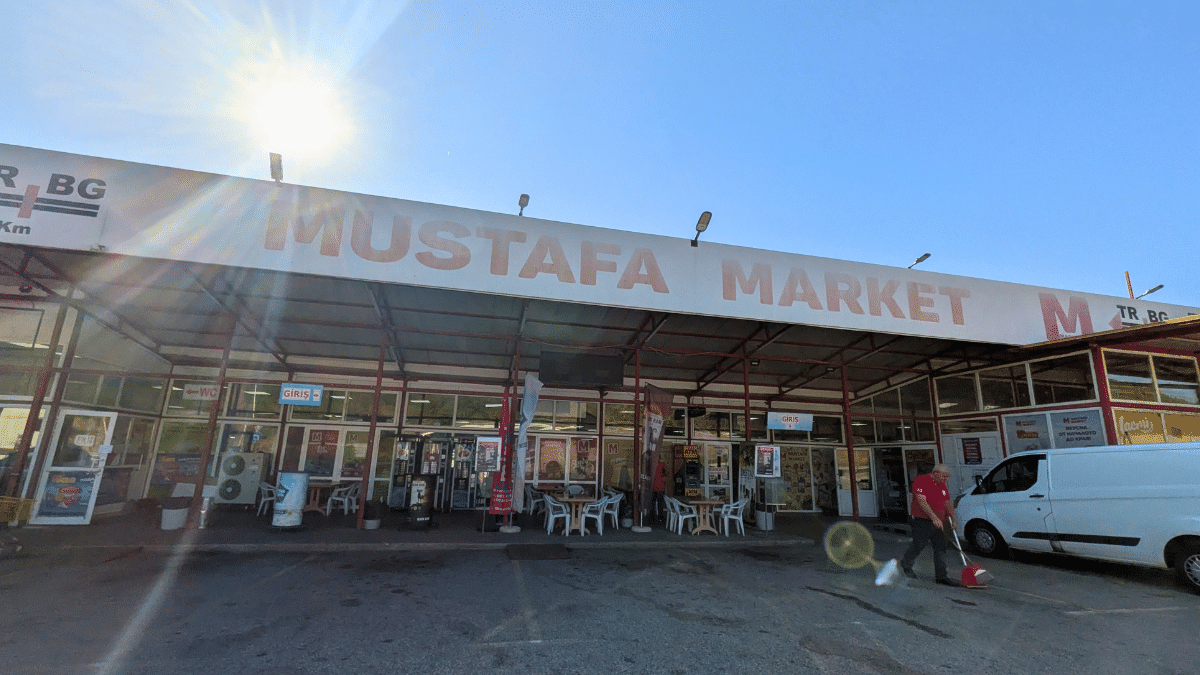
The next stop was the very Turkish-sounding “Mustafa Market”, which seemed to be a hypermarket full of booze – I’m guessing it’s cheaper here than in Turkey? While they had vodka aplenty, they didn’t have much in the way of substantial food – so I ended up with pom bears and chocolate for lunch.
Border crossing
We headed toward the border, which ventures very close to Greece – at one point we were just 200m away! It’s the main border crossing for many Bulgarians and Greeks.
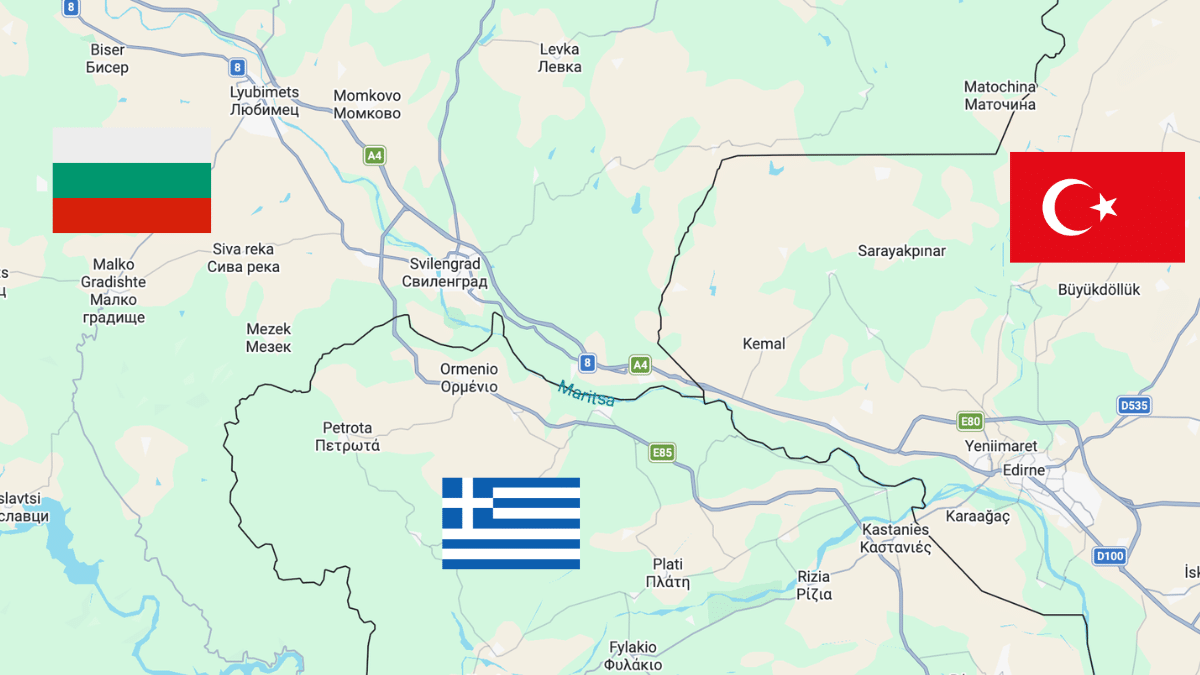
I’d personally heard varying reviews, with some people stating it could take hours and hours, but I found it fine! We were straight off the bus and into immigration, then on the Turkish side we had to take our bags off the bus and go through baggage security. We then just waited 5 minutes for the bus.
Straight after the border, we had a lunch stop (despite it being 16:20!). I bought some stir fried aubergine, green beans and bread and a can of coke. I’m not sure if I paid the right amount for this – I ended up paying €20 and getting over €19 change, in a combination of euro and lira. But the next day, I spent about €8 on a similar meal!
Arriving in Istanbul
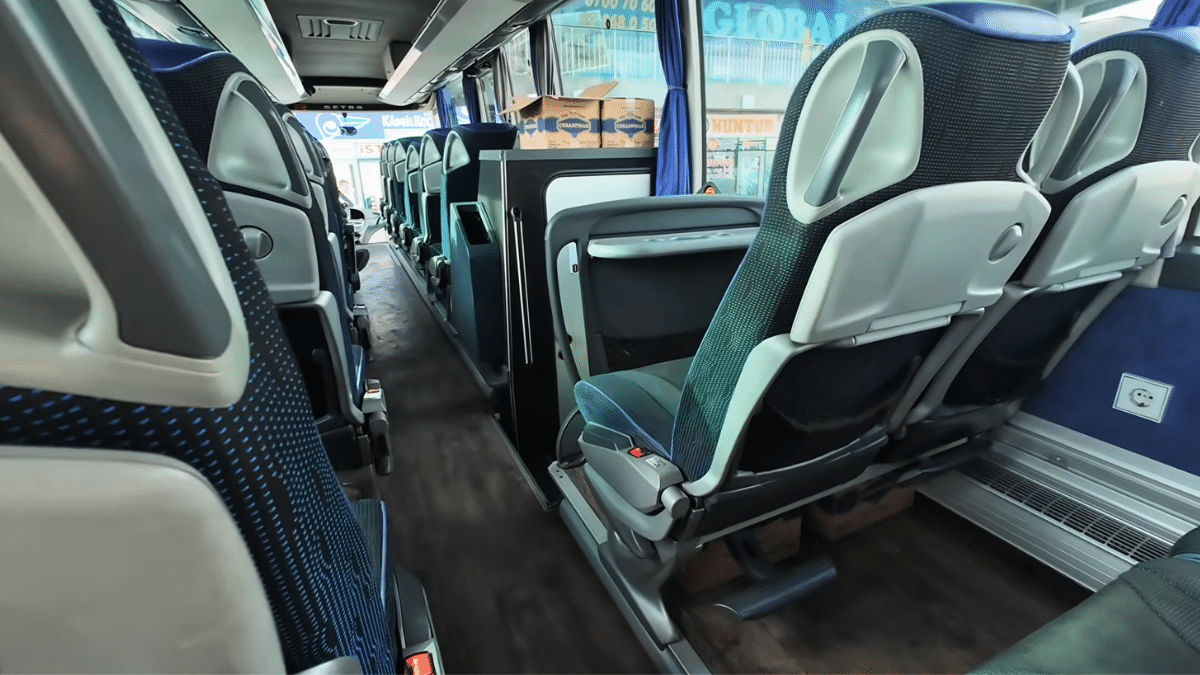
Next up was three hours driving through Turkey to Istanbul. I kicked back, watched the sunset and caught up on some Netflix as we negotiated through Turkey’s busiest city.
When I arrived at the station, I needed to change some more Euros. Not knowing if there was an official exchange office, I stepped into a bus waiting room and asked a man there.
In a rush? Here are my favourite hotels near Istanbul’s Europe bus station
⭐⭐⭐⭐⭐ Ramada Plaza By Wyndham Istanbul Tekstilkent – Click here for rates & availability
⭐⭐⭐⭐ Litros Hotel & Spa – Click here for rates & availability
⭐⭐⭐ Fez Inn Hotel – Click here for rates & availability
“Is there anywhere I can exchange Euros?”. He readily changed them for me – giving me 1,000 Lira for €20, which was about 100 Lira shy of the official exchange rate – I didn’t mind for the convenience!
I took a taxi to my hotel, which was about 10 minutes away and cost me 280 Lira – I made sure it was on the metre.
Here’s why I think Istanbul is a city that’s REALLY worth visiting!
You can see my YouTube video here.
3. Flying from Sofia to Istanbul
The third option is flying from Sofia to Istanbul (or Istanbul to Sofia). Neither myself or Rich have done this – we’re avid overland travellers – but from my research, Pegasus and Turkish Airlines operate the route. Bulgaria Air does not.
It’s the quickest option at 1 hour 15 minutes. Sofia just has one airport, and it’s easy to get there using the metro. Private vehicle options, like this one, are also affordable (Sofia in general is quite an affordable city).
If you book a flight with Pegasus, be aware that it only flies to Sabiha Gökçen Airport, whereas Turkish Airlines flies to Istanbul Airport. Sabiha Gökçen is, in my experience, around a 90 minute drive from Istanbul, whereas Istanbul Airport is around 45 minutes.
You can take buses or the metro from either, or book a private transfer like this one (see some more options below).
Here is my up-to-date guide on the costs of travel in Turkey.
4. Which is best?
The best way to get from Sofia to Istanbul really depends on your priorities.
- If you want to get there as quickly as possible: Likely flying, but there’s not that much in it if you factor in travelling to and from the airport and arriving in advance (that is, if you have no border issues!).
- If you want the most hassle-free option: I’d say taking the bus is easiest in this instance. You do have to do the land border, but other than that it’s pretty simple.
- If you want the most interesting way: It has to be the night train!
- If you want the cheapest way: Overall it’s likely the bus, but if you factor in saving a night’s accom it might be the train. There are also possibly good flight deals, but I think it would be rare for travel to and from an airport plus flight prices to come to less than the cost of a bus ticket.
For me? I wouldn’t fly, but I would take the bus or train depending on my trip and tiredness levels!
