I was SO impressed with Sofia, Bulgaria’s capital. It’s one of Europe’s oldest capitals, and the centre is super navigable on foot. I only had one day here, so there’s a lot I didn’t see, but I devised a fantastic one day in Sofia walking tour itinerary, with all of the historical attractions in the centre!
I arrived in Sofia at around 08:00 after a long bus journey – I’d actually taken a few Flixbuses all the way from London (you can see my YouTube video about it here!). But I’d never been to Sofia or even Bulgaria before, so I was really keen to make the most of my day here. I MAY have also spent a fair chunk of time in the hotel spa in the afternoon…
Nevertheless, here are all of my top things to do in Sofia in one day!
My one day in Sofia itinerary
Here’s a list of everything I did and saw in Sofia!
- Central Mineral Baths
- Banya Bashi Mosque
- Central Market Hall
- Synagogue
- Serdica ruins
- Medieval orthodox temple of St. Petka Samardjiyska
- St Sofia Statue
- Sveta Nedelya
- St George Rotunda
One thing that really struck me was how much history there was in a tiny area. All of these buildings were only really steps from each other, but they spanned Roman, Ottoman, Communist and modern histories.
In a rush? Here are my favourite hotels in Sofia
⭐⭐⭐ Maison Sofia – MGallery – Click here for rates & availability
⭐⭐ WorkNomads LAB Hotel – Click here for rates & availability
⭐ BG Hotel – Click here for rates & availability
Things to do in Sofia in one day (in detail)
Here’s some more detail about everything I did:
Central Mineral Baths
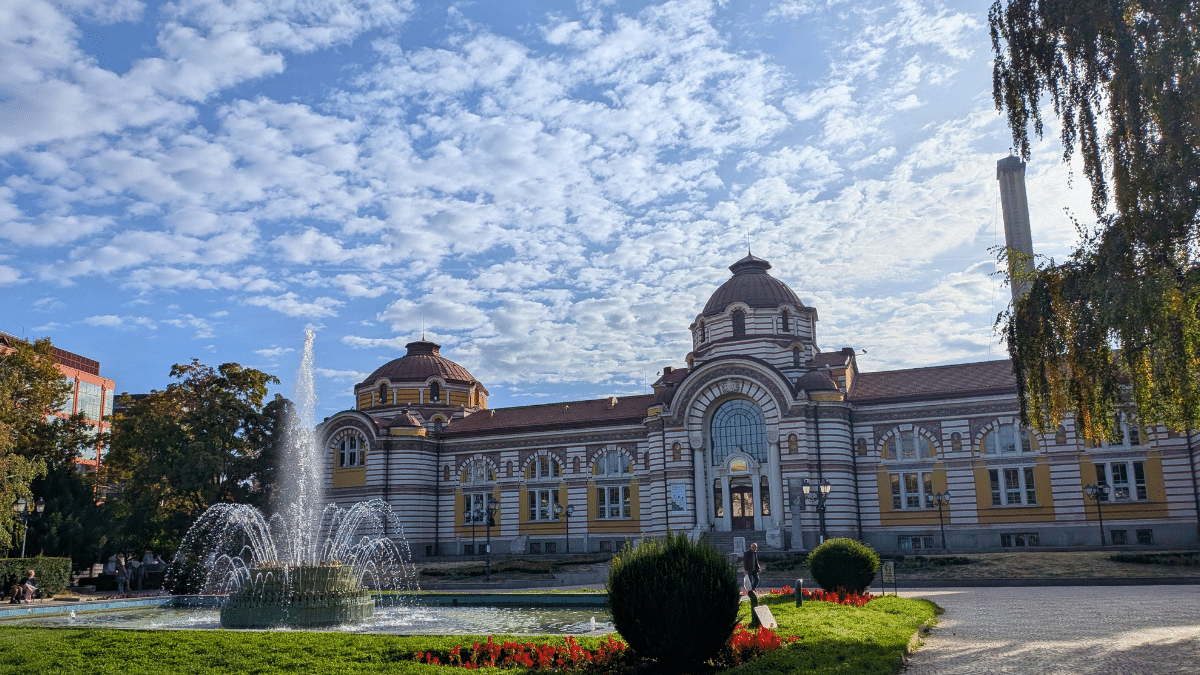
Unfortunately, these are no longer a spa (but find a spa recommendation below!). Instead, they are home to the Sofia Historical Museum.
The building was built in 1913 in a Vienna Secession style, blended with Byzantine and Bulgarian elements, and was used as a bathhouse until the 1980s. Then it was converted, and has been the residence of the Sofia History Museum since 2015. I only poked my head in, but it looks like a super interesting museum about the history, and could be a great place to start your day!
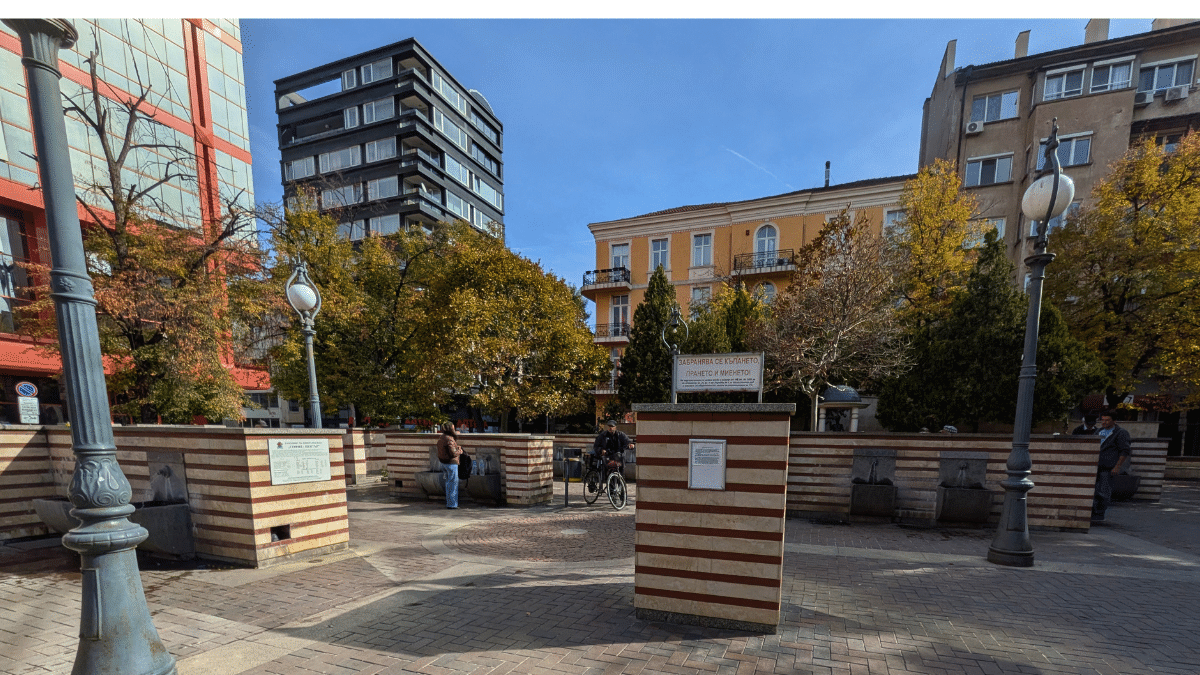
Around the corner, there are some taps which serve up drinking water. It’s actually warm, but a lot of locals fill containers to take home and cool before drinking.
Banya Bashi Mosque
The Muslim population of Sofia is low, only around 0.8%. Nationwide, it sits between 9-10%, but most live in rural areas or closer to the Turkish border. Subsequently, the Banya Bashi Mosque is the only working mosque in Sofia, and tourists can enter outside of prayer times for free.
I had a slightly curious encounter here – all down to a language mix up! I was told by a man as I entered the gates (in Bulgarian) that I needed to cover my head, but I could see headscarves hanging up near the door so motioned to them.
The man kept thinking I was asking if I could go in, so kept telling me I needed a headscarf, and I kept pointing at the headscarves but inadvertently pointing at the door! It resolved itself eventually – and I borrowed a headscarf and robe for free.
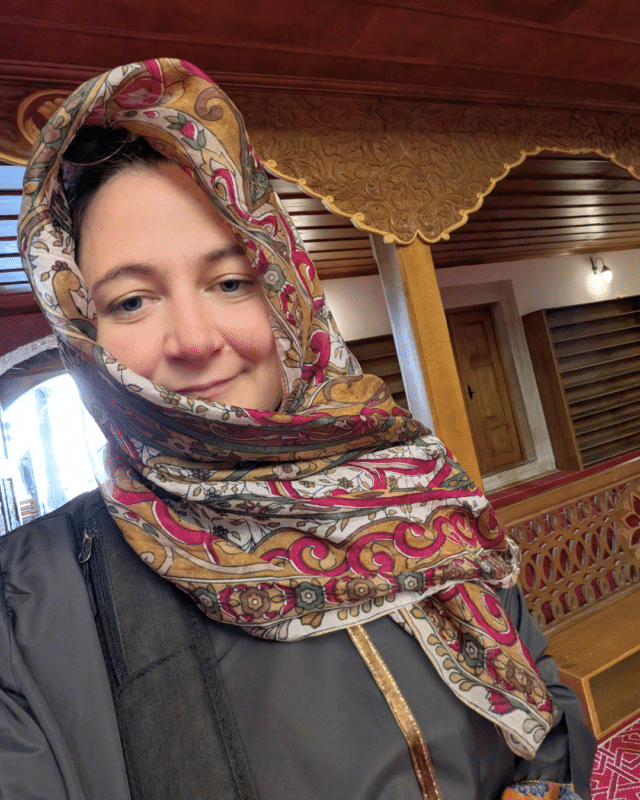
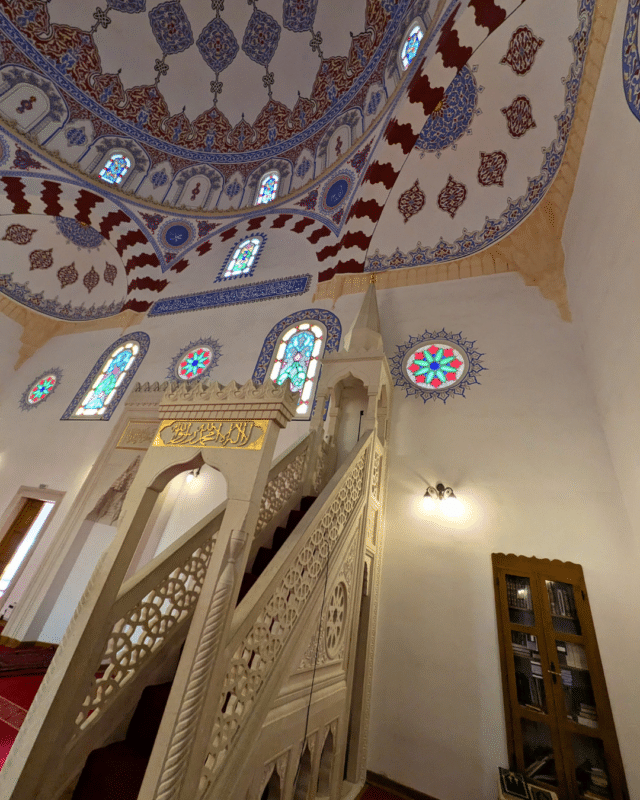
The mosque dates back to the 1500s (the Ottoman era) and translates either to “many baths” or “head of the bath mosque”. It’s a beautiful building inside and out and is just steps from the Central Mineral Baths!
Central Market Hall
The Central Market Hall was listed as one of the best buildings to see in Sofia, but to be honest, I was a bit confused by it.
As the name suggests, it’s a market hall, and dates back to 1911. It has a grand exterior, and some historical features inside (with some explanations of its past), but nowadays it mostly seems to be taken up by a supermarket, with some eateries upstairs!
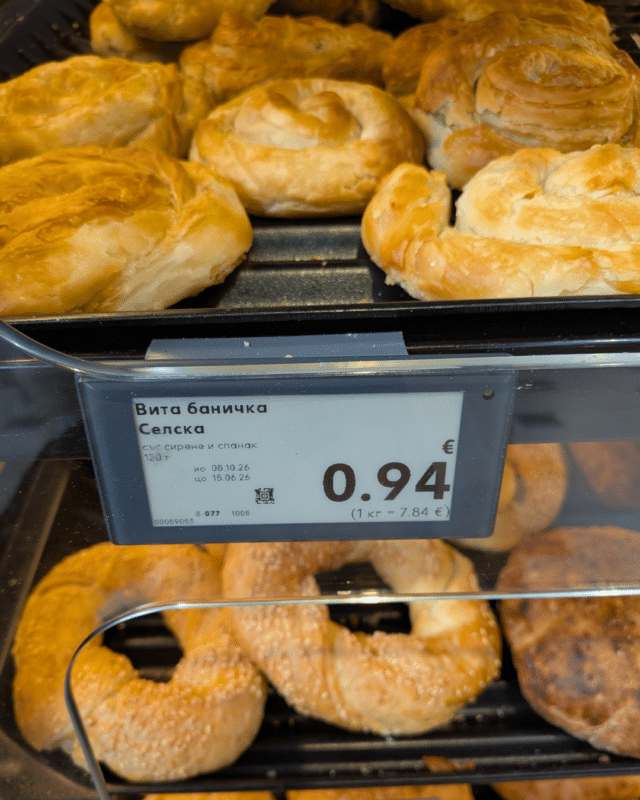
I did, however, try my first banitsa, which is a feta-like cheese and spinach filo pastry, a little like burek in Turkey. This was delicious and only cost me 94 cents!
Central Synagogue of Sofia
The largest Synagogue in Southeastern Europe (and third largest in all of Europe) sits just behind the Central Market Hall, not far at all from the mosque and various churches. It was designed by the Austrian architect Friedrich Grünanger and opened in 1909.
Bulgaria wasn’t as badly affected as neighbouring countries by the Holocaust, but most Jewish people left after the war. Nowadays, the services often only have around 50 people.
The Museum of Jewish History of Bulgaria is located in an upstairs room, but I couldn’t work out how to access the inside of the Synagogue!
Serdica ruins
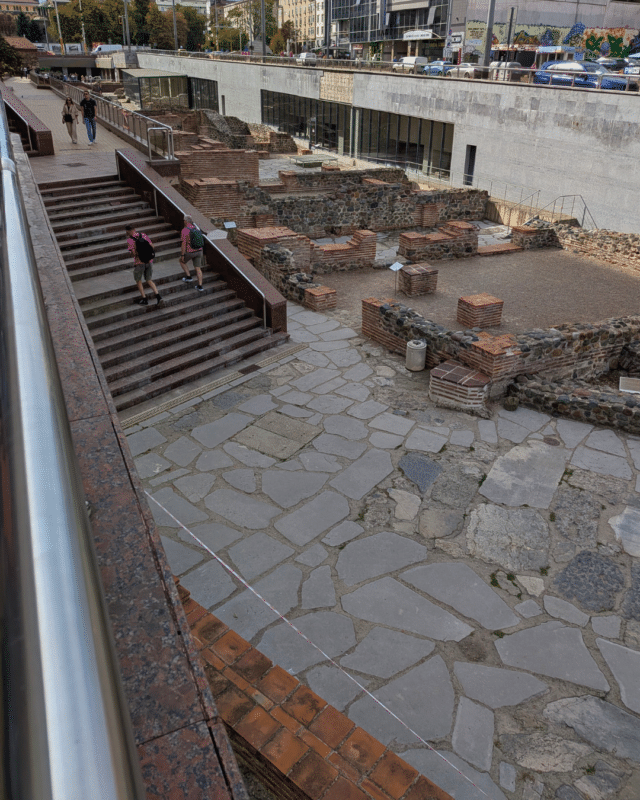
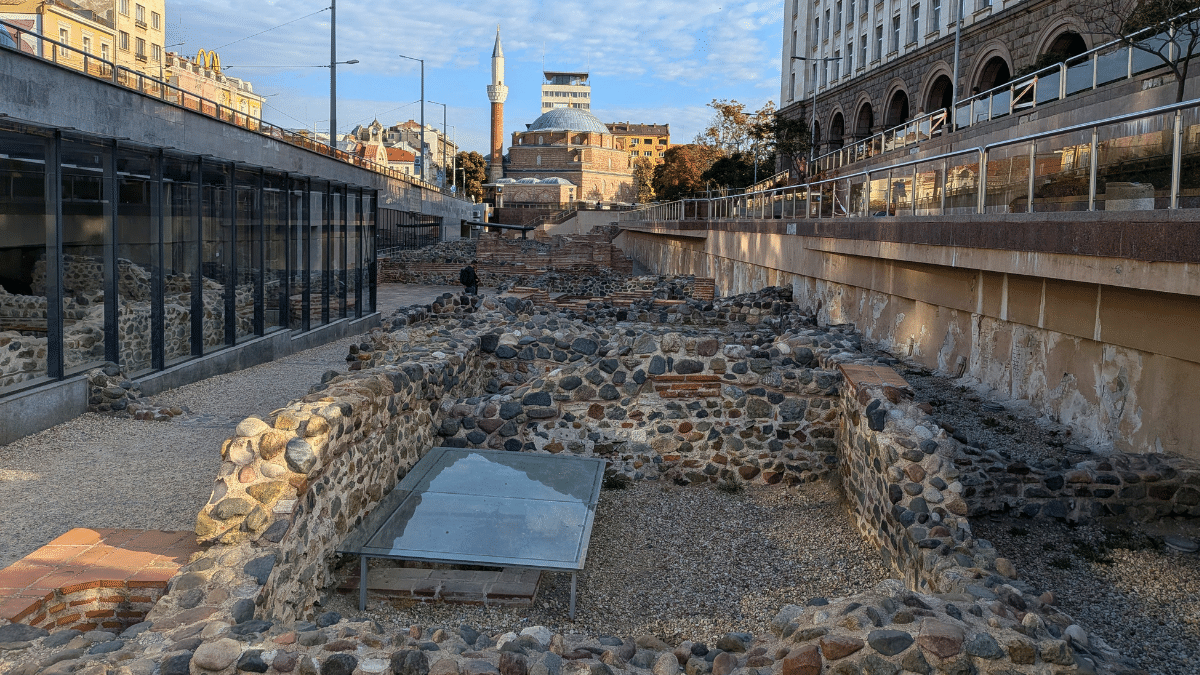
I found the Serdica ruins incredible – I think Sofia is worth visiting for them alone. They’re literally right in the middle of Sofia city centre, sitting underneath street level. They’re home to the ruins of the ancient Roman city of Serdica, which is situated where modern-day Sofia is located.
You can literally walk straight down and go amongst the ruins for free, where there’s also a metro station. Here, you’ll find the Serdica Ancient cultural and communicative complex, which has some more information about the Roman history of the city.
Don’t forget your Bulgaria eSIM! (ad aff)
I’d highly recommend getting a Holafly eSIM.
I use one whenever I travel; they have unlimited data (which is SO useful in a city like Sofia, where you’re often looking up directions and facts about where you are!) and if your package runs out of days, the “Always On” feature means you get an extra 1GB of data to sort out your plan!
Click here to get 5% off your Holafly SIM!
#HolaflyTraveller @holafly
Medieval orthodox temple of St. Petka Samardjiyska
By the Serdica ruins, I saw the Medieval orthodox temple of St. Petka Samardjiyska. This is a small church dating back from the Medieval times, but the really interesting thing about it is its set below street level.
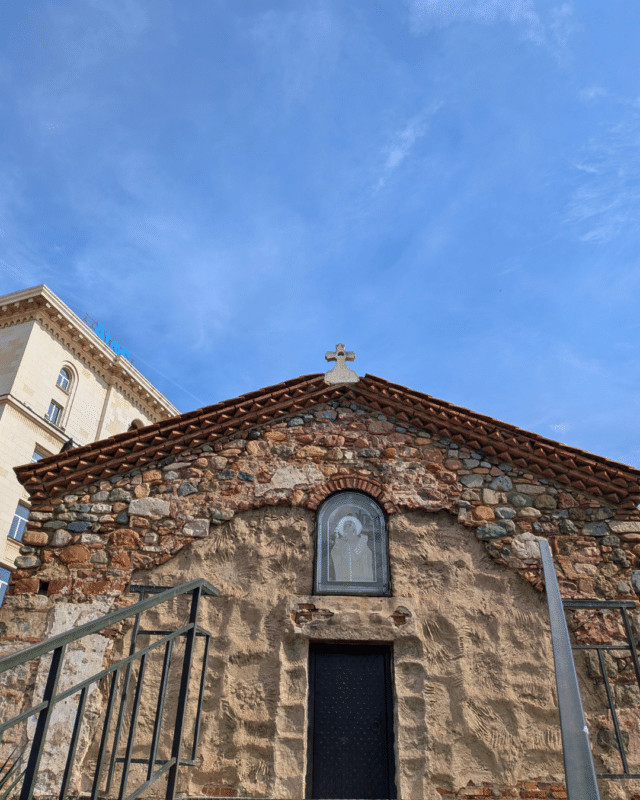
Apparently, this is due to taxes in the Ottoman era. Non-Muslim religious buildings were taxed depending on how high they were, so a workaround was to build them nearly underground!
It was closed when I was there, but I think the exterior is the most interesting part.
St Sofia Statue
You might think that the city of Sofia is named after the St Sofia featured in this statue – that’s what I thought – but we’d both be mistaken!
The St Sofia statue stands in the Largo area of the city, not far from Serdica. It’s a figure of a woman on a column, and was supposed to be religious, but met resistance when she was put up as it was thought she looked to Pagan. Instead, she’s supposed to represent the wisdom and intellect of Sofia.
Largo and the Party House
After World War Two, Bulgaria, like the countries around it, became Communist.
To this day, three Socialist Classicism buildings surround Independence Square. These were constructed to become the city’s new representative centre in the 1950s. There was a planned 16 storey “House of Soviets” which was never built.
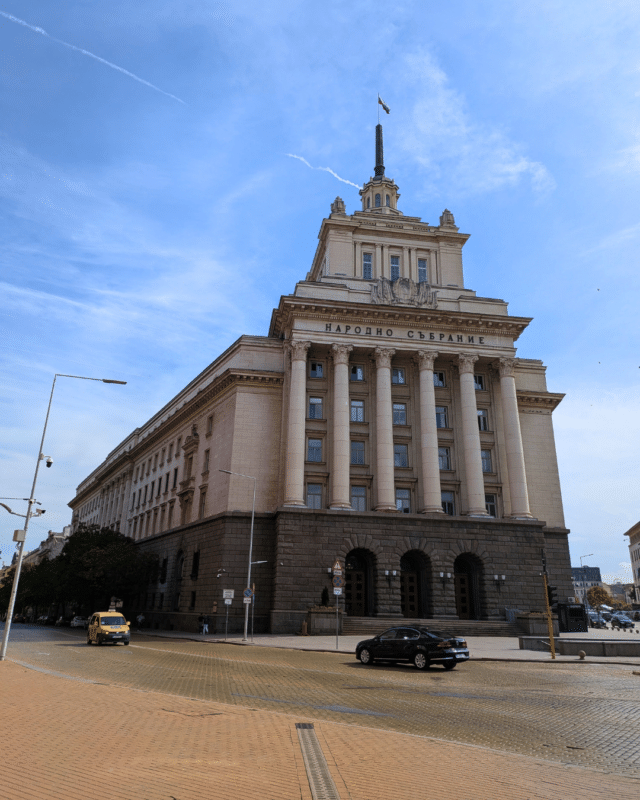
The Party House is a classic example of Socialist Classicism architecture. It’s now once again a governmental building, so you can’t go inside, but it’s worth a quick stop to see the exterior!
Sveta Nedelya
My penultimate stop was Sveta Nedelya, an Orthadox church that I popped into. I thought I might have to cover my hair up, but I saw lots of locals walking in without.
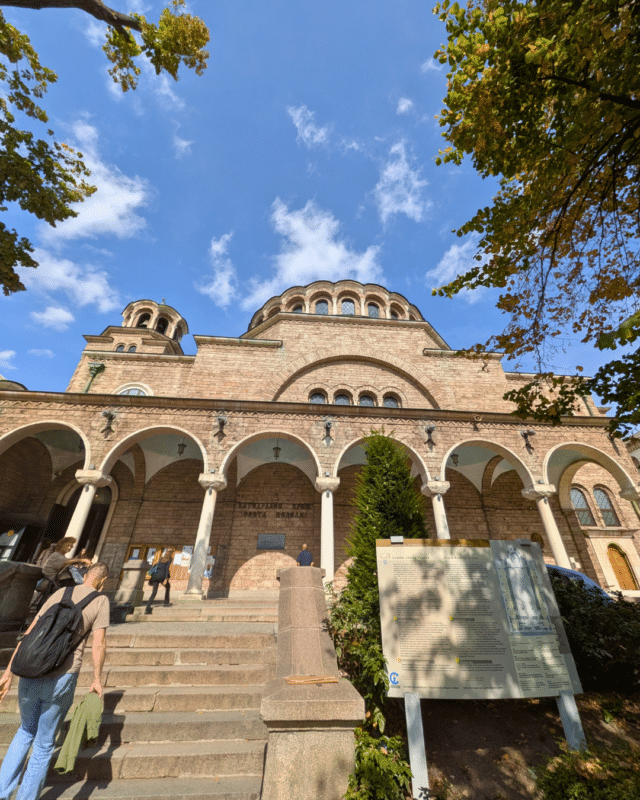
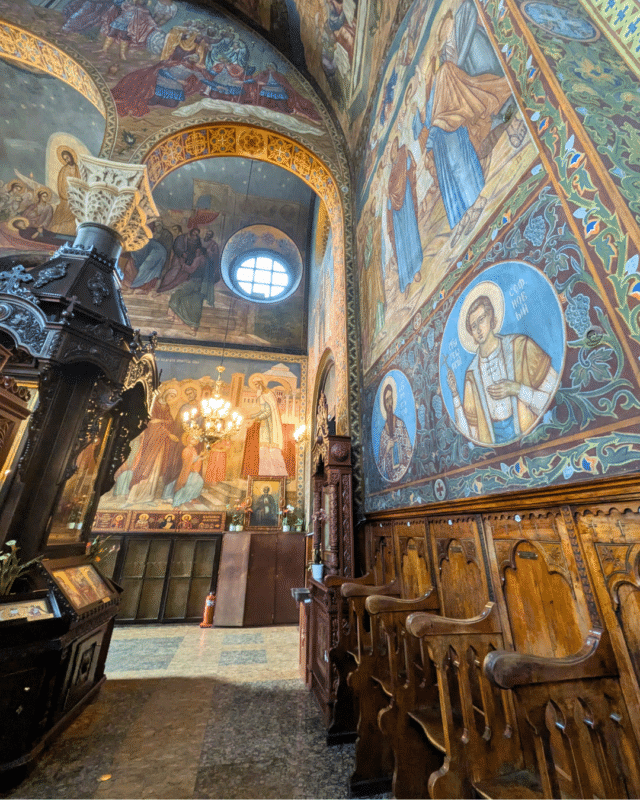
This church has a sad story; it was bombed in 1925, and over 150 people were killed. The church we see nowadays reopened in 1933, although the original church probably dates back to the 10th century.
Nowadays you’ll see a plaque and wreath which mark the 1925 bombing.
St George Rotunda
Finally, I stopped in St George Rotunda, which is thought to be the oldest building in Sofia and dates back from the 300s (yes, 300s!). It was originally built as Roman Baths, and you can still see some of the ventilation systems if you step inside.
It became a mosque in the Ottoman era, and then a church in the mid-19th century. I heard that it wasn’t always open, but I was pleased to see it was. On the ceiling, there are frescoes of 22 prophets. These were painted over during Ottoman times and then uncovered in the 20th century!
It was a quick stop, and I found it interesting, although it seemed a little commercial now – there were a few stalls inside selling souvenirs! But it was free and worth a quick stop.
Cafes in Sofia
Sofia has loads of hip cafes that make a great speciality coffee – and I was delighted to see that oat milk was on the menu everywhere.
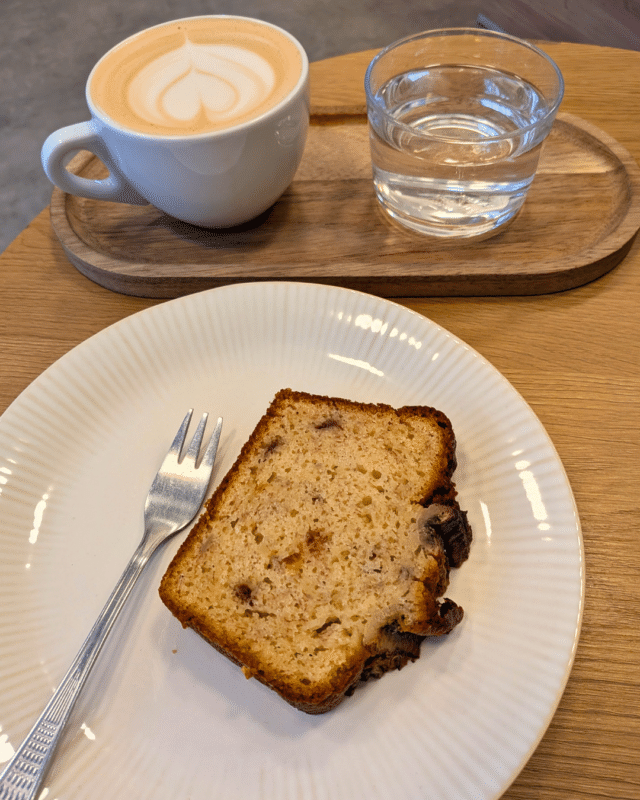
The two I tried were:
Altruist – Urban Coffee Shop & Pastry: This is quite a big cafe, although it was very busy when I went! They serve a range of cakes, although I just had an oat cappucino (which was delicious).
VYBE: Coffee is a serious business here, and I actually ended up grabbing one twice! I also tried the delicious banana bread.
Where I stayed in Sofia
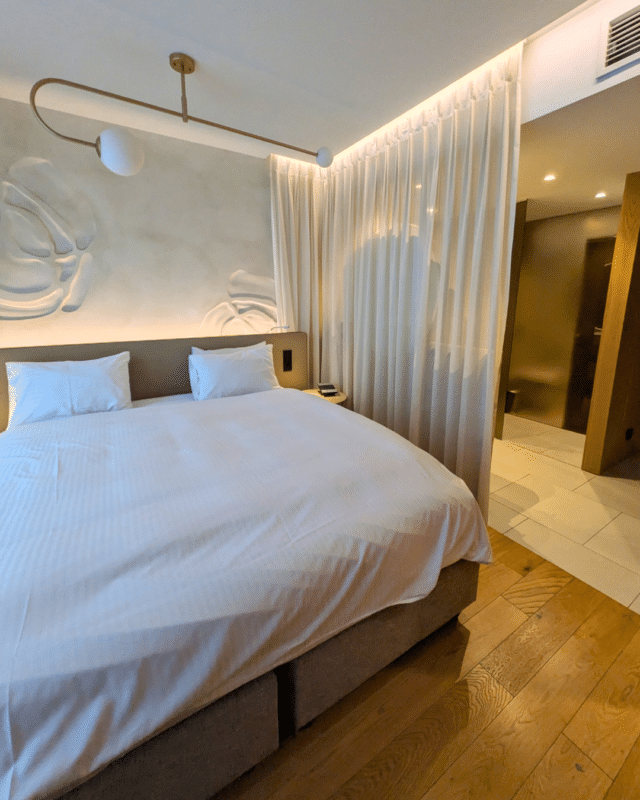
I stayed at Maison Sofia, and it was a dream. The room was ultra modern and comfy, and as I’d been sleeping on a bus for two nights before, I sunk straight into the mattress!
But what I LOVED about it was the spa. There’s a relaxation room with a sauna and steam room, and a separate pool. Just be mindful of when swimming lessons take place – I ended up trying to go for a swim while they were happening, which turned a bit hectic! I retreated to the relaxation room instead!
Click here to read more about it.
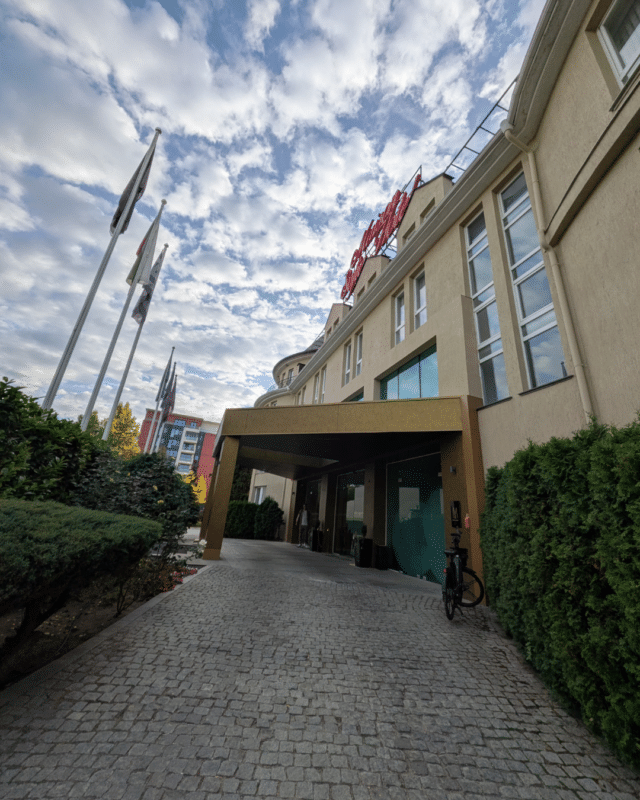
How to get around Sofia
One thing that really surprised me when I arrived in Sofia is that Bolt doesn’t really work, and Uber is non-existent. Bolt is only used for renting bikes, not for taxis. There are local taxi apps, but I didn’t end up trying any.
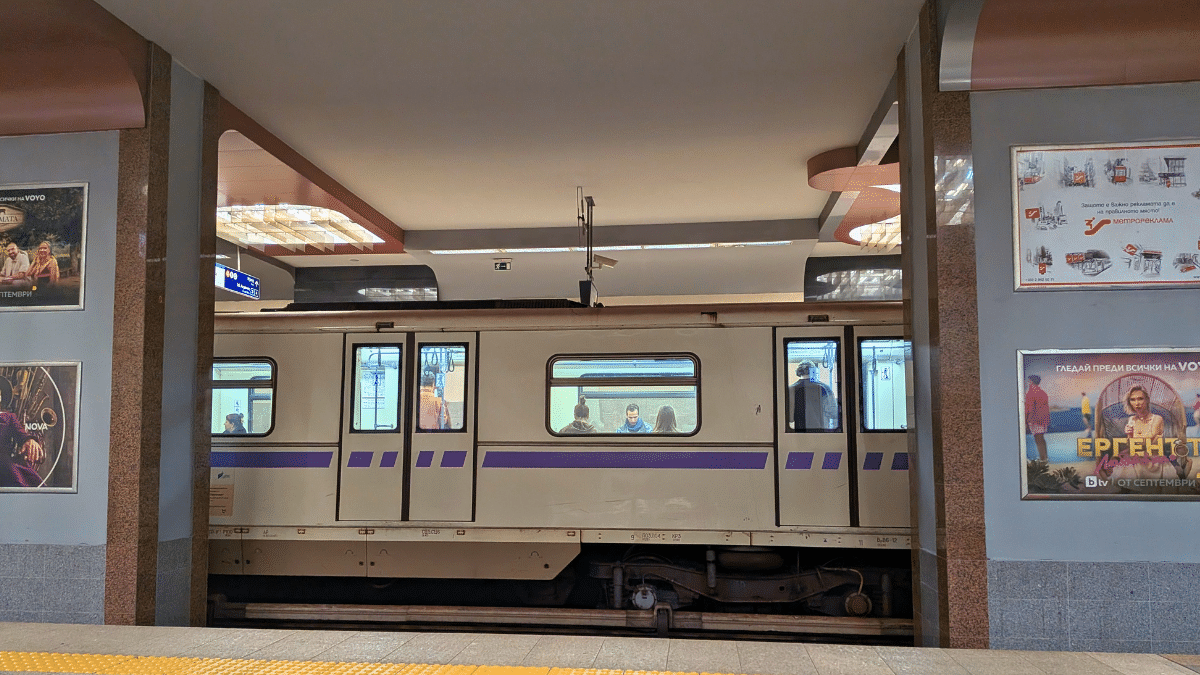
Instead, I walked around (Sofia is pretty walkable!) and I used the metro. While the metro’s infrastructure doesn’t seem the most modern, it accepts international contactless payments – I just needed to tap on with my Monzo card.
I loved my one day in Sofia, and I definitely want to return to see more of the city and of Bulgaria!
