
From late 2025, UK travellers heading to European Union and Schengen Area countries will face new border systems.
These are being introduced for security and data tracking across Europe and will affect everyone entering from outside the EU, including British citizens.
Two new systems are being rolled out:
- the Entry/Exit System (EES) — coming in from 12 October 2025
- the European Travel Information and Authorisation System (ETIAS) — expected to launch in late 2026
Here’s what each involves, how it affects UK passport holders, and which countries are included.
Reminders when travelling to the European Union
Make sure your passport has at least three months’ validity remaining on the date you plan to leave the EU. Border officials can refuse entry if your passport is too close to expiry, even if it’s still technically valid.
Arrange comprehensive travel insurance that includes medical cover and repatriation. Healthcare costs can be high in some EU countries, and insurance ensures you won’t face large bills in an emergency.
Carry a UK Global Health Insurance Card (GHIC) if you have one, as it can reduce healthcare costs in the EU. It’s not a replacement for insurance, but it can make medical care cheaper or even free in some situations.
Be aware of mobile roaming charges, which can be high outside the UK. Many UK mobile providers no longer include free EU roaming, so check your plan before you travel to avoid unexpected costs.
Be aware of rules and regulations in the EU — now that the UK is no longer a member, they may differ from what you’re used to. For example, UK-licensed poker sites might not be legal in the country you’re visiting, so always check local laws before playing.
Entry/Exit System (EES)
EES will replace manual passport stamping with a digital record. It will automatically log when and where you enter and leave the EU/Schengen zone.
When it launches:
- On your first visit after EES starts, you’ll need to:
- scan your passport at an automated gate or with a border guard
- have your fingerprints taken
- have a photograph of your face captured
- scan your passport at an automated gate or with a border guard
- On subsequent trips, you’ll just scan your passport and may be asked for a fingerprint or photo check.
- Children under 12 will be photographed but not fingerprinted.
- This will apply whenever you enter the Schengen Area, whether by plane, ferry, train or car.
- The system starts on 12 October 2025 and will be phased in, with full rollout by 10 April 2026.
EES will track how many days you spend inside the Schengen Area to ensure you don’t exceed the 90 days in any 180-day period rule that currently applies to British citizens.
ETIAS
ETIAS is not a visa. It’s a pre-travel authorisation for people from visa-exempt countries, including the UK.
Once it launches (expected in late 2026):
- You’ll need to apply online before travelling.
- It will cost €7 (free for under-18s and over-70s).
- Most applications will be processed within minutes, but some could take a few days.
- Once approved, an ETIAS is valid for 3 years (or until your passport expires).
You’ll need to have an approved ETIAS before boarding your flight, ferry, or train to the EU/Schengen Area. It will be checked electronically by carriers.
Which countries these rules apply to
Both EES and ETIAS will apply when you enter any of these Schengen Area and associated states:
- 🇦🇹 Austria
- 🇧🇪 Belgium
- 🇭🇷 Croatia
- 🇨🇿 Czechia
- 🇩🇰 Denmark
- 🇪🇪 Estonia
- 🇫🇮 Finland
- 🇫🇷 France
- 🇩🇪 Germany
- 🇬🇷 Greece
- 🇭🇺 Hungary
- 🇮🇸 Iceland
- 🇮🇹 Italy
- 🇱🇻 Latvia
- 🇱🇮 Liechtenstein
- 🇱🇹 Lithuania
- 🇱🇺 Luxembourg
- 🇲🇹 Malta
- 🇳🇱 Netherlands
- 🇳🇴 Norway
- 🇵🇱 Poland
- 🇵🇹 Portugal
- 🇸🇰 Slovakia
- 🇸🇮 Slovenia
- 🇪🇸 Spain
- 🇸🇪 Sweden
- 🇨🇭 Switzerland
Microstates and territories applying Schengen rules (no separate border checks):
- 🇲🇨 Monaco
- 🇸🇲 San Marino
- 🇻🇦 Vatican City
- 🇦🇩 Andorra
These microstates don’t issue their own visas and are treated as part of the Schengen Area for border control, so EES entry/exit registration and ETIAS pre-authorisation will also apply when you enter via their surrounding countries.
European countries you won’t need EES or ETIAS for
🇮🇪 Ireland
Ireland is part of the Common Travel Area, so UK citizens can travel freely with no passport controls, including driving between the Northern Irish/ Irish border.
Dublin is packed with things to see, from the Book of Kells at Trinity College Dublin to the historic cells of Kilmainham Gaol.
On the west coast, the Cliffs of Moher rise 214 metres above the Atlantic, while the Ring of Kerry winds through mountain passes and lakeside villages.
You can also take the ferry to Inis Mór in the Aran Islands to walk or cycle past Iron Age forts and sea cliffs.
🇨🇾 Cyprus
Although it’s in the European Union, Cyprus isn’t yet in the Schengen Area.
This means that you won’t need to go through these checks initially, but may need to in a few years.
Split into two, the Greek and Turkish sides (you can travel between them, although most tourists visit the Greek side), Cyprus is home to gorgeous beaches with ancient ruins and Byzantine churches.
Around Paphos you can see the Tombs of the Kings and intricate mosaics at the House of Dionysus, while Ayia Napa has lively nightlife and sandy beaches.
The Troodos Mountains are dotted with painted monasteries like Kykkos Monastery and quiet stone-built villages.
🇹🇷 Türkiye
Türkiye spans Europe and Asia, with most visitors heading to its Mediterranean and Aegean coasts! But its main city, Istanbul, is one of my favourite in the world.
Here you’ll find the Hagia Sophia, Topkapi Palace and buzzing bazaars, while ancient ruins line the coast from Ephesus to Side!
The beaches around Antalya and Bodrum are backed by mountains, and inland Cappadocia has rock-cut churches and cave hotels scattered across its volcanic valleys.
Türkiye is a huge country that you could spend a lifetime exploring, and at the time of writing its visa-free for Brits for up to 90 days!
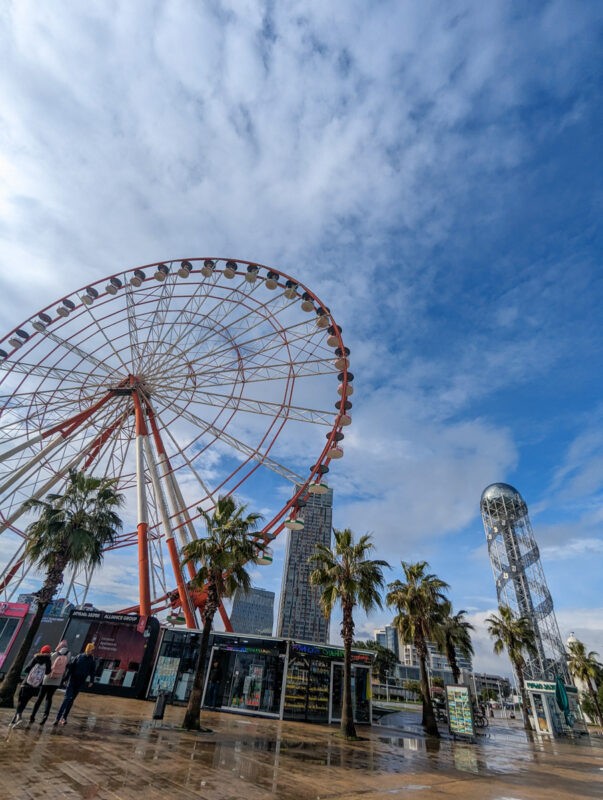
🇬🇪 Georgia
Georgia sits at the crossroads of Europe and Asia. It’s home to mountain scenery and deep history and wine culture. And, Brits can visit for a year with no visa!
In Tbilisi, you’ll find sulphur bathhouses, the Narikala Fortress and cobbled lanes filled with wine bars.
The Kazbegi region offers alpine hiking to Gergeti Trinity Church, while Mestia in Svaneti is known for medieval stone towers.
On the Black Sea, Batumi is home to beaches, Art Nouveau buildings and a lively nightlife scene.
🇲🇪 Montenegro
Montenegro’s compact size makes it easy to explore! It’s not currently in the EU or Schengen, and Brits can visit without a visa for up to 90 days in any 180-day period (the same rules as Schengen, but its not related to Schengen at all).
The walled town of Kotor sits on a fjord-like bay backed by steep mountains, while the Riviera around Budva has beaches and Venetian architecture.
South of there, Ulcinj has long sandy beaches and Ottoman landmarks. Inland, Durmitor National Park has glacier lakes, deep canyons and some of the Balkans’ best hiking.
🇷🇸 Serbia
Like Montenegro, Serbia also has the “90 days in 180 days” rule. In this country, you’ll find the buzzing capital Belgrade, which has the hilltop Belgrade Fortress, a vibrant café scene and riverfront nightlife.
The second city, Novi Sad hosts the huge EXIT Festival at Petrovaradin Fortress each summer.
Vineyards surround the historic town of Sremski Karlovci, and monasteries dot the rolling hills of the Fruška Gora region.
🇦🇱 Albania
Albania has Adriatic and Ionian beaches that stay far quieter than nearby Greece or Croatia.
The clear waters around Ksamil and Sarandë sit close to the ancient ruins of Butrint.
Inland, the Ottoman stone houses of Gjirokastër and the alpine trails in Theth and Valbona draw hikers in summer.
Brits can visit 90 days in a 180 day period.
🇧🇦 Bosnia and Herzegovina
Bosnia and Herzegovina is home to Ottoman, Austro-Hungarian and Balkan heritage. Sarajevo has markets, mosques and the historic Latin Bridge, while Mostar is known for its rebuilt Ottoman bridge, the Stari Most.
Nearby are waterfalls at Kravica and traditional villages in the Dinaric Alps. These are all within easy reach of Croatia (which is now in the EU and Schengen).
Like other Balkan nations, Bosnia has a 90 days in 180 visa policy.
🇽🇰 Kosovo
Brits can visit Kosovo for up to 90 days. While the country is recommended by many, it’s not an official UN recognised country and you’ll need to be careful if crossing borders here.
Still, the country’s worth a visit. Pristina has Ottoman mosques, modern galleries and vibrant coffee shops, while Prizren is filled with cobbled lanes and medieval stone bridges beneath a hilltop fortress.
The Accursed Mountains offer multi-day hiking routes linking remote villages and take in the best of Balkan landscape!
You can visit Kosovo for 90 days without a visa, which can be extended.
🇲🇰 North Macedonia
North Macedonia is home to Ottoman architecture, mountains and lakes – it’s a really underrated travel destination!
Skopje has Ottoman-era bazaars, Roman ruins and a fortress overlooking the Vardar River, while Ohrid sits on a clear mountain lake dotted with Byzantine churches such as Church of St. John at Kaneo.
National parks like Mavrovo National Park surround the main towns.
North Macedonia also offers 90 day visa-free entry.
🇲🇩 Moldova
Moldova is Europe’s least-visited country, and for that reason it’s on my list! Brits can get up to 3 months visa free.
I’ve heard that Chișinău has leafy parks, grand Soviet-era boulevards and wine bars pouring local vintages. The underground cellars of Cricova stretch for over 100km, while the clifftop cave monastery at Orheiul Vechi is one of the country’s most impressive sites.
I’ll make it one day!
🇦🇲 Armenia
Armenia pairs dramatic mountains with ancient heritage.
Yerevan has Soviet architecture, lively cafés and views of Mount Ararat, while medieval monasteries like Geghard Monastery and Tatev Monastery cling to cliffs across the countryside.
Lake Sevan is a popular summer getaway, with beaches, walking trails and fresh local food.
Brits can visit for up to 180 days in a year with no visa.
While the new rules are different, it’ll be easy enough to get to grips with when the changes do happen. Plus, there are so many other European countries to explore as well!
