
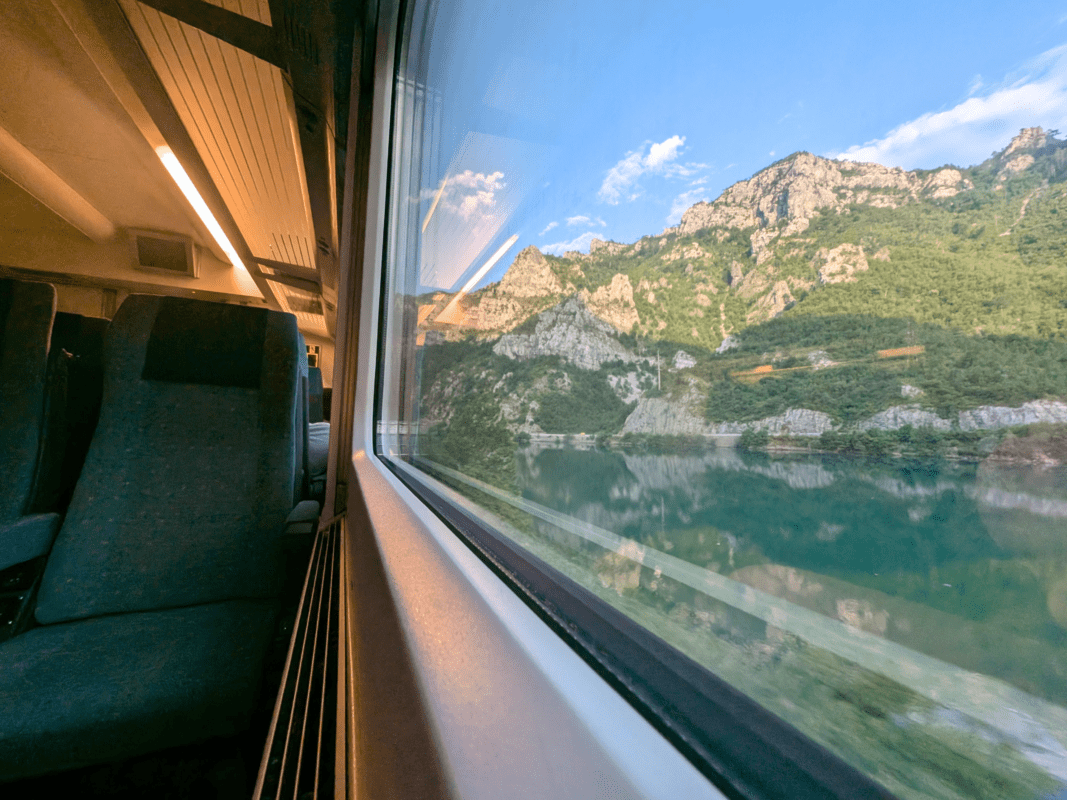
The Sarajevo to Mostar train is a two-hour scenic journey that costs just €6. Although my train was delayed by nearly an hour, I loved gazing over the Neretva River and Bosnian Mountains on this journey between the nation’s two tourist hotspots.
In fact, when I was planning my trip around the Balkans and was wondering how to get from Sarajevo to Mostar, train was always my number one option. I’d had some conflicting information about whether it was actually running (even a local tour guide said it might be running at a different time!) so I travelled to the station not sure what to expect.
Let’s go into the train and what taking it was like in this post!
About the train
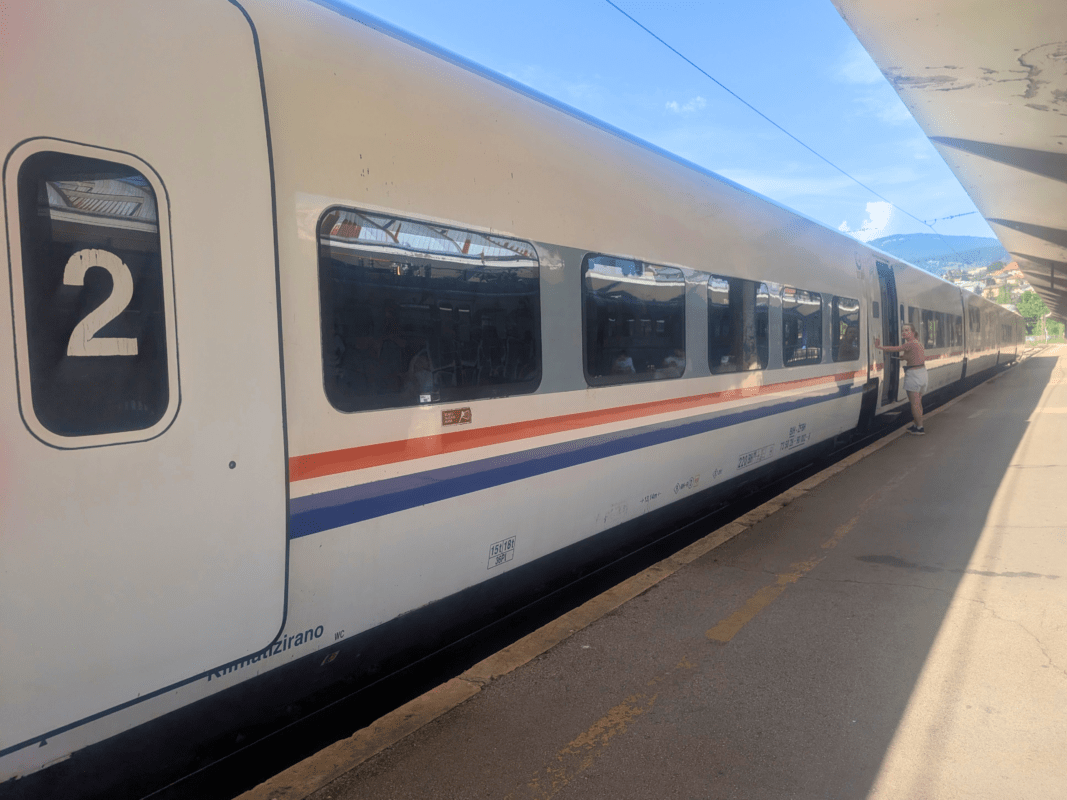
- 💶 Price: it costs around €6 one-way. I used an Interrail pass as I had days to use. However, I wouldn’t recommend doing this unless you do have days you need to use, as the train doesn’t cost much and it’s not the most effective way to make the most out fo your interrail pass.
- ⏱️ Duration: it’s scheduled for two hours, but it was almost three for me!
- 🔁 Frequency: there are two trains per day, one in the morning and one in the evening.
- 💵 Payment: bring cash to pay at the station.
About the trains in Bosnia and Herzegovina
This route, and many in Bosnia and Herzegovina, have Austro-Hungarian origins. It was originally a narrow-gauge railway which was constructed to link Sarajevo to the Adriatic, and then rebuilt to standard gauge in the 1960s under Yugoslavia. This compares to the Belgrade to Bar train that I took a few days before, which only initially opened under Yugoslavia!
But during the Bosnian War, which ran between 1992 and 1996, Bosnia lost around 35% of it rail network. Sarajevo was completely cut off by rail during the siege of the city and the line I travelled on didn’t ropen until July 1996.
After the war, most railway networks in the Balkans were forgotten, with money going to road and rail links instead. The average speed of trains today is just 50km per hour.
That said, there’s been some change on this line between Sarajevo and Mostar. Since 2017, it has run on Spanish-built Talgo trains, which are more modern and have AC!
How I Found Out About the Sarajevo to Mostar Train
I’d seen photos of the glorious Sarajevo to Mostar train, and had added it to my Balkans itinerary, as I knew I’d be travelling between the two cities.
From a quick Google search, it looked like there was a Sarajevo to Mostar train departing at 16:50. But when I spoke to my partner the night before, he advised me “make sure you have a back up plan. The train wasn’t running when I was there”. Granted, his visit to Sarajevo had been a decade before, and the city had changed a lot since then, so I wasn’t too concerned.
“Is the train definitely running?” I asked a local guide who I got chatting to in the morning. “Yes, but I’m not sure of the time” he replied. “Sometimes the time changes and it doesn’t always say online”.
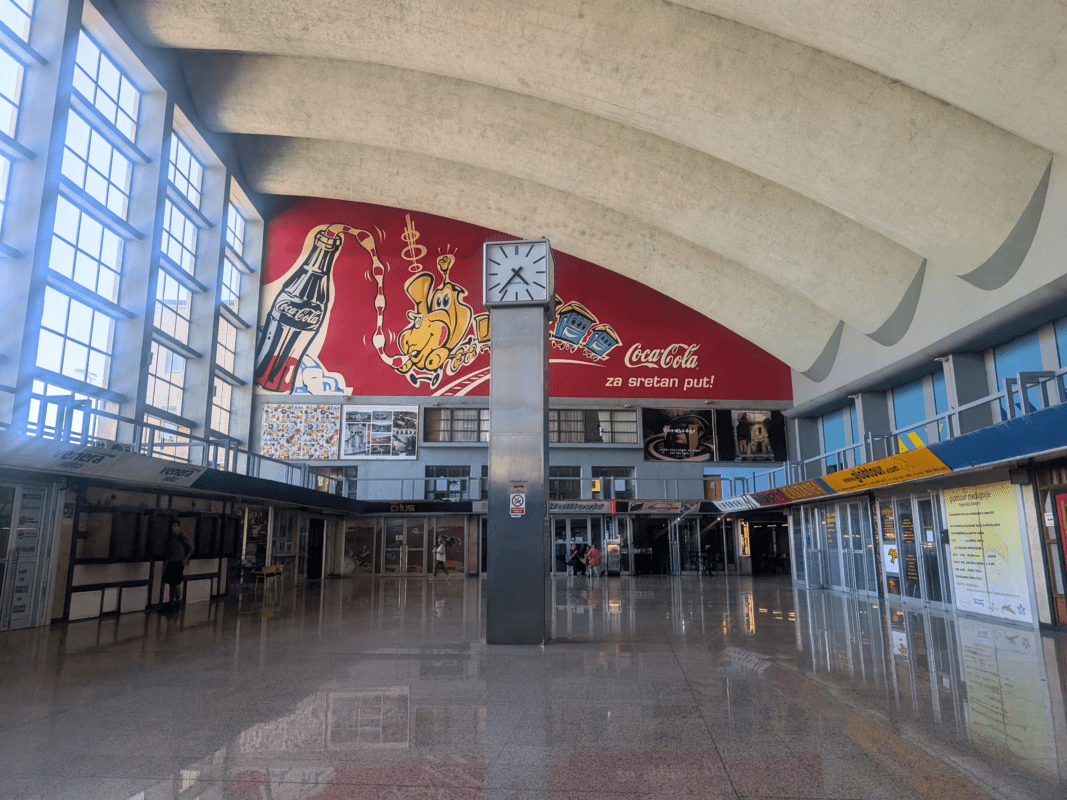
Still a bit unsure about if I’d be taking the train, I headed there early, arriving just after 16:30. While the station was much larger than Pristina in Kosovo’s (I’d taken the Pristina to Peja train from here earlier in my trip), it still looked semi-abandoned. Trains depart from here a few times per day, but considering it’s the main station in the country, it’s a far cry from London St Pancras or Paris Gare du Nord.
A timetable was stuck to the door, and I studied it to find my train. “Sarajevo to Čapljina, 16:46” I read. Four minutes earlier than I thought, but not a problem for me to get my train (fortunately I’m always at stations early!).
Arriving at the Station
The station itself is out of the old town, but I took tram line number 1 to the main road just south of the station (9 minute walk away). Lines 5 and 3 also call there. The tram costs 1.80 BAM and I’d recommend having exact cash to pay the driver (I’d also confirm with a local that the price is still 1.80 BAM when you’re travelling).
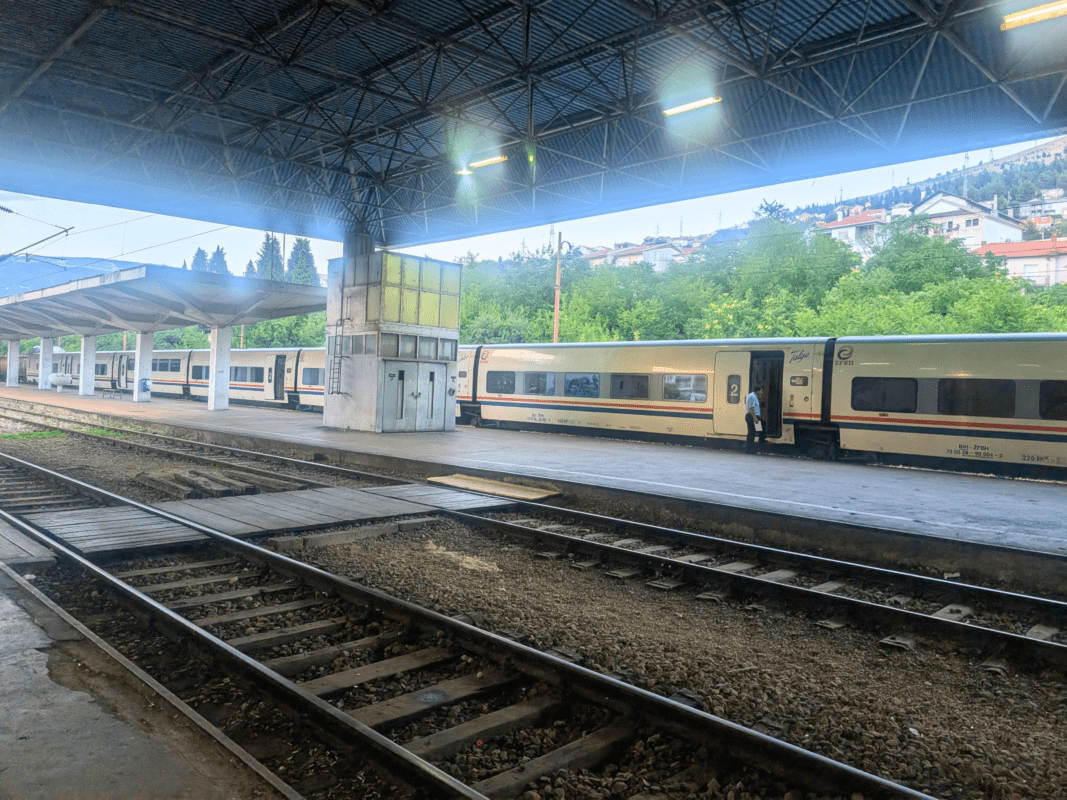
It’s a bigger station than Pristina’s, and I got the sense that a lot more trains used to run from here – but now, most of the station is dated and faded. I made my way to platform three, where my train was departing from – struggling up the huge flight of stairs to get there!
On one side, there was an old, Yugoslavia-era train bedecked in graffiti, but a more modern Spanish Talgo train was on the other. This was mine!
What Was the Train Like?
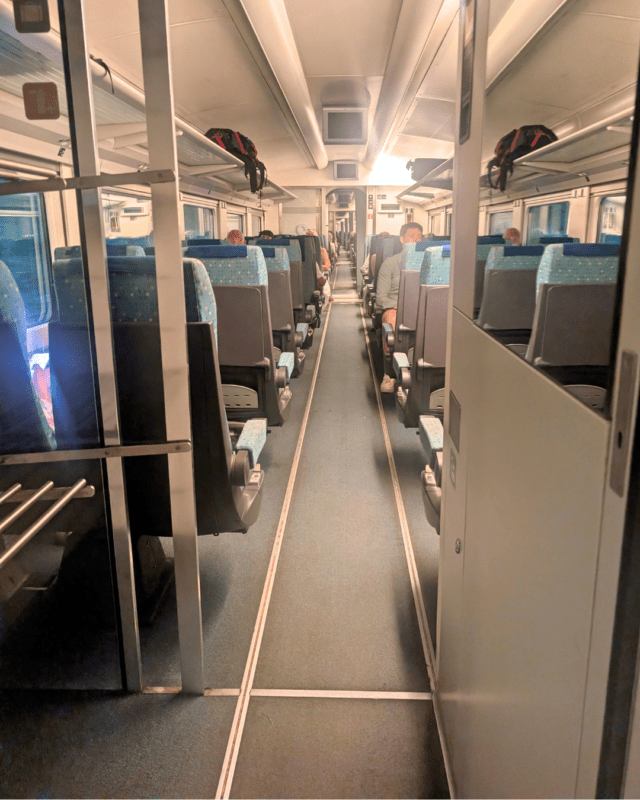
The train only had a small step to get on board, which was much easier than the Kosovan and Montenegrin trains I’d already been on board on this trip. There was lots of baggage storage (much more than the modern Serbian train I’d taken from Belgrade to the Montenegrin border!) and AC – it wasn’t the strongest, given the 40 degree temperatures outside, but it did crank up a little once we got going.
Seats were in a 2-2 configuration and I’d been advised to sit on the left side, facing forward, for the best views – although sometimes the better view was on the right hand side too!
The Journey from Sarajevo to Mostar
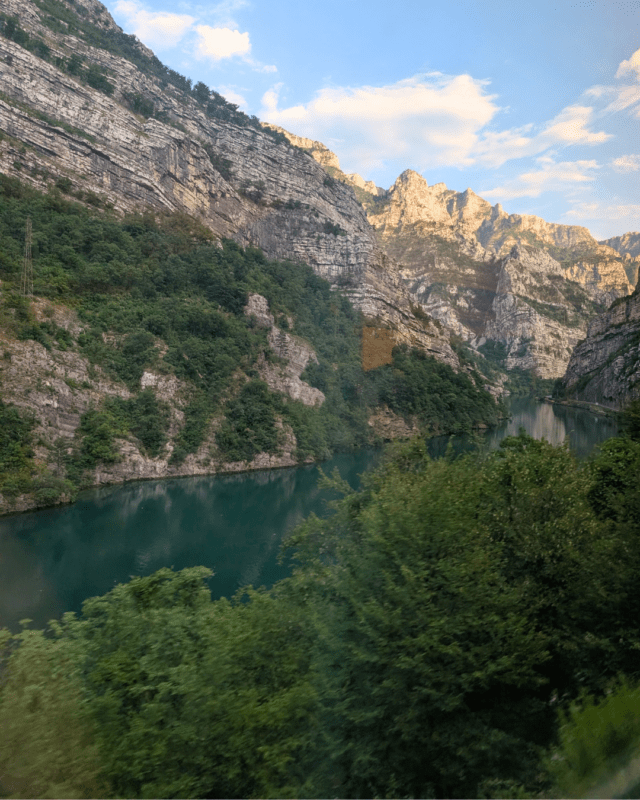
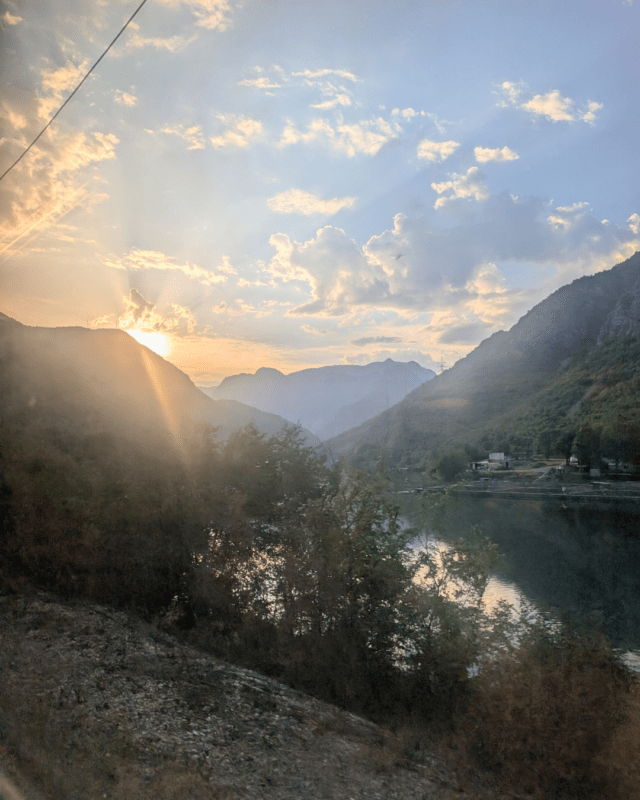
From Sarajevo, the railway line heads in a southwesterly direction. It follows the Neretva River for most of the journey, which means there are incredible scenes like the photos below:
We stopped for a while at Konjic Station; like usual, the delay wasn’t communicated (and if it was, it wouldn’t have been in English!). I suspected that it was because of the single-track line after the station, and that we were waiting for a train in the other direction. This ended up being true, and we got moving shortly after a train appeared from the other way!
We were delayed for about 20 minutes at Konjic, and then ended up around an hour late overall. But the scenes made it worthwhile!
Tips for taking the Sarajevo to Mostar train
- Bring food if you need it – I ended up being delayed and not arriving into Mostar until nearly 8pm, which is after my usual dinner time! There’s no catering on board, although there is interestingly a “restaurant car” that’s not used.
- You can buy tickets online – technically, you should be able to secure an e-ticket on the Bosnia Railways website, but the site didn’t load for me. There are always tickets available at the ticket office, its staffed hours are 9-5. I’d leave plenty of time if I was buying a ticket at the station (or ideally get one a day or two before), in case I arrived and staff were on a break.
- You can use an Interrail/ Eurail pass – this is what I did, but only because I had spare days. All I needed to do was show the pass, seat reservations are not mandatory for this route.
Arriving in Mostar
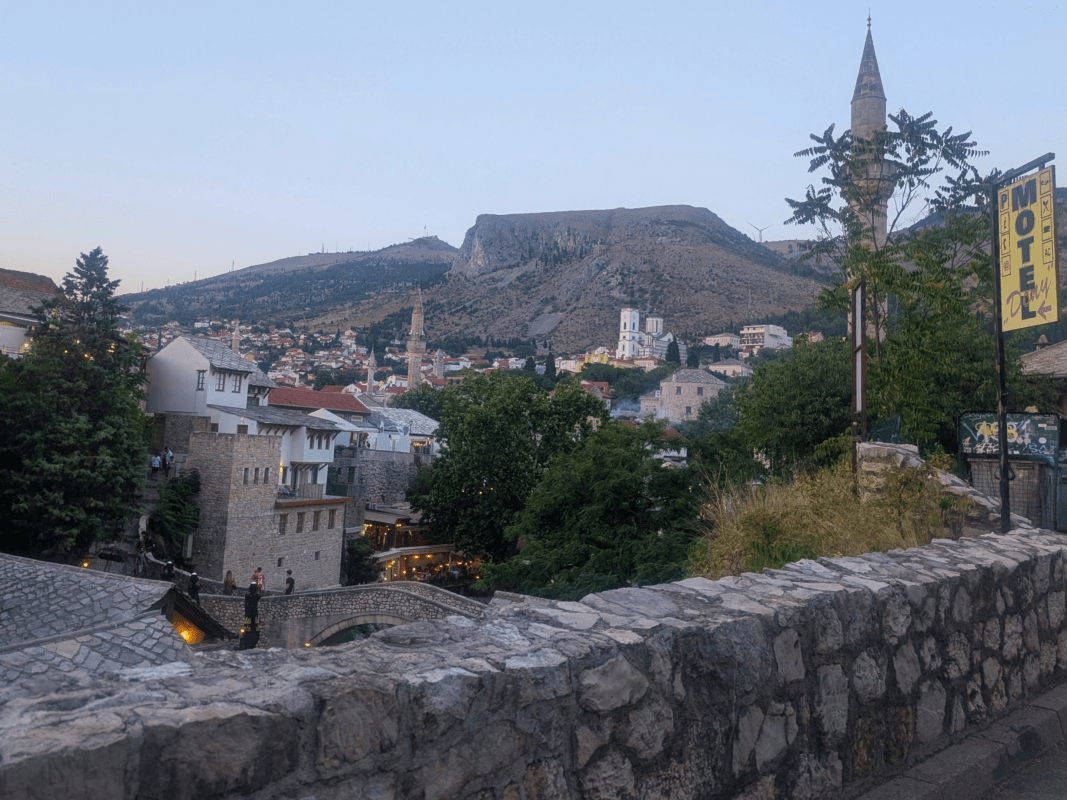
Finally, we arrived in Mostar an hour late. There’s a big flight of stairs to go down to the entrance hall (which was fun with the huge bag I’d decided to lug around the Balkans!), and then I headed outside to get a taxi.
There were plenty of taxis available, and I was quoted 10 euro for the trip to the old town. I think that was a bit expensive, but it was similar to how other taxis were priced in the region. I’d actually originally planned to walk, but the delay threw me off!
It’s around a 30 minute walk to the old town; if you have a wheeled suitcase you won’t be able to take it over the Old Bridge, as there are horizontal rails on it. There are other bridges you can cross though!
Where to stay in Sarajevo and Mostar
I stayed in two lovely places in Bosnia and Herzegovina!
In Sarajevo, Halvat Guesthouse was a friendly, quiet guesthouse with a lovely owner, Valida. The room was spotless and cosy, decorated in boutique-style. Valida was really chatty, invited me to have coffee with her and helped me with recommendations for my stay in Sarajevo! It’s right by the Ottoman Old City, as well. Click here for more information.
In Mostar, I stayed in Pansion Infinity. This was a contrast to Sarajevo, as I didn’t meet the owners at all – although they left self-check in instructions and were quick to respond on Whatsapp! The room was much nicer than I was expecting, with a rain shower, really comfy bed and strong AC. It was a ten minute walk to the Old Bridge. Click here to read more about it.
Where Next?
After Mostar, I headed to Split in Croatia, where I had a couple of days of relaxing before leaving the Balkans!
I’ll be writing a full things to do in Mostar post and will update here when it’s live! In the meantime, check out my things to do in Sarajevo post!
Or, see all my Balkans posts here or my Balkans YouTube videos here.
