
Spain is one of my favourite countries to travel around by train. Although there aren’t any sleepers, it has one of the world’s best high-speed rail networks, largely plied by Renfe AVE trains (although other brands also operate now too).
It’s also not that difficult to reach from London on a no-flights trip. You can get to Barcelona in a day via Paris, and here’s a list of other cities that are fairly well-connected.
I’ve taken the high-speed trains many times, and have never had any issues. The slower, regional trains are another story, however – I did a Spain by rail trip last year and 4/4 of my trains were severely delayed or cancelled!
So I wouldn’t recommend relying on regional trains too much – but it’s easy to reach many cities by high-speed train. Here’s a list of them!
Madrid
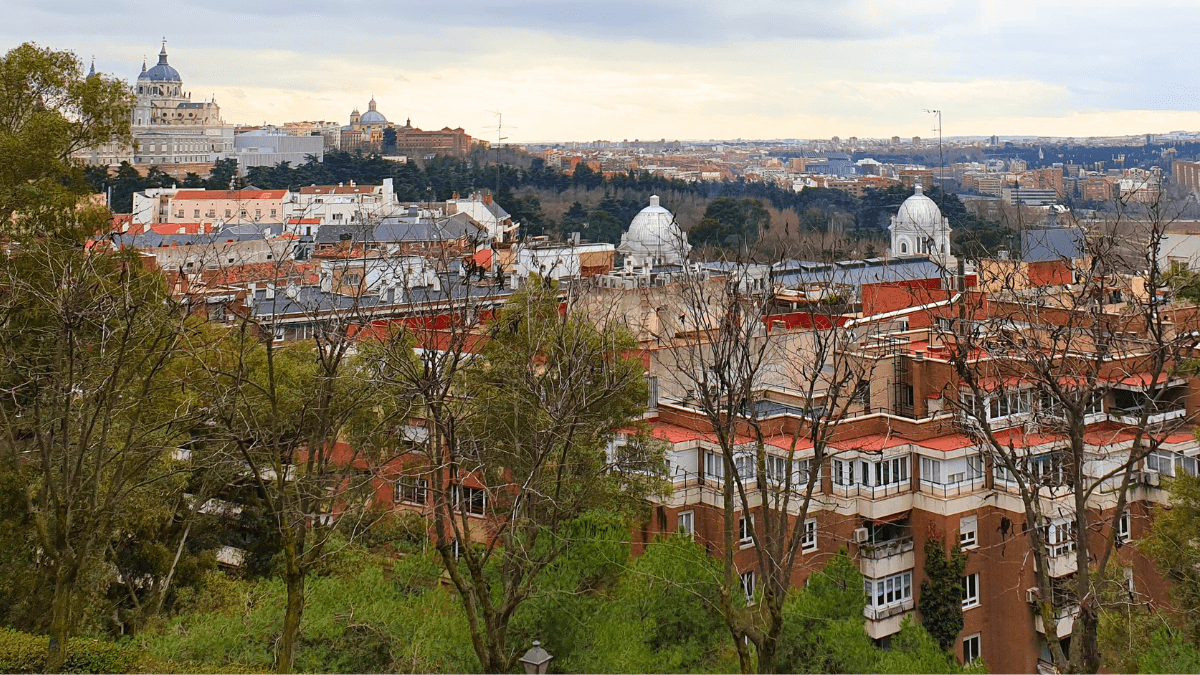
As Spain’s rail hub, Madrid is the easiest place to start a train trip around the country. It’s also in an advantageous position at pretty much the middle of the country!
Madrid is often forgotten about, but there’s still plenty to do here. I’ve been twice (and passed through a few times).
Trains aren’t bad prices either! Madrid to Barcelona train tickets can cost as little as 25.
You can walk through the grand boulevards around Gran Vía, visit the Prado Museum, or spend an afternoon in Retiro Park watching rowboats drift across the lake. Areas like Malasaña and Lavapiés feel completely different to the formal architecture around Plaza Mayor and the Royal Palace.
Madrid’s two main long-distance stations are Atocha and Chamartín. Atocha handles many southern and eastern routes, while Chamartín increasingly serves northern and newer high-speed services. Both are connected by Cercanías commuter trains and the metro.
Here are just some of the cities you can reach by high-speed train from Madrid:
- Seville
- Córdoba
- Málaga
- Valencia
- Alicante
- Barcelona
- Zaragoza
- Toledo
All in less than three hours – some, like Toledo and Segovia, are even day trip-able!
Barcelona
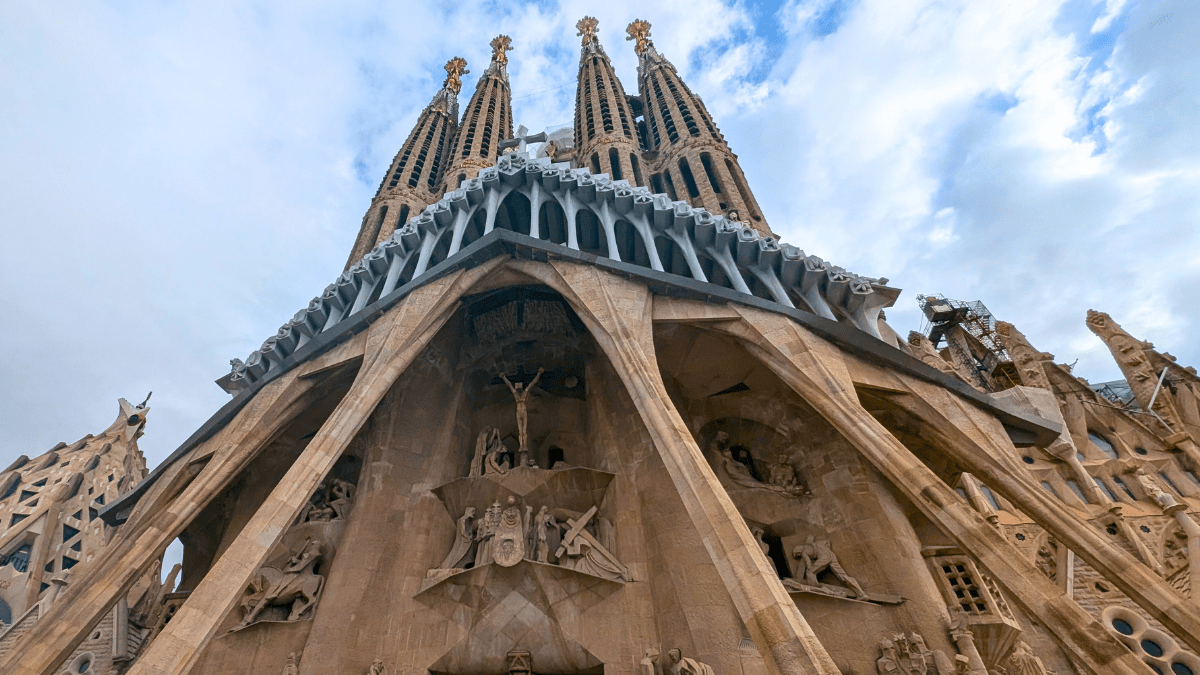
Like I mentioned, Barcelona is where you’ll start in if you’re travelling from the UK to France by train.
Most long-distance trains arrive at Barcelona Sants station, which has direct services to Madrid, Zaragoza, Valencia, Alicante, Seville and Málaga. International trains to France also depart from here!
Barcelona doesn’t really need an introduction, but just some of the things to do here include exploring the Gothic Quarter, walking along Las Ramblas (watch out for pickpockets), and of course seeing Antoni Gaudí’s architecture – from the Sagrada Família to Casa Batlló to Park Güell.
If you’re basing in Barcelona, you could take local trains elsewhere in Catalonia, including Sitges, Tarragona, Girona or Figueres.
Seville
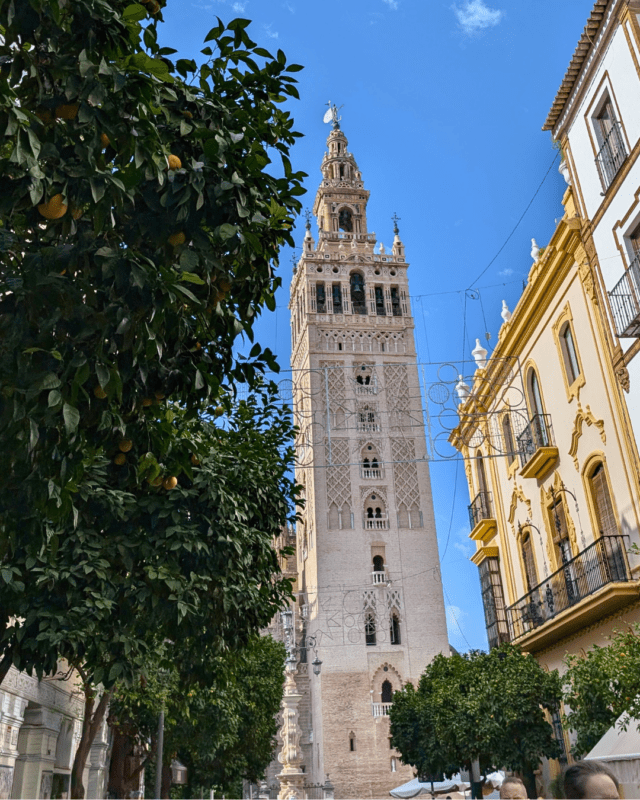
Seville was Spain’s first city connected to the AVE high-speed network, and it’s still one of the country’s best train destinations!
The journey from Madrid takes around 2 hours 40 minutes – compared to drive time which is well over five hours!
Santa Justa station sits just outside the historic centre, with regular services to Madrid, Córdoba, Málaga, Granada, Cádiz and even some to Barcelona.
There’s a reason why Seville is one of Spain’s most visited cities. Orange trees line the streets, temperatures regularly climb above 35°C in summer (and are mild in winter!) and many buildings still reflect centuries of Islamic influence.
The Real Alcázar boasts intricate Mudéjar architecture and the enormous cathedral dominates the centre of the city.
If you visit in peak summer, early morning sightseeing is much more comfortable! Spring and autumn tend to be ideal for walking around the city.
Córdoba
Córdoba sits directly on Spain’s main southern high-speed line, so it’s one of the easiest historic cities to add to a rail itinerary. Trains from Madrid can take under two hours, while Seville is around 45 minutes away.
Like Seville, Córdoba was once Islamic, which means that the city’s biggest landmark is the Mezquita-Catedral, originally built as a mosque during Islamic rule before later becoming a cathedral. Nowadays, it has Christian chapels and Renaissance additions but still strong indications of its Islamic origins.
Córdoba is also famous for its flower-filled patios that bedeck many buildings.
Córdoba station is modern and well connected, with AVE and Avant trains linking the city to Madrid, Málaga, Seville, Granada and Barcelona. You could visit it as a stop between Madrid and Seville.
Valencia
Sitting by the Balearic Sea, Valencia is easy to reach from Madrid and Barcelona.
Madrid to Valencia trains can take under two hours and arrive at Joaquín Sorolla station. From there, shuttle buses connect with Estació del Nord, Valencia’s beautiful historic station near the city centre.
One side of Valencia feels deeply traditional, especially around the old town and the Central Market. The other side feels futuristic. The City of Arts and Sciences stretches along the former riverbed of the Turia, with massive white structures housing museums, an aquarium and performance spaces.
The Turia Gardens themselves are one of the city’s best features. After devastating floods, the river was diverted and the old riverbed became a huge green space cutting across the city.
Valencia is also the home of paella, which originated in the surrounding region! Many restaurants around Albufera and the beaches south of the city cook up traditional versions over wood fires.
Train connections southward toward Alicante are also improving, so you can city-hop along the Mediterranean coast!
Zaragoza
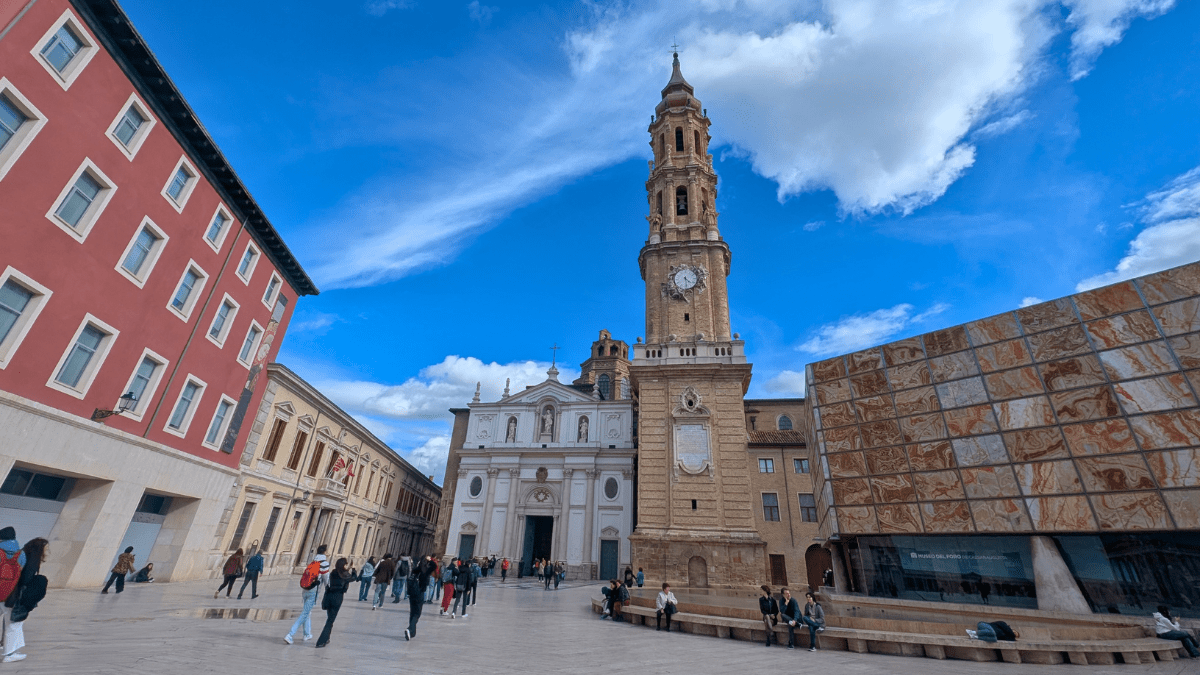
Zaragoza is often overlooked by international visitors, despite sitting directly between Madrid and Barcelona on Spain’s busiest high-speed route. Journeys from either city can take around 90 minutes.
Because many travellers simply pass through, the city often feels more local than Barcelona or Madrid. Yet it has one of Spain’s most impressive basilicas and very substantial Roman ruins. I visited Zaragoza on my last trip to Spain and loved it – here are all my thoughts!
The Basílica del Pilar dominates the skyline beside the Ebro River, with colourful tiled domes visible across much of the city. Nearby, you’ll find remnants of Roman Caesaraugusta, including sections of forum and theatre.
Delicias station is where the high-speed services stop – it sits west of the centre.
Compared with many major Spanish cities, accommodation prices are often noticeably lower too!
Málaga
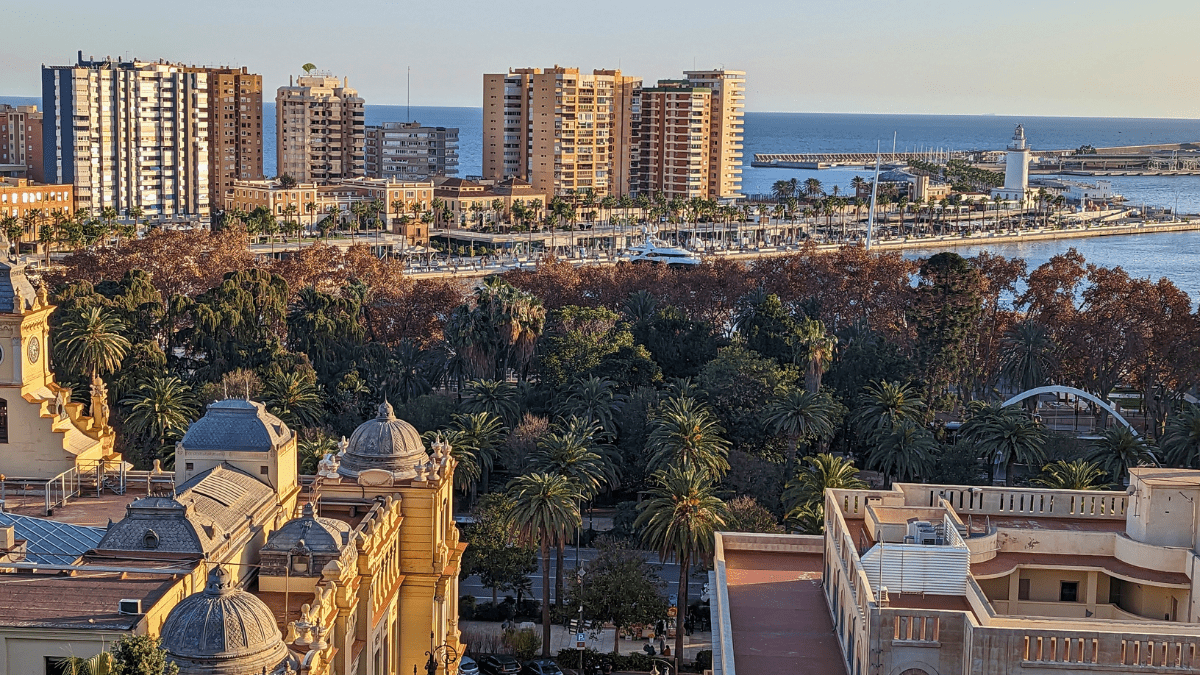
Málaga has transformed from a mainly airport gateway into one of southern Spain’s most visited cities. High-speed trains now connect it directly with Madrid in under three hours, while Córdoba is under an hour away.
María Zambrano station sits close to the centre and links with local Cercanías trains along the Costa del Sol. That makes it easy to visit towns like Fuengirola, Torremolinos or Benalmádena without needing a car!
The city itself has changed rapidly over the last decade. Alongside beaches and resort tourism, Málaga now has a growing museum scene, regenerated waterfront areas and a large pedestrianised centre filled with restaurants and terraces.
The Alcazaba and Gibralfaro Castle overlook the city from the hillside, while the Roman Theatre sits directly below. Around Soho and the port area, you’ll find more contemporary developments and street art.
Summer temperatures can become extremely hot inland, but the coast usually feels more manageable thanks to sea breezes.
I visited Malaga for New Years Eve one year, and loved the history and tapas bars. We were lucky with temperatures around 20°C. While most tourists head straight to the Costa del Sol, I think it’s worth sticking around the southern city!
