
If you’re travelling to Germany, your first thought might be to book a RyanAir flight to Berlin. But, while that’s certainly the fastest – and usually the cheapest – way to get to the European nation, is it really the best?
A collection of cities in northeastern Germany sit just over the Belgian and French borders and are relatively easy to reach from the UK, with just one change of trains (usually in Brussels).
Taking the train is not only better for the environment but it also turns the journey into more of an adventure itself!
With the Eurostar linking London to Brussels and high-speed ICE trains continuing into Germany, you can reach some German cities in around the same time it takes to get through airports, security queues and long transfers from out-of-town airports.
Stations are central and you can watch the landscape change from Kent countryside to Belgian cities and the Rhine Valley all in one journey.
Here are six German cities that are actually straightforward to reach from London by train.
Aachen

Aachen is one of the easiest German cities to reach from London. After taking the Eurostar to Brussels (two hours), you can board a direct train, also run by Eurostar, that crosses into Germany and arrives in Aachen in around 1 hour 10 minutes.
Total journey time can be as low as five and a half hours from London St Pancras.
The city itself sits close to the Belgian and Dutch borders. Its old town centres around Aachen Cathedral, where Charlemagne was buried, and there’s a gorgeous Rathaus. See my guide with things to do in Aachen here.
I visited during Christmas time, when I had the chance to try Aachener Printen, their famous gingerbread-like snack!
You can also visit the tri-country point, where you can be in Brussels, Netherlands and Germany at once!

The trains on this route are modern and spacious, with reserved seating and power sockets. When you change trains in Brussels, sit on the right for views of rolling countryside as the train approaches Germany.
Cologne
Cologne is one of the very best train destinations from London. While there’s no direct train (yet!), journey times are five to six hours.
Take the Eurostar to Brussels, then board a direct Eurostar train to Cologne Hauptbahnhof. Although you need to change trains, it’ll be on one ticket!
When the train arrives, Cologne Cathedral towers directly above the station platforms.
Cologne’s location on the Rhine gives the city a busy, energetic atmosphere. You might find groups of tourists travelling through Germany’s cities, or stopping on a Rhine river cruise. Aside from the iconic cathedral, the city is known for the colourful Fischmarkt area, where riverside bars and outdoor seating line the waterfront.
The Belgian Quarter has independent cafés and street art, and there’s also the chance to take the cable car across the Rhine for panoramic views over the cathedral, railway bridges and skyline. Lastly, Museum Ludwig houses one of Europe’s largest Picasso collections.
The route from Brussels into Germany is also scenic in places, particularly around the Rhine section south of Cologne if you continue further into the country.
Off-peak fares from London to Cologne can occasionally drop below £100 each way, provided you book several weeks ahead.
Düsseldorf
Düsseldorf sits slightly north of Cologne and is another easy city to reach by train from London. Most routes involve the Eurostar to Brussels, followed by a direct service into Germany.
Journey times are usually between five and a half and seven hours, depending on the connection.
The city often gets overlooked, but Düsseldorf has a lively riverside area, one of Germany’s largest Japanese communities and an excellent public transport network. The Altstadt contains hundreds of bars and breweries packed into a compact area near the Rhine.
Frankfurt
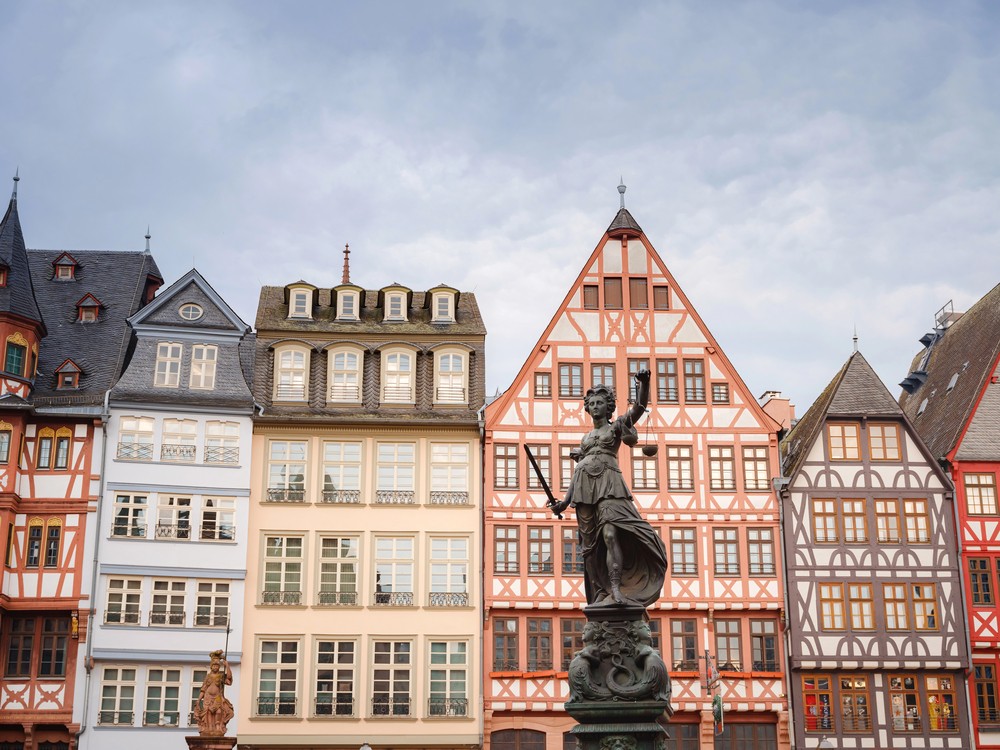
While Frankfurt isn’t on the Eurostar network, Direct ICE trains from Brussels run at high speed into Germany. Total journey times from London are around six to seven hours.
If you’re booking an ICE train after your Eurostar, I’d recommend allowing two hours from your Eurostar arrival, and make sure you have comprehensive travel insurance in case of any very late running services. You can read Eurostar’s delays and cancellations policy here.
Frankfurt has Germany’s largest skyline, filled with glass towers and banking headquarters, but there’s also a reconstructed old town area around Römerberg Square and extensive riverside walking paths along the Main.
Frankfurt Hauptbahnhof is one of Europe’s busiest railway stations, with trains departing across Germany and beyond. You can continue onwards towards Switzerland, Austria or Eastern Germany very easily!
Bonn
Bonn often gets overshadowed by nearby Cologne, but it’s one of western Germany’s most pleasant smaller cities and is easy to reach from London by train!
Bonn does require two changes – you can book a Eurostar all the way to Cologne and then an ICE train. I’d maybe recommend staying in Cologne and doing a day trip to Bonn if you have time on your trip.
Bonn was the capital of West Germany during the Cold War, and several museums linked to post-war German history remain in the city. It’s also the birthplace of Beethoven, whose influence appears throughout the centre!
Train connections along the Rhine Valley south of Bonn are particularly scenic. If you continue further towards Koblenz or Mainz, you’ll pass vineyards, castles and riverside towns almost continuously.
Dortmund
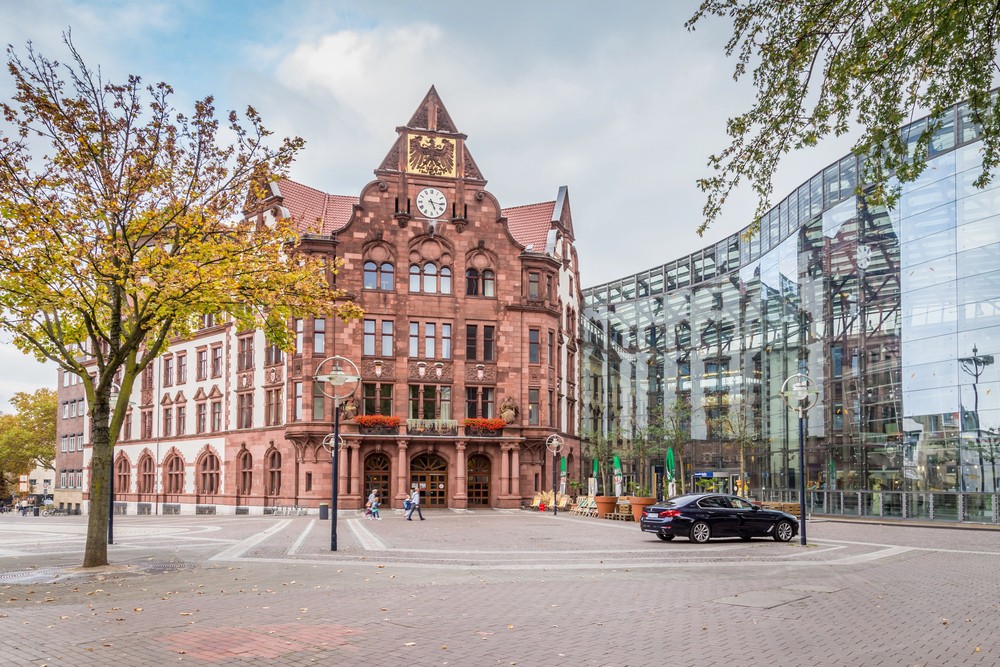
Dortmund is another German city that’s surprisingly easy to reach from London by train!
Most journeys involve taking the Eurostar from London St Pancras to Brussels, before changing onto another Eurostar train to Germany. Journey times are usually around six to seven hours in total, depending on the connection.
Dortmund sits in Germany’s Ruhr region, one of Europe’s largest urban areas, and has excellent rail links across the country! The main station is large but straightforward to navigate, with high-speed trains continuing towards cities like Hamburg, Berlin and Frankfurt.
While the city is best known internationally for football and Signal Iduna Park, there’s more to it than that!
Dortmund has transformed many of its former industrial areas into cultural and leisure spaces. Phoenix See, a former steelworks site turned lakeside district, is now lined with cafés, restaurants and walking paths.
The city also has a strong beer culture, several industrial heritage museums such as Zeche Zollern, which is set in a former coal mine and explores the region’s mining history, and large pedestrian shopping streets around the centre.
If you’re planning a wider Germany rail trip, Dortmund works well as a base thanks to its central location and fast rail connections throughout western Germany!
Click here to read more about Eurostar trains to Germany.
