
I don’t think I’ve ever seen anywhere quite like this, I remember thinking as our minibus navigated the icy road. As far as the eye could see, snow, nearly a metre thick, throttled the landscape like a plush duvet. In the background, the outlines of peaks thrust upward into the milky clouds, but at times it was difficult to see where the land ended and sky begun.
“Maybe Antarctica’s similar? Siberia? Alaska?” my partner Richard offered. But we hadn’t been to any of these destinations in midwinter. And we were further from the polar regions than we are back home in England. We were in the far east of Turkey, around 50 killometres from the city of Kars.
This was the second out of three times I’ve visited Kars, a Turkish city that’s popular with domestic tourists, but barely visited by international tourists. I would say I’d be shocked to find another British tourist who’s been to Kars more than three times, but Rich has too – and only two of those trips have been with me!
My first trip to Kars was in August 2019, when I was travelling from Bali to London without flying. Kars is the terminus of the Eastern Express journey (more on that in a moment), and as I was taking trains and buses across Eurasia, I spent a night in the town before boarding the train to Ankara.
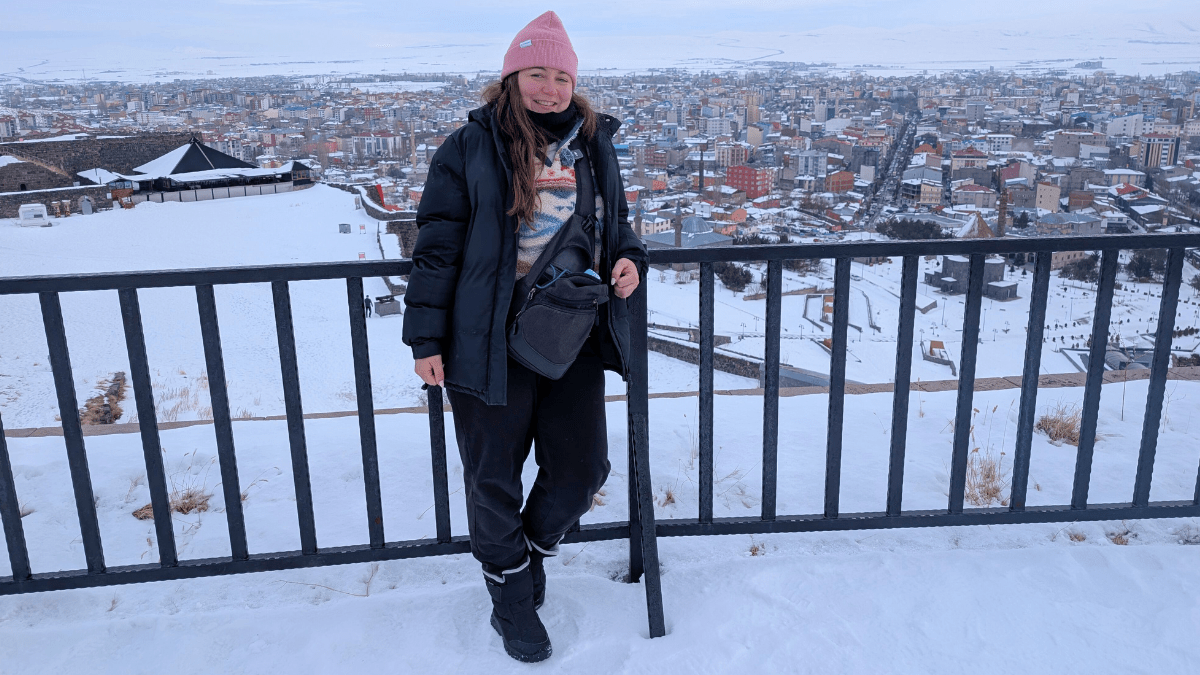
But ask any Turk, and they’ll tell you that Kars is far better in the winter. This region of Turkey sees plummeting temperatures, sometimes lower than -20 degrees. Gleaming white snow transforms the city and nearby Lake Cildir freezes so determindely you can take a horse and carriage across it.
Kars also sits at a crossroads city, close to the Georgian and Armenian borders (and not too far from Iran). This has shaped its history – it was even part of the Russian Empire for 40 years. That said, local geopolitics is witnessed most notably in nearby Ani, once capital of an Armenian Bagatrid kingdom, now located on the hard Turkey/ Armenian border.
There are so many things to do in Kars, yet most international tourists will never visit. But there’s a reason Rich and I have collectively been to this city four times. Here’s my full travel guide to Kars.
Things to do in Kars city
The Eastern Express
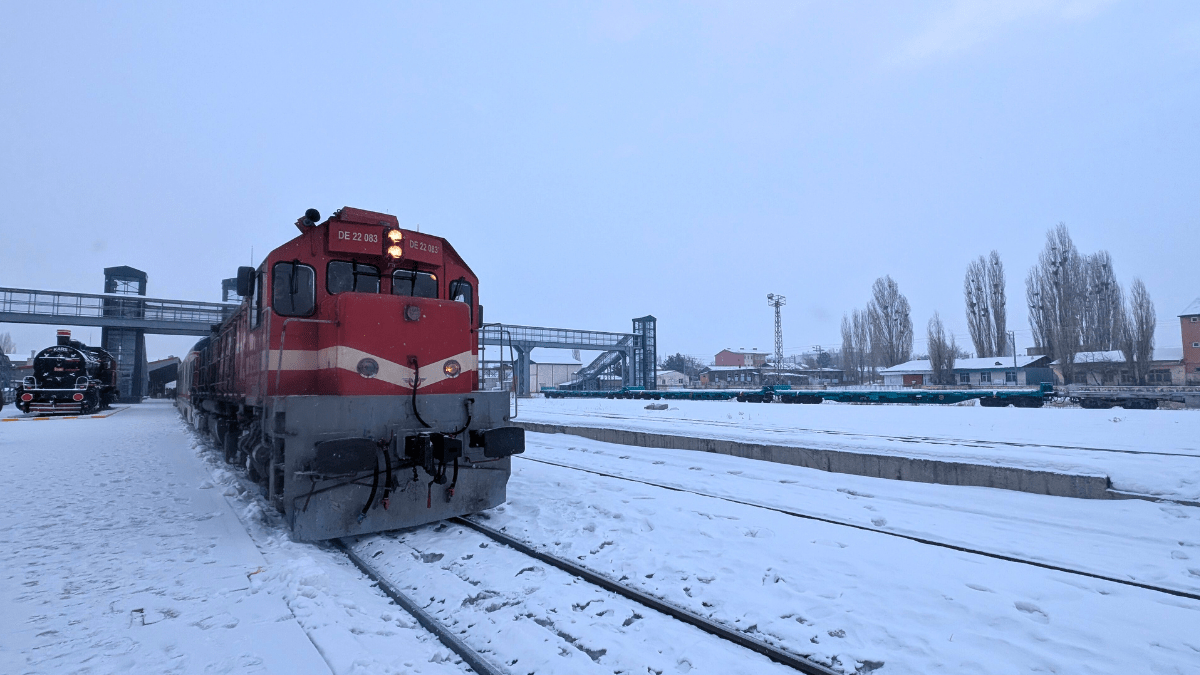
Kars’ position on the terminus of the Eastern Express is the main reason why tourism to the city has boomed in the last few years.
Rich first visited Kars in 2017, me in 2019, and we visited together first in 2024 and then again in 2026. From Rich’s first trip nearly 10 years ago, the city has transformed. And it’s largely due to the Eastern Express, or Dogu Expresi as it’s known in Turkish, becoming viral on social media.
So a trip to Kars probably should include at least part of the Eastern Express, right?
I’ve taken this train three times, and it has pros and cons. It’s probably the most beautiful scenery I’ve ever seen from a train, but getting a sleeper berth can be tricky, and a private cabin is nearly out of the question.
Men and women also can’t share non-private cabins, which resulted in myself having a sleeper berth and Rich having the choice of a sleeper or seat on our recent trip. He opted for a seat rather than have to spend a 30 hours in a cabin with three strangers!
I’ve detailed the whole journey in my Eastern Express post, but if you don’t fancy the whole 30 hour voyage without guarantee of a sleeper berth, here are a few other options you can take to still experience some of the Eastern Express:
- take a high-speed train from Ankara to Sivas, spend the night in Sivas and then take the Eastern Express to Kars, cutting out the need to spend a night on the train. It leaves Sivas at 5am (although is often late) and is scheduled to arrive in Kars at 8pm. Seats are comfy and there is a restaurant car!
- take Eastern Express to Erzurum, the next city along, which has Silk Road architecture and ski slopes. It leaves at 8am daily and arrives at noon. Either spend a night there or take the train back to Kars at 4pm!
- head to the station at 8am on one of your days in Kars and see it depart. It’s not quite the same, but it’s still a glorious way to see the train!
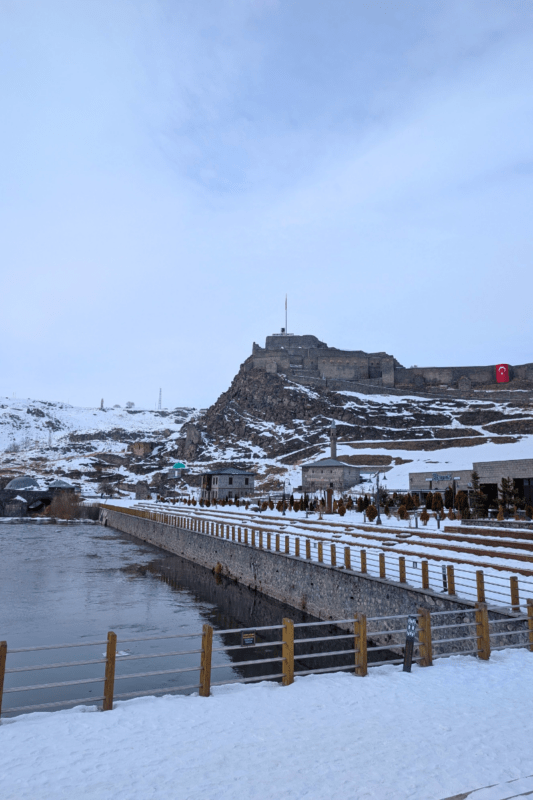
Kars Castle

Kars has always been a border city. Armenians, Georgians, Persians, Russians and Mongols, plus peoples from ancient groups, have frequently passed through this city, some leaving their mark more than others.
Part of the reason why Kars was established in its position was the looming hill from which you can see the city and surroundings. Ancient people resided here first, but the castle was first constructed by the Bagatrid Armenians.
The Kümbet Mosque
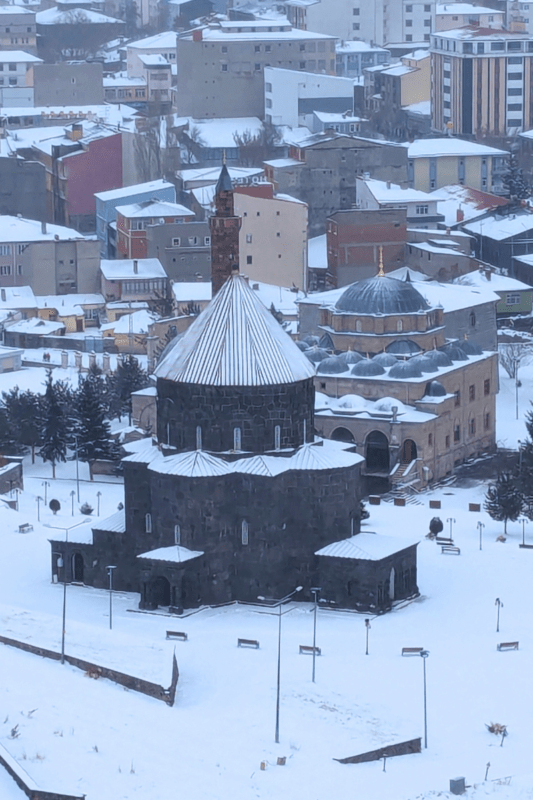
Standing close to the river in central Kars, Kümbet Mosque is one of the city’s most distinctive buildings. From the outside, it does not immediately look like a mosque at all – instead, it looks like an Armenian church.
And that’s how it began life! The building dates to the 10th century, when Kars formed part of the Bagratid Armenian Kingdom. It was originally built as the Church of the Twelve Apostles, and the Armenian architectural style remains clearly visible today.
Like much of Kars, the building has changed identity several times. When the Seljuk Turks gained control of the region, the church was converted into a mosque. During the Russian imperial period in the late 19th century, it became a Russian Orthodox church. When the region returned to Turkish rule after the First World War, it was once again turned into a mosque.
Today it functions as a working mosque, but you can still enter! We got chatting to the lovely caretaker who invited us into the immam’s office for tea.
Kars Fethiye Camii
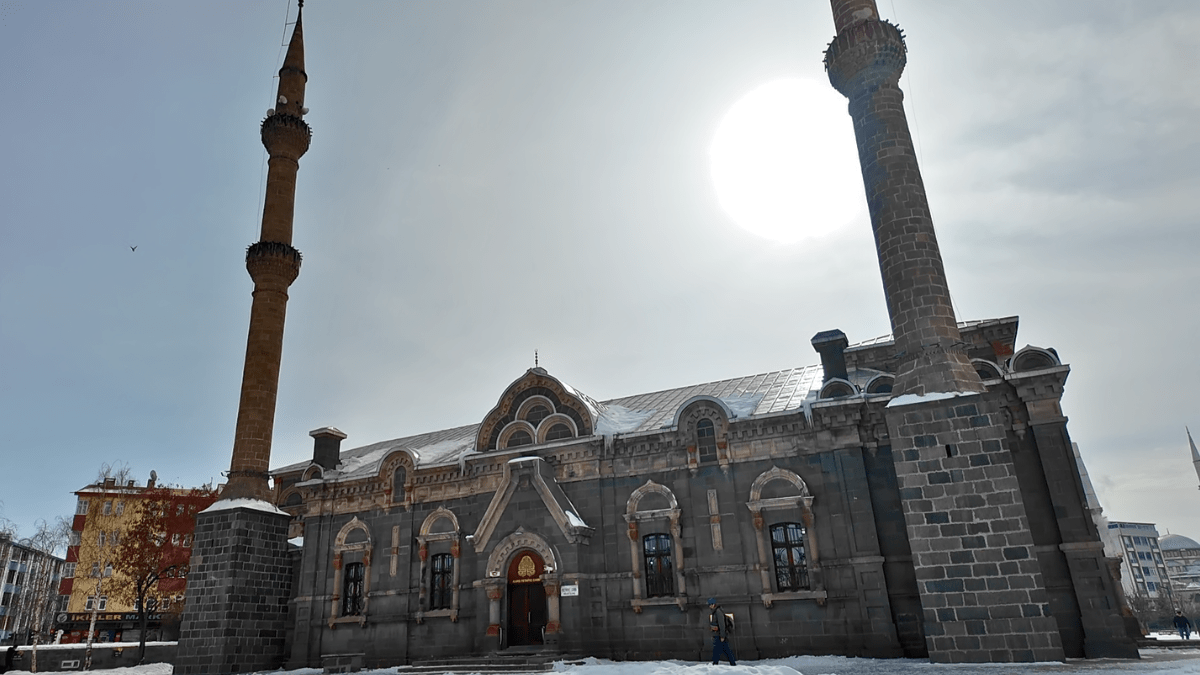
A short walk from the centre of town stands another reminder of the city’s Russian past. Kars Fethiye Camii began life not as a mosque, but as a Russian Orthodox cathedral built during the period when the city belonged to the Russian Empire.
After the Russo-Turkish War of 1877–78, the Ottoman Empire lost control of Kars and the region was incorporated into the Russian Empire. The Russians rebuilt much of the city according to their own urban planning principles. Wide streets, symmetrical stone buildings and European architectural styles began to dominate the town.
The cathedral was part of this transformation. Constructed in the late 19th century, it features a tall central dome and thick stone walls typical of Russian Orthodox church design. At the time it served the Russian military and civilian population who had moved into Kars.
When the region returned to Turkish control in the early 20th century, the building’s function changed. Like several other religious structures in Kars, it was converted into a mosque and given the name Fethiye Camii. It also spent a short amount of time as a leisure centre!
Angel House
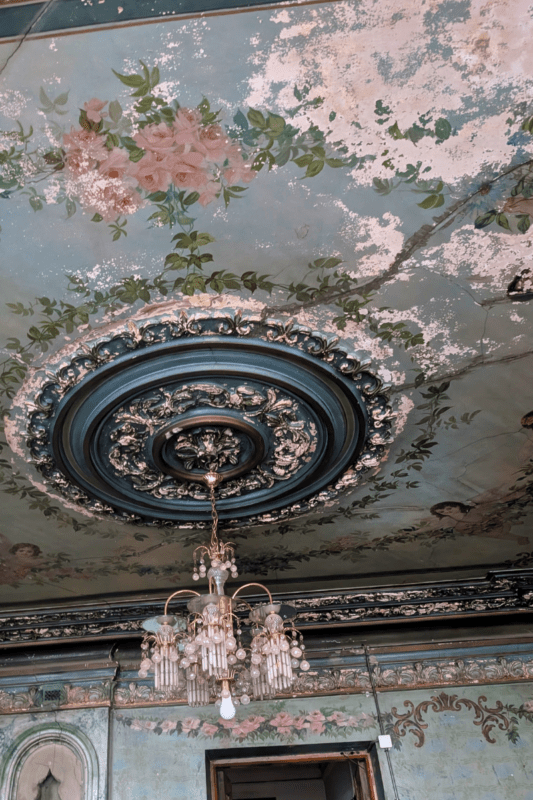
This cafe seems a bit nondescript from downstairs, but upstairs, you’ll find a beautiful room with angel frescoes painted on the ceiling (hence the name!).
I’m unsure of the history behind the room, but was told it also dates from the Russian era.
Kars Cheese Museum
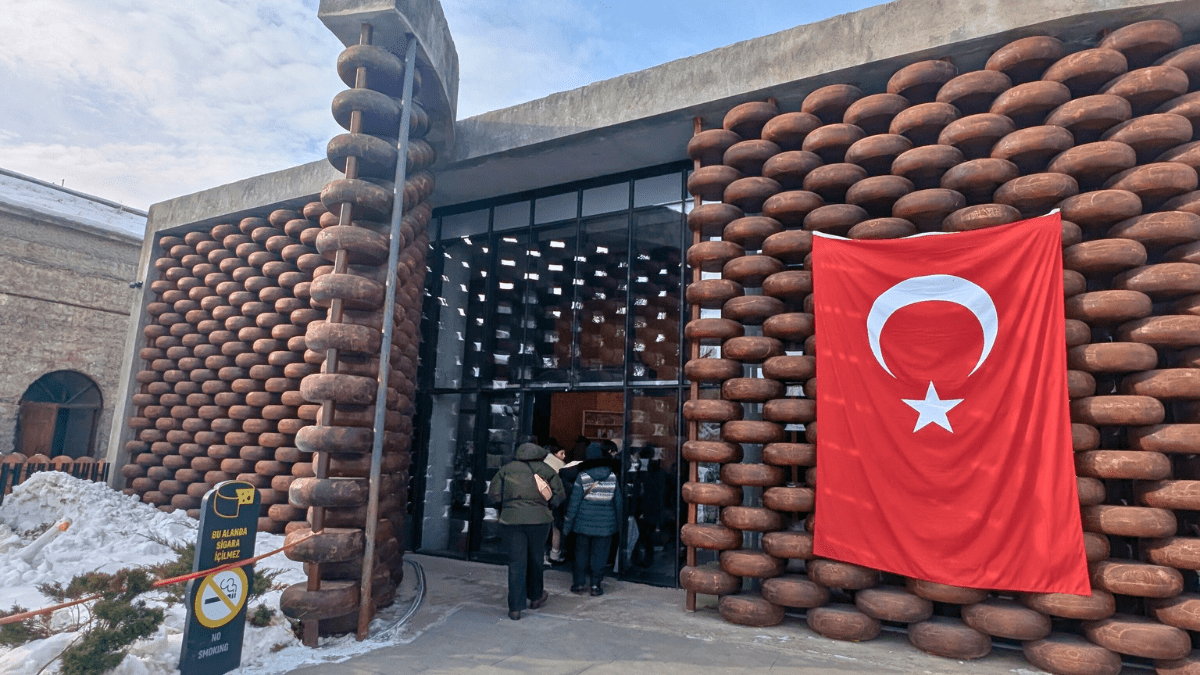
Kars is famous throughout Turkey for its cheese. The region’s high pastures and long agricultural traditions have produced dozens of local varieties, many of which are difficult to find elsewhere in the country. Cheese was brought here by the Russians, but inspired by a Swiss cheesemaker who ended up here and taught the Russian settlers Swiss cheesemaking techniques.
One of the most famous local cheeses, gravyer, closely resembles Swiss gruyère.
To celebrate this heritage, the city opened the Kars Cheese Museum inside a restored Russian-era building. The museum focuses on the region’s long history of dairy production and the traditional techniques used by local producers.
Kars War Museum
The Kars War Museum focuses on the Battle of Sarıkamış during the First World War.
In the winter of 1914–1915, the Ottoman army attempted to launch an offensive against Russian forces in the Caucasus. The campaign ended in disaster. Tens of thousands of Ottoman soldiers died, many from extreme cold and exposure in the mountains surrounding Kars.
The museum explains the events of this campaign through its exhibits.
Cheese shops
After visiting the Cheese Museum, the next logical stop is one of the many cheese shops scattered around the city centre.
Kars cheese is sold throughout Turkey, but buying it directly in the city where it’s produced is a completely different experience! Shop counters are stacked high with wheels of cheese, many aged for months or even years.
Gravyer is the most famous variety. Large wheels are displayed behind glass counters, often cut open so you can see the distinctive holes and pale yellow interior.
Many shops also sell other regional products such as honey, butter and cured meats. Even if you don’t plan to take anything home, shop owners are often happy to let you sample small pieces!
Places to visit around Kars
If you’re visiting Kars for two days, one day should be spent in the surrounding areas. Ani and Lake Cildir are the two must-sees in the area, and you can visit both on day trips.
These days, private tour guides are very expensive in Turkey, partially due to an increase in essential fees from the Turkish government. While I usually would always recommend hiring a local guide, we were quoted upwards of 500 euro for a day tour! There are also only few English speaking guides in Kars.
Instead, we booked a tour with our hotel. It was a Turkish language tour, but other guests were very helpful with letting us know when we needed to return to the minibuses and other essential information. That said, I’d recommend having the Google translate app close to hand for any quick necessary translations!
We paid 750 TL per person for this full day tour. At the time of writing, that’s around £15 GBP.
We visited the following places:
Ani
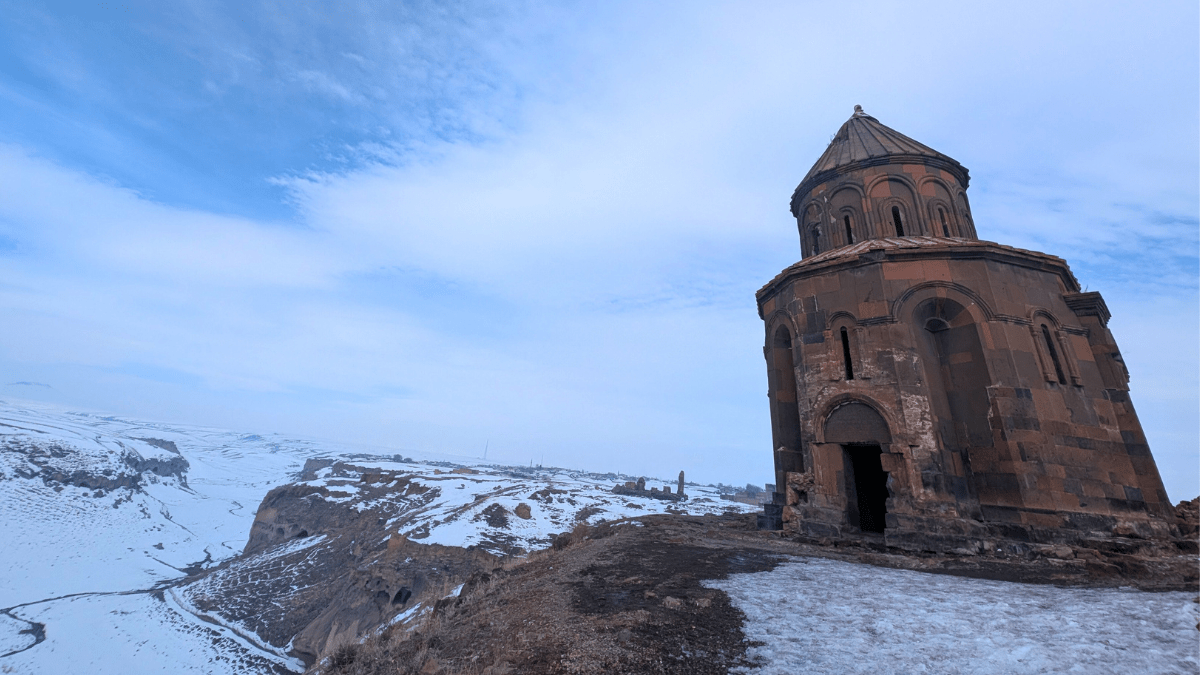
The landscape of Ani is entrancing in winter, but its history (and modern location) are what sticks in my mind. Ani is a 10th century Bagatrid Armenian capital – it was a city before, but prospered under the Bagatrids. Then it fell to the Seljuk Turks, and ultimately into disrepair after a Mongol raid and an earthquake.
Now, Armenian churches stand over the frozen landscape, next to a deep gorge – and Armenia is on the other side.
Turkey and Armenia are not friends and the border has been closed since the fall of the USSR. But there are talks that it will open this year, and hopefully this is the start of tentative opening up and cooperation between the two countries.
But for now, buildings of the old Armenian captital loom over the country that it once controlled to, watching it while being completely part of another.
Lake Cildir
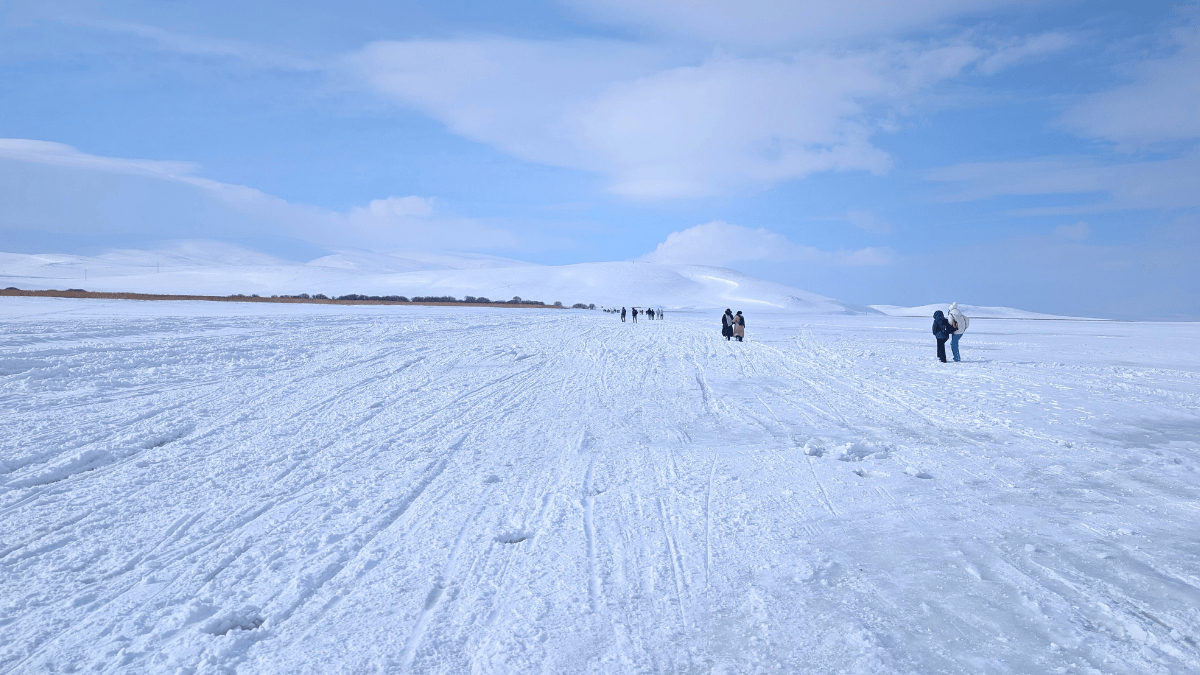
Much less geopolitically tense is Lake Cildir, which is famous for freezing each winter – to the point where you can not only walk on it, but snowmobile or take a horse and cart across the ice and snow.
I was nervous to take a step onto it at first, but was reassured by the fact that a hut, where payment for the rides was taken, and an insta360 (not that!) both stayed standing on the icy lake!
The lake’s also known for its delicious fish, which are presumably taken from the lake before winter and stored. Balik (fish) restuarants are open in virtually every car park to serve hungry tourists. We stopped for lunch here when we did the day trip – although as I don’t eat fish I was glad I’d brought supermarket supplies!
Where to eat in Kars
As a vegetarian, Kars food was a bit of a nightmare. The city is at 1,600 metres elevation, so it’s tough to grow fruit or vegetables – meaning the cuisine is very meat and dairy heavy. This is why Kars cheese is so famous, although it’s a very strong tasting cheese which I wasn’t a fan of either!
That said, I did find some restaurants in Kars that were suitable for all diets. These are all tried and tested by myself and Richard – other traditional restaurants will exist but we didn’t try them due to the lack of veggie options!
Pushkin
While there’s not much in the way of veggie options here, Pushkin is still an experience not to be missed!
Every night, Caucasian singers and dancers perform in Pushkin. Amusingly, the first act when we last visited was two guitar-playing singers. It took us a while to realise they were going from table to table, making up funny songs about each guest.
When they got to us, they realised we were tourists, asked where we were from, and proceeded to make up (what sounded like) a jaunty limerick about us. We couldn’t understand a word they said, but the rest of the restaurant found it very amusing! The rest of the singers and dancers were less interactive, although there was some knife-throwing at the end, where the artist was looking for participants – I swiftly looked away!
Food-wise, veggie options were sparse. There was a deconstructed manti (dumplings) dish that was drowning in cream, which Rich had. I ate rice and asked for some veggies on the side (I got peppers and some very greasy chips!). We were also given some soup and assured it was vegetarian, although whether it was cooked in meat stock or not I couldn’t tell you.
Peynir Khalveti
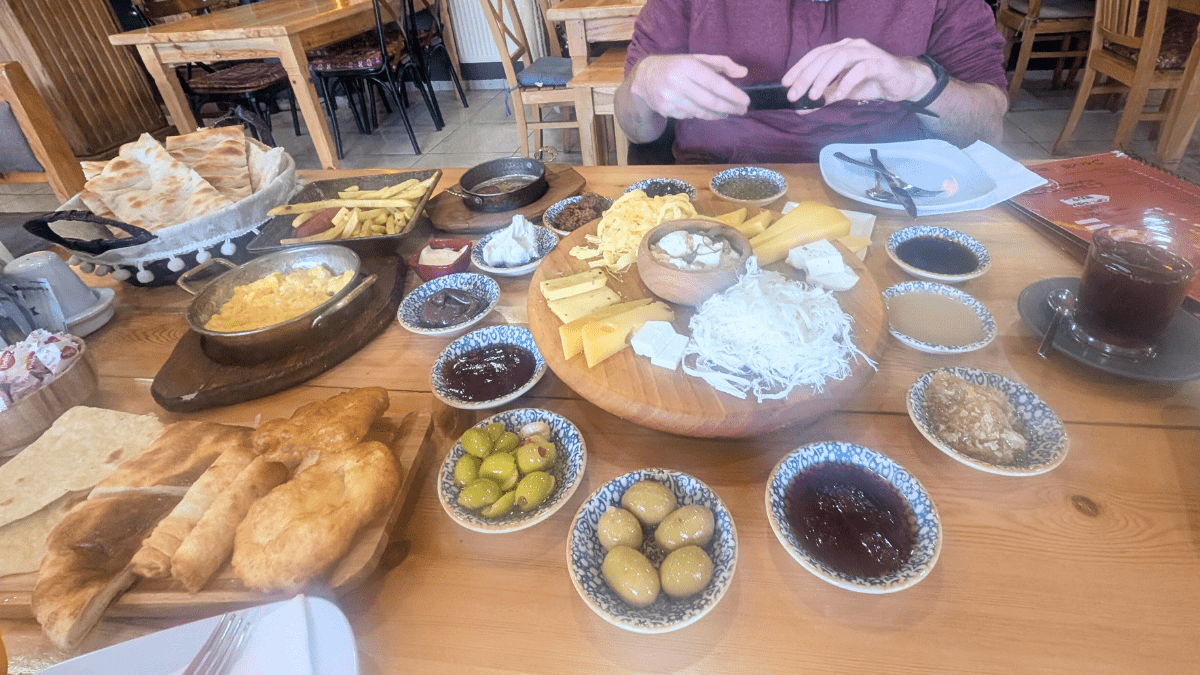
There’s a road in Kars that’s lined with cheese shops. Each establishment is piled high with different types of high-altitude cheeses made in the area. But one stands out – it has a large breakfast restaurant attached.
Here, you can eat a traditional Turkish breakfast (a sharing feast consisting of olives, cheese, eggs, various dips, bread and unlimited tea or cay) with a twist – there’s a lot more cheese.
Although some of the cheese wasn’t to my taste, this was the first Turkish breakfast we’d had on this trip and I loved it! Definitely recommend.
Bursa Kebab House
This is a chain that’s set up in Kars – we thought it was going to be a small kebab restaurant, but it has a huge modern restaurant in the back. You’ll find doner meats here, but for veggies they offer Middle Eastern dishes like falafel, hummus and muttabal. We also had a lentil soup each.
Pide restaurants
Pide restaurants are ubiquitos in Kars. Pide is a long, thin Turkish pizza which is served with cheese and often meat, although it’s easy to get a cheese-only pide. In fact, in Eastern Turkey, if you ask for any veggie options this will be the most common offering!
How to get to Kars
I’ve travelled to Kars twice by the Eastern Express, and once by bus from Tbilisi. The bus was bound for Tehran and all other passengers were Iranian (they were a wonderful intro to the overwhelming hospitality and kindness of Iranian people!).
Kars is also connected to nearby cities, including Hopa on the Black Sea coast and Dogubayzit (one of my favourite places in Eastern Turkey), by bus.
There are also flights from Istanbul, Ankara and other cities, but I’d really recommend taking at least part of the Eastern Express (maybe by high-speed train to Sivas and then spending the day on the train); it’s a glorious way to enter Turkey’s east.
Where to stay in Kars
On our last trip, we weren’t sure if Kars’s hotels have caught up with its newfound popularity as a domestic tourist destination, although we did walk past some swankier looking establishments that we hadn’t seen online.
We have stayed in Kars Konak Hotel and Kent Ani Hotel. Both are very dated but have friendly staff and decent included breakfast. On our 2026 trip, Kent Ani Hotel cost £40 per night. I’d be intrigued to stay in one of the swankier hotels and see the difference!
