
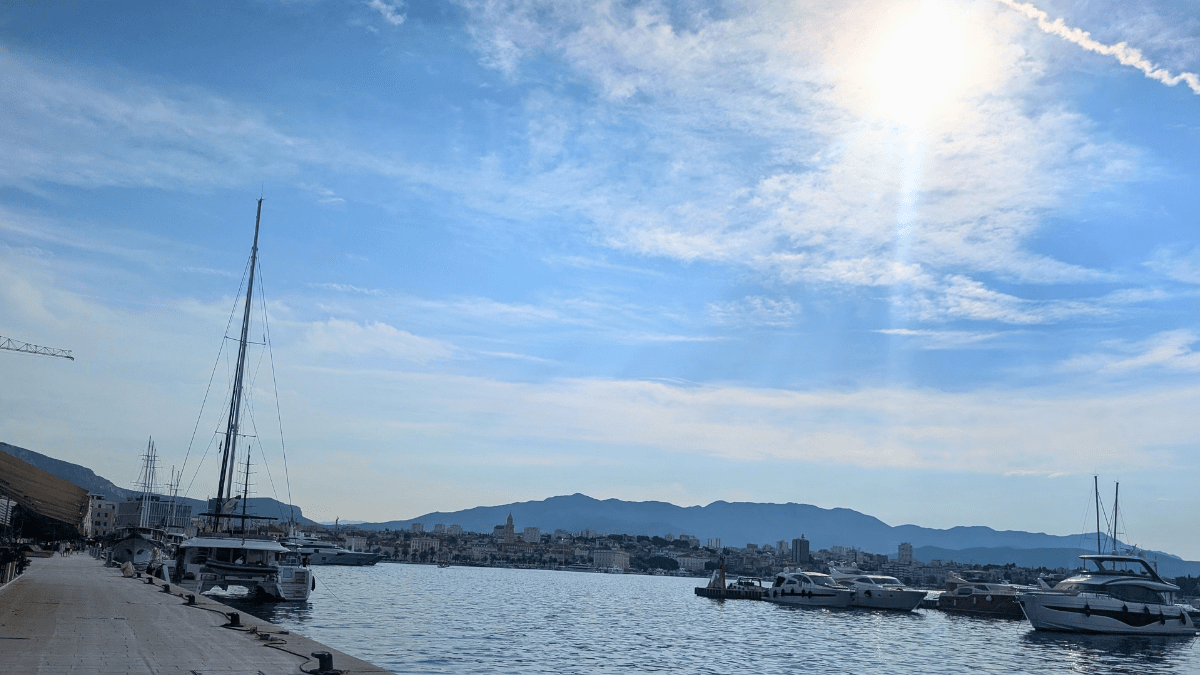
I’m going to be honest, Split felt like one of the most expensive cities I’ve visited in Europe. When I visited, I’d just spent two weeks travelling through the Balkans, and prices in Montenegro and Bosnia and Herzegovina were a fraction of what they were in costly Split.
But it’s not all bad news – I didn’t spend any money on attractions, and there are a few cheap meal options. So, if you’re wondering “Is Split expensive?”, let’s delve into the ins and outs of exactly what I spent in two days in the city.
What I spent in Split
With costs going up at home, I usually think twice before going to more expensive destinations these days! Before my trip I even decided to sell my mobile (an old one!) that was sitting around in a drawer and do a few other side hustles to earn extra money.
But in all honesty, I wasn’t expecting Split to be quite as expensive as it was. Here’s exactly how much I spent…
Accommodation: €190.85
I spent €190.85 on a very average hotel in Split (Split City Rooms) for two nights, which included €5.30 tourist tax.
The staff were nice and it was clean, with comfy beds, but I didn’t realise upon booking that it’s underground so all rooms have no windows! That said, it’s in a good location, so if you’re not bothered about the lack of light, it’s an ok place to stay. I was just a little grumpy because I’d paid a lot less for much nicer hotels in Bosnia and Herzegovina just before!
See Split City Rooms here
Transport: €32.88
I spent €28.00 on a five-hour Flixbus from Mostar in Bosnia and Herzegovina to Split. This took five hours (as opposed to a three-hour drive!) because it stopped in quite a few places, but it was comfortable and the border crossing was easy.
I then took an Uber from the bus station to my hotel; I was planning on walking but it was really rainy. This cost me €4.88.
Food & drink: €58.60
This total could have been a lot higher, if I hadn’t quickly realised how expensive most Split restaurants are and decided to eat supermarket food instead!
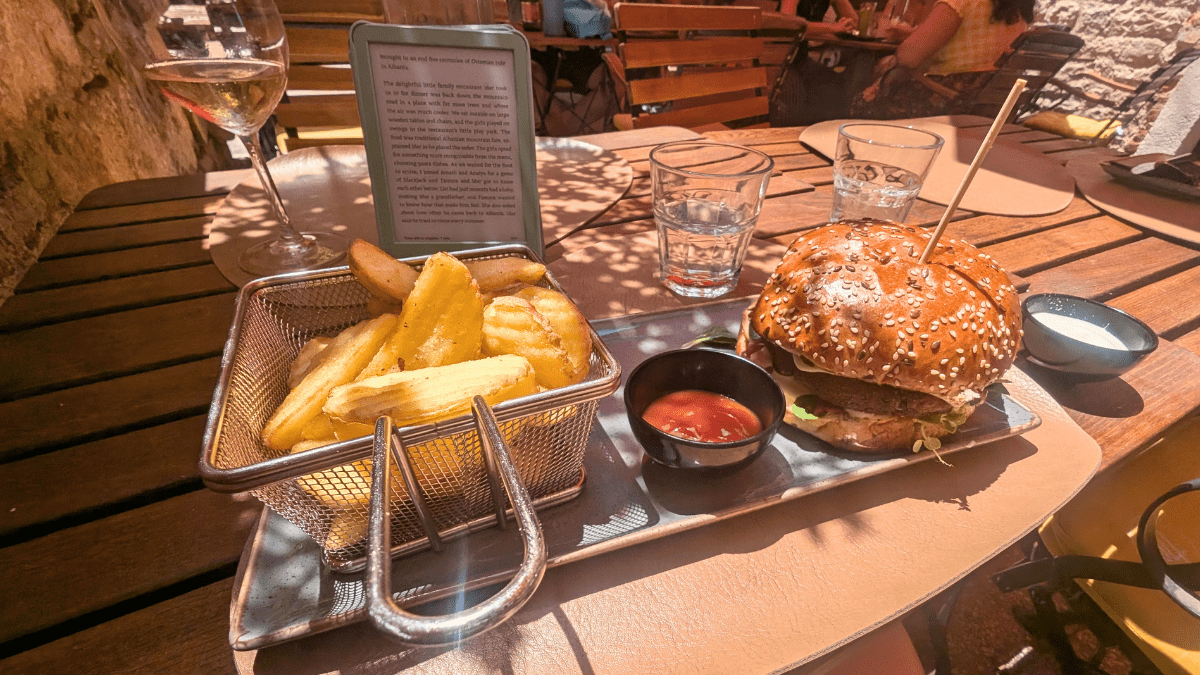
I first went to Fig Split, where I was HORRIFIED to see sweet potato fries on sale for €12. That got me a whole bowl of pasta and glass of wine in Montenegro and Bosnia! I ended up spending €30 on a veggie burger, fries and a glass of wine.
Later, I went out for another glass of wine, which was €7.50.
The next day, I searched for cheap restaurants in Split, and discovered Restoran Indeks, which is a student-focused cafeteria style restaurant. Here, I had cheese tortellini and mushroom soup – and this cost just €4.40!
It was over thirty degrees both days I was in Split, so ice cream was a necessity; there are loads of gelaterias in the old town. I bought two lots of two scoops, for €5 in one place and €5.50 in another.
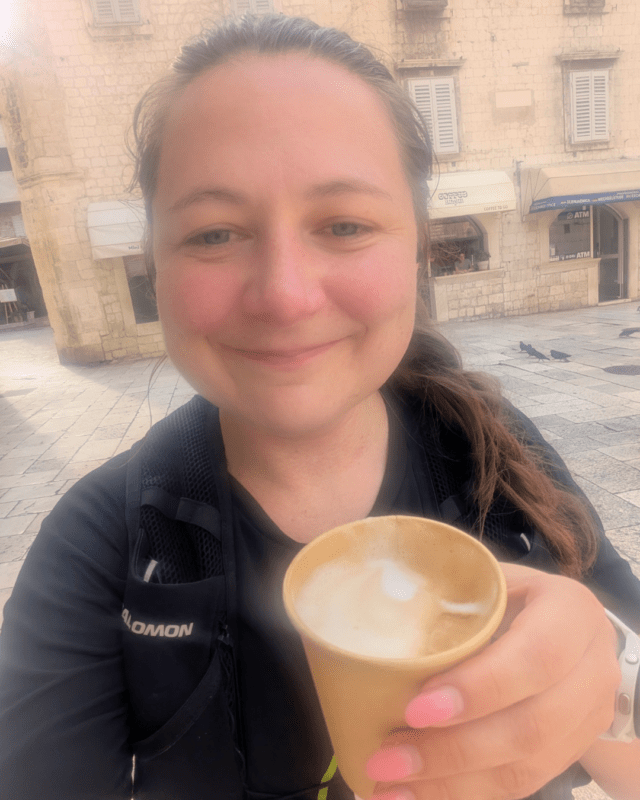
I also bought an oat cappuccino each day (I was delighted about how easy it was to get good coffee in Split!); these cost me €2.50 (Coffee Bilijka, although they didn’t charge for oat milk as they forgot initially) and €3.70 (D16 coffee).
Groceries: €21.87
I ended up buying quite a lot of groceries as eating out was quite pricey; I bought a salad (although this ended up going off before I managed to eat it), crisps, a protein yoghurt and some fruit, whic cost me €14.87 total.
I also bought water and a small toblerone bar at the port, on the way to Italy – and they were priced at €3.50 each! So I definitely don’t recommend doing this – buy what you need in Studentac before.
Attractions/activities: €0.00
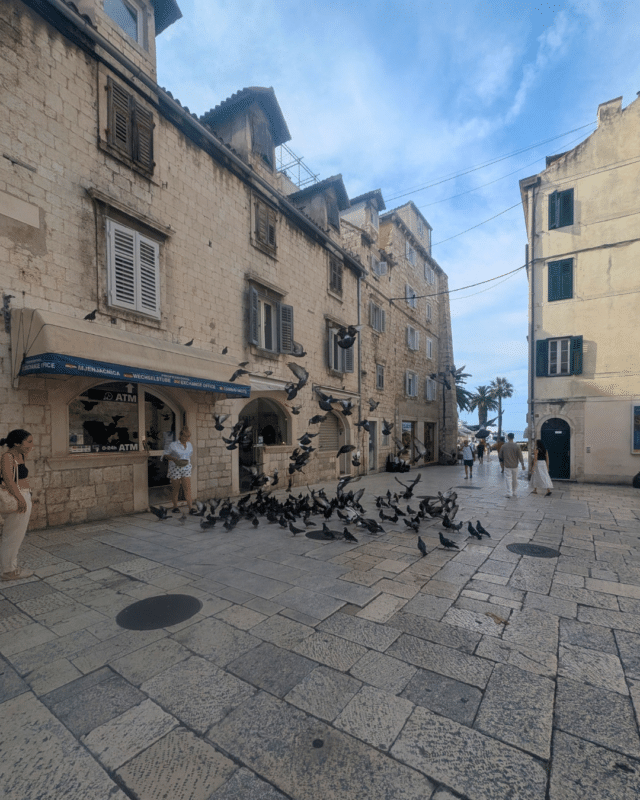
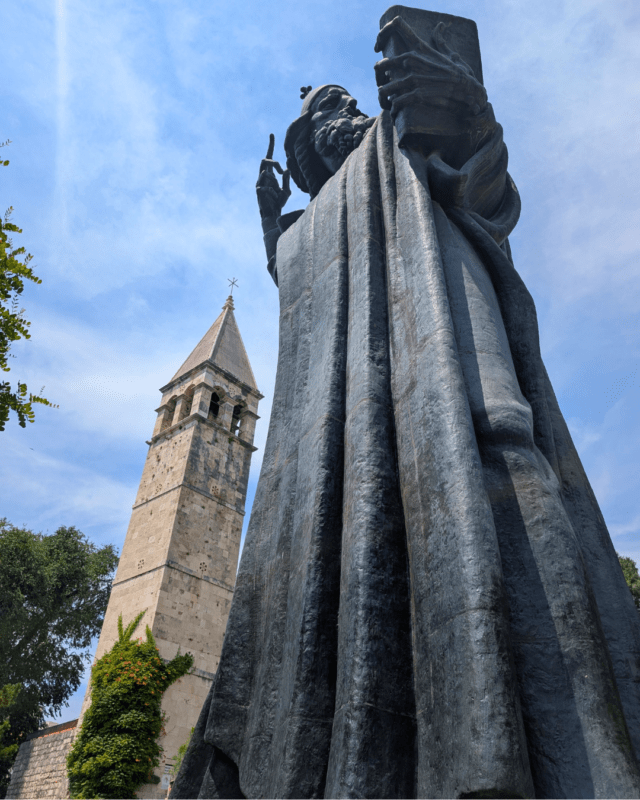
This is where I saved money! I went on a run, went swimming, spent time at the beach and walked around Diocletian’s Palace. If you’re happy just soaking in the vibe of the city, you dont’ have to spend lots on attractions in Split.
One thing that I would have done if I hadn’t been really tired and hot was a walking tour of the old town. I found this tour on Get Your Guide which is rated well and only costs around €15.
Total: €304.20 (approx. £259.79)
Why is Split so expensive?
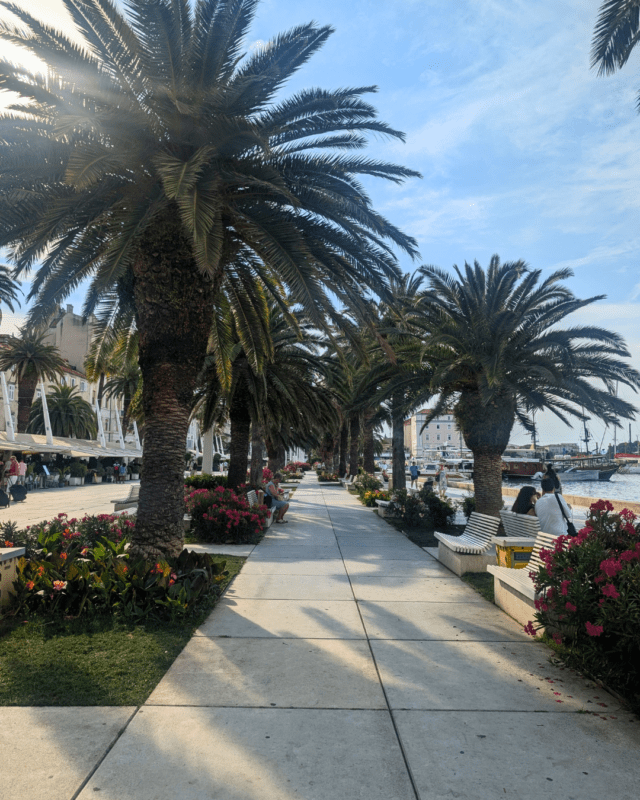
The cost of travel in Croatia in general has gone up in recent years; I remember going to Outlook Festival in Pula over ten years ago, and it felt considerably cheaper than Western Europe then.
Since then, tourism in Croatia has boomed and it’s joined the Eurozone, both of which will have strengthened the country’s economy. And good for them! I’m always happy to pay more for travel if it’s because local salaries have increased.
That said, I think Split has become especially expensive as it’s such a tourist captive market. It’s one of Croatia’s most visited destinations, and Diocletian’s Palace sees a huge footfall of tourists in the summer (although people still live here!). I think there is an element of people charging as much as they can and seeing if tourists pay it (like for the €12 sweet potato fries!).
How to Save Money in Split
I quickly decided I needed to live quite cheaply in Split, so I didn’t go way over my trip budget!
Here are some things I did:
Focus on free activities
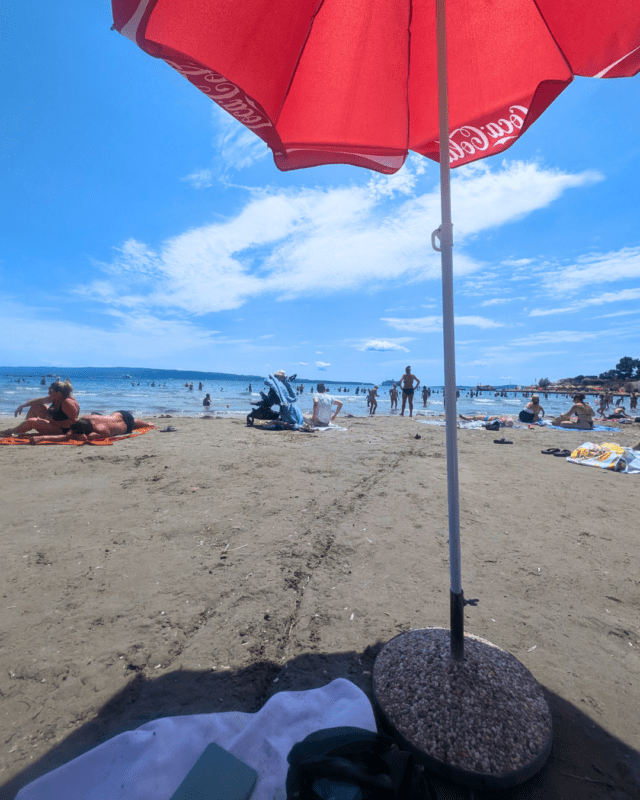
Running along the coast, sea swimming, going to the beach (I didn’t pay for a parasol, but luckily someone was just finishing with theirs and let me use it, saying they’d rented it for the whole day!) and mooching around Diocletian’s Palace are all free.
I would usually do a guided tour to get to know the city a bit better, but in this instance I decided to rest – it had been a busy trip to the Balkans!
Shop in Studentac
There are Studentac markets on nearly every street corner in Split, and here you can purchase crisps, bread, salad, fruit, yoghurt etc. I did this for ⅔ of my meals to save money.
Go to Restoran Indeks
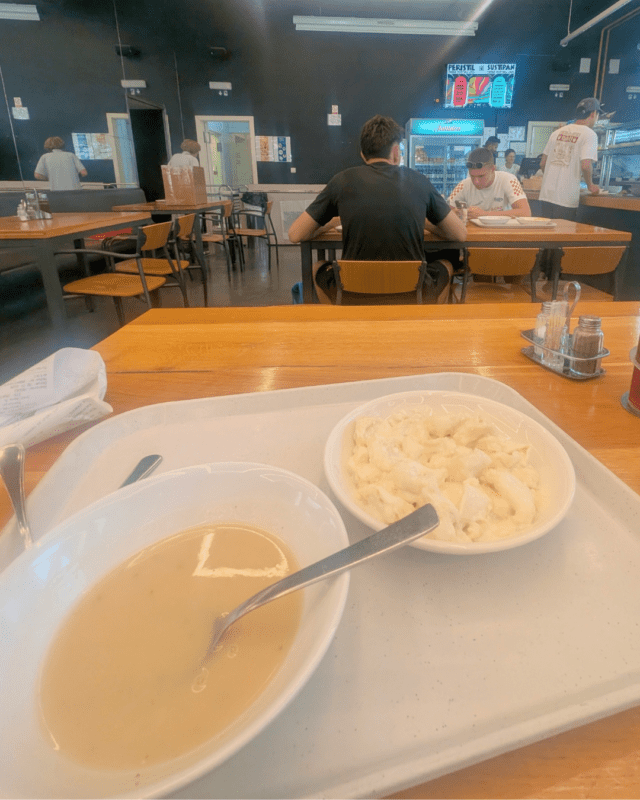
FIG restaurant may have been atrociously expensive, but Restoran Indeks was very cheap!
This is a no-frills canteen that’s actually tailored mostly for students (but anyone is welcome!). The food I had here was only ok, but at €4.40 it was hard to complain. I wanted to save money to pay for gelato and oat cappucinos!
Walk around
Split does have Uber, but I found it easy enough to walk to and from the beaches, and to the ferry port when I left. The only time I did get an Uber was when it was raining.
Earn some extra money before I went
Not a saving tip per se, but I’ve been trying to earn a bit more from side hustles this year!
I did a few market research tasks and tried some mystery shopping before my trip. For market research I use sites like Respondent and User Interviews, and Roamler and Shepper for mystery shopping.
You could sell clothes on Vinted or trade in an iPhone, too – anything to boost the budget a bit to make staying in Split feel a bit less wallet-damaging!
Split vs Mostar cost
I’d just come from Mostar, and Split was much more expensive – 3x the price for a meal with wine and for accommodation. And Mostar is likely the most expensive part of Bosnia and Herzegovina – it’s generally a very affordable country to visit.
Croatia vs Montenegro cost
I can only compare Split with Bar, but again it was about 3x the price. That said, in more touristy places in Montenegro like Kotor and Budva, I imagine that it the prices would be higher – but I doubt they’d be Split prices!
Cost of travel in Split FAQs
What currency do I need in Split?
You need Euros for Split; all of Croatia is in the Eurozone as of 2023.
Do I need cash for Split?
I spent two days in Split and paid contactless for everything, but that’s not to say you don’t need cash at all. There might be a few smaller places that are cash-only, so I’d recommend taking some euros out when you can! But generally card payment will be fine.
So, is Split cheap or expensive?
I think Split is expensive, although if you’re flying in from elsehwere in Europe, you might not find it so bad. That said, if you’re looking for cheaper places to visit in the region I’d recommend Montenegro or Albania (if beaches are essential) or Bosnia and Herzegovina instead.
