
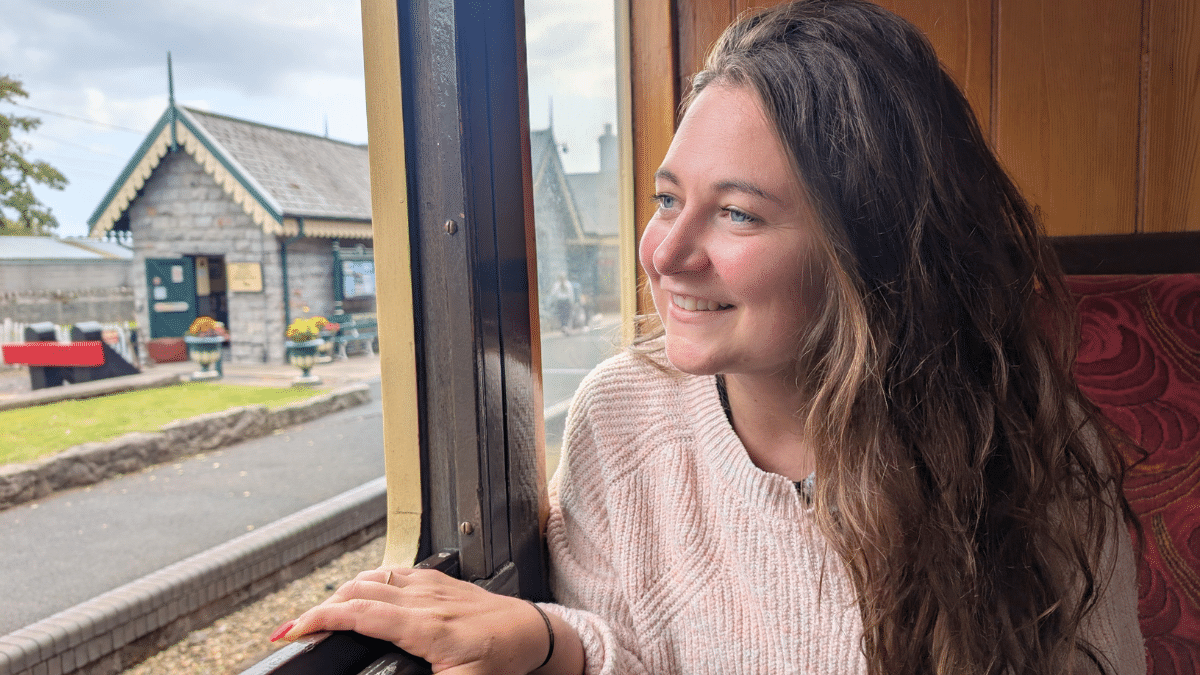
What are the best things to do in the Isle of Man? I honestly had no idea before I visited, but my partner and I were very lucky to spend a few days in the Isle of Man in August last year (we actually won the trip as part of an award ceremony!).
But after a week on the island, I feel well-versed on the very best Isle of Man attractions and activities! We found the island such an interesting place; it’s not part of the UK and it’s not its own country, but instead is a self-governing crown dependency. We were told, time and time again by locals “we are not part of the UK”.
So some of our Isle of Man itinerary revolved around political themed attractions, others focused on nature, and – being the train fan I am – we found a few railways, too.
Let’s take a look at the very best things to do in the Isle of Man.
Best things to do in the Isle of Man: a quick list
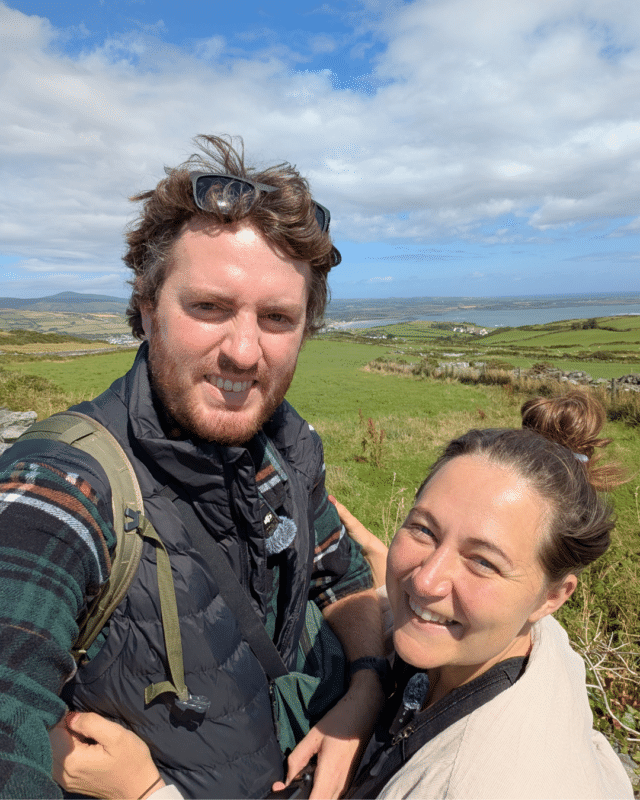
- Ride the three heritage railways
- See four countries from the top of Snaefell
- Visit Tynwald Hill
- Explore Castletown: Castle Rushen and the House of Keys
- Step back in time at Cregneash and meet the Loaghtan sheep
- Browse for Manx books in Port Erin
- Get coastal views at The Sound
- Walk the Douglas promenade and visit the Manx Museum
Where to stay in the Isle of Man
Comis Hotel & Golf Resort ⭐⭐⭐⭐
The Empress Hotel ⭐⭐⭐⭐
The Penta ⭐⭐⭐
Top Isle of Man activities & attractions: full break down
1. Ride the steam train to Port Erin
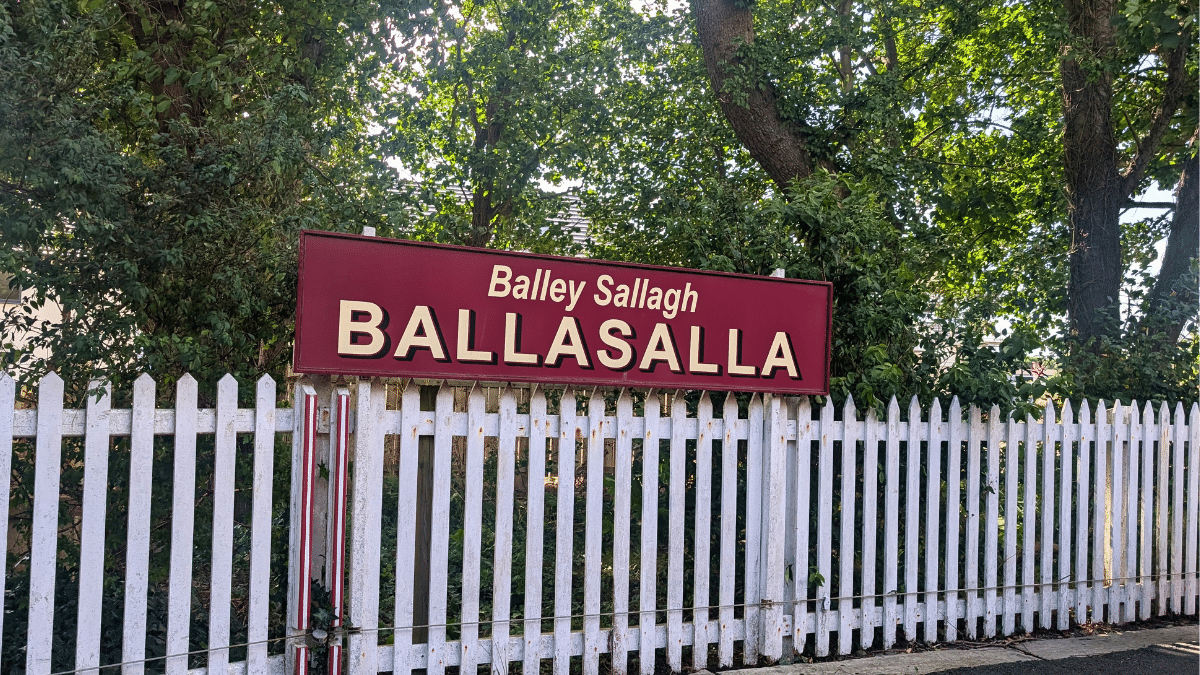
The main reason, as a railophile, that I thought the Isle of Man was worth me visiting, was because of its fascinating trains and rail history.
So, the first thing we did was take the Isle of Man steam train to Port Erin. We had Go Explore cards which gave us unlimited travel (and I highly recommend if you’re train hopping like us!).
The Isle of Man Steam Railway was set up in 1873 to link Douglas with southern destinations, towards its Port Erin terminus. It’s one of the world’s oldest narrow-gauge steam railways that still runs today.
We took it from Douglas to Castletown, and then onwards to Port Erin. We were there in August (so it was summer holidays), and our carriage was jam-packed! That said, we had seen a cruise ship docked that day, and discovered later that lots of passengers were from there.
We departed Douglas and started to trundle through woodland. Rich and I live in the South West, and I commented to him that the forests looked similar to those that we have on Dartmoor. “I think they’re temperate rainforests too!” I told him excitedly. Temperate rainforests are commonly found across the west of the British Isles, so that would measure up.
We stopped off in Castletown (more on that below) and then clambered back on board to get to Port Erin. At Castletown, we met one of the railway staff who told us that it’s government-owned, and was nationalised in the 1970s. It was, for a time, the only public transport on the island, and it’s still used by locals today!
In fact, it also operates as one of the world’s most unusual airport transfers. There’s a request stop for the airport (Ronaldsway Halt), which is a five to ten minute walk away.
See my video about the Isle of Man’s trains below!
2. Ride the electric train from Douglas to Laxey and Ramsey
The electric train travels from Douglas to Laxey and Ramsey. We only took it to Laxey, as we wanted to take the Snaefell Alpine railway afterwards.
We started our trip at the electric tramway station in Douglas, which was super busy! After we showed the conductor our Go Explore cards, we climbed into car number one – which we were pretty sure was the original carriage.
In fact, the Manx Electric Railway is the oldest electric railway in the world that still uses its original cars!
There’s an automatic commentary on the tram, and we were told that it opened on 7th September 1893, with a short line from Douglas to Groudle Glen. This was then extended to Laxy in 1894 and finally Ramsey in 1899. Its complete line is 17 ½ miles, and while it seems old-fashioned now, it was pioneering for its time.
It had overhead wires and bow collectors, which you might find in modern tram systems, and for most of the route, it ran on double track. This was really rare for a rural line!
We arrived in Laxey station about half an hour later. This is the change point for the Snaefell railway, which was my favourite on the whole island!
4. Take the Snaefell Alpine railway to the summit
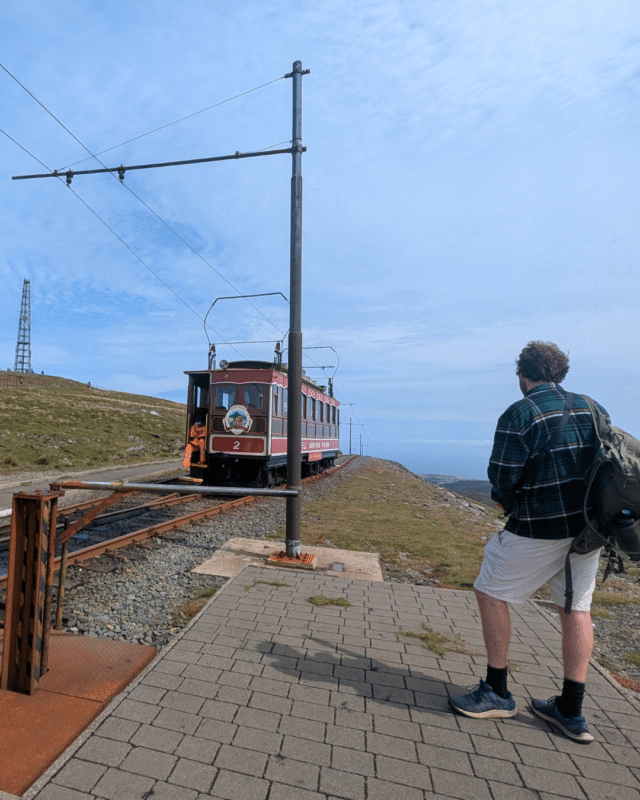
We changed to the Snaefell Alpine Railway at Laxey, which was a bit hectic to say the least. We accidentally joined a cruise group (don’t ask…) but there were two available spaces, so we grabbed them!
Snaefell is a Norse word meaning “snow mountain”. If you’ve ever been to Iceland, it has the same origins as the Snaefellsnes peninsula there!
The railway opened in 1895, two years after the electric railway. Climbing over 2,000 feet or 600 metres to the highest point, it was another pioneer. To this day, it’s the only Victorian mountain railway in the British Isles.
Alongside its two normal tracks, there is also a central braking rail – and it’s the only railway in the British Isles that uses this system today.
We travelled upwards, towards the highest area of the island. At the top, a sign says “welcome to the summit”. More on that below!
4. Ride the Groudle Glen Railway
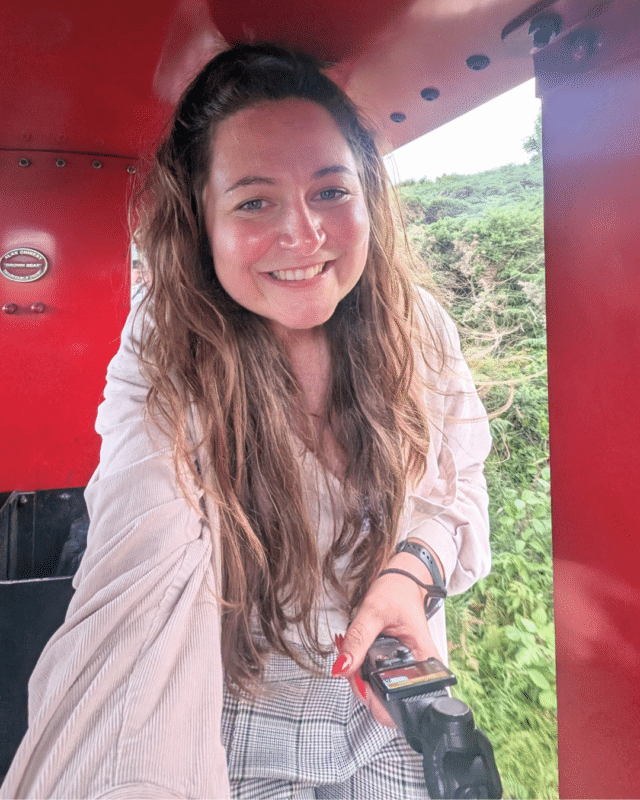
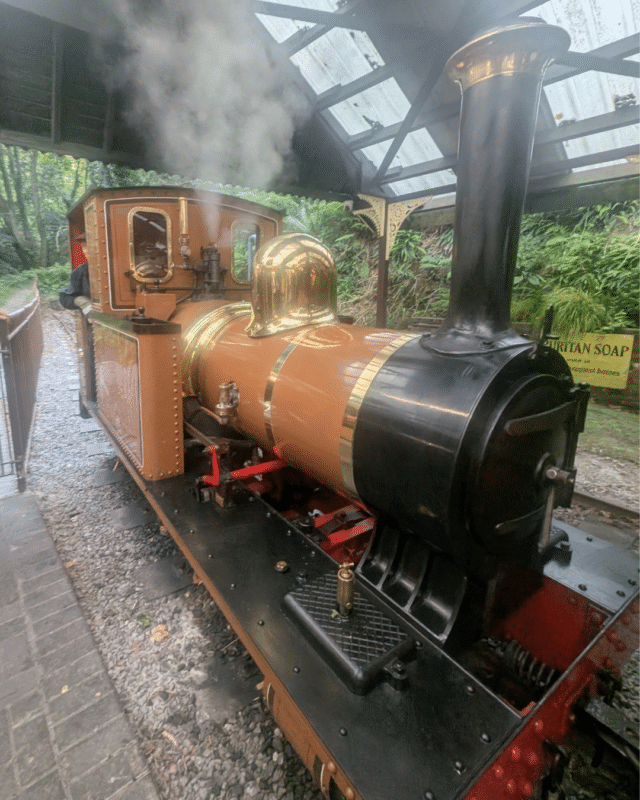
The last railway to check off your list is the Groudle Glen Railway. At the time of my trip, it only ran on Wednesday evenings and Sundays; luckily, we had a chance to ride it on the Wednesday when we were there!
To get there, we took the electric train (again) from Douglas to Groudle Glen. We were fortunate to have a behind-the-scenes tour, and the volunteers showed us how they fire up the steam engines and all the necessary maintenance!
The electric railway visited Groudle the first year it started running, and a man named Richard Maltby Broadbent decided to create a “mini Alton Towers” there to encourage the influx of tourists to the island to head to the glen.
At the time, there was a bandstand, a cafe, lily ponds, a fortune teller, candy floss stalls and even a zoo! The railway ran around it, but it fell into disrepair along with the rest of the pleasure gardens.
It’s since been lovingly restored by the incredible volunteers! It’s a gorgeous line to the Sea Rocks Tearooms, where you can stop and look around before the return journey.
5. Visit the Sea Rocks Tea Rooms
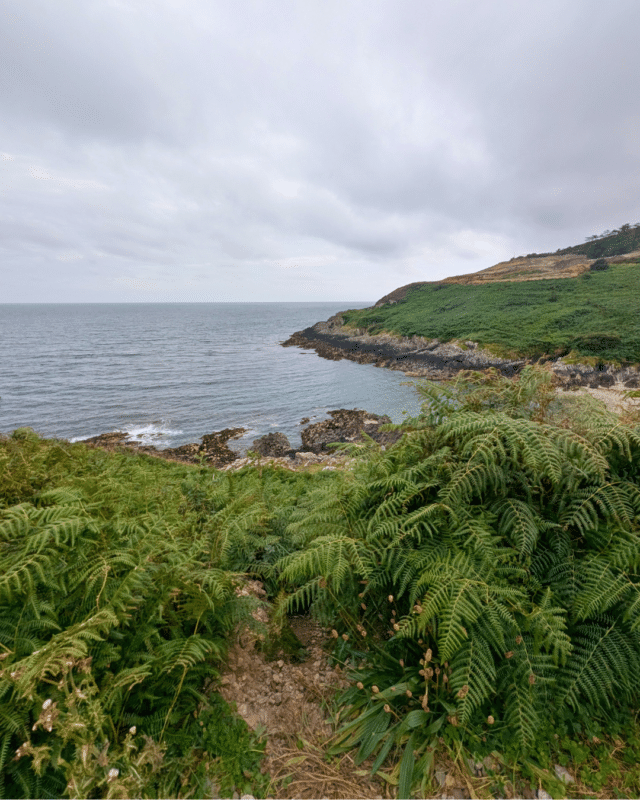
We actually went here twice: once on the Groudle Glen train, and once just before – after we had our behind-the-scenes tour, the volunteers needed some time to get the trains ready, so as we walked there!
When we walked there, we had tea and cake while we waited for the trains to spring into action. There are jagged cliffs here and some infrastructure of what remains of the zoo, along with sea views!
6. Learn about the Isle of Man’s politics at Tynwald Hill
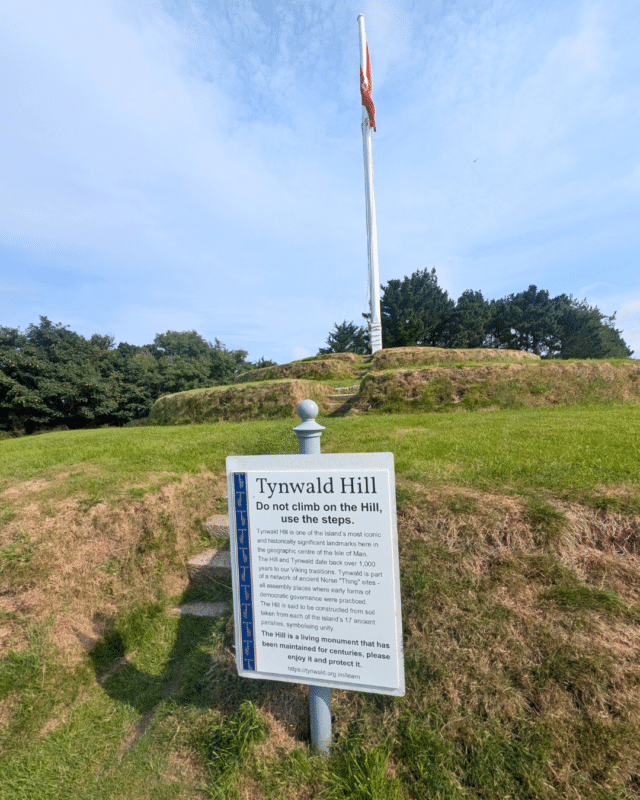
Around a 20 minute drive from Douglas, you’ll find Tynwald Hill. Every 5th July, the parliament comes to the top of this hill and dictates every new law to the public, in both English and Manx. This is a Norse tradition that you’ll find in other countries like Iceland.
We visited independently, and it’s free to walk around. The four tiers of the hill represent different social ranks: kings, clergy, knights and free men. There isn’t much information, so it’s worth reading about (even if it’s just on the Wikipedia page) before you visit!
7. See Castle Rushen in Castletown
We enjoyed a stop in Castletown, which is the old capital of the island. Here, there’s a historic harbour, and the town grew up around the castle.
This is Castle Rushen, which dates back from the late 12th century. It’s nowadays a living-history museum, with a working Medieval kitchen and opportunities to see the central keep and 17th century dining room.
We didn’t have time to go in (we were dashing for the next train!) but it looked like the ramparts had great views of the town!
8. Sit in the old House of Keys
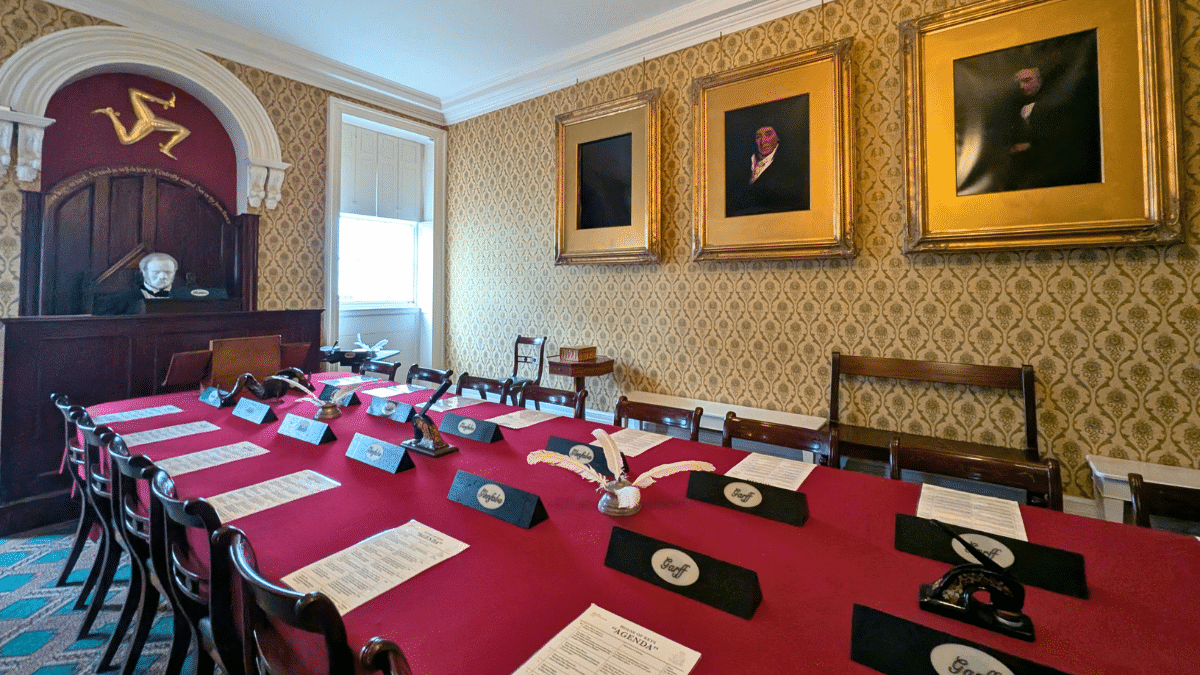
We popped into the House of Keys while we were in Castletown. This is the old parliamentary building, which nowadays serves as an explanation about the Isle of Man’s governmental system.
You can sit in the parliament and pretend to “vote” on bills – although my in-laws did this when they were there and said it wasn’t that interesting! We just poked our heads in and had a chat with one of the people working there.
The Keys moved to Douglas in 1874 – so you obviously can’t go into the modern building!
9. Step back in time at Creagneash
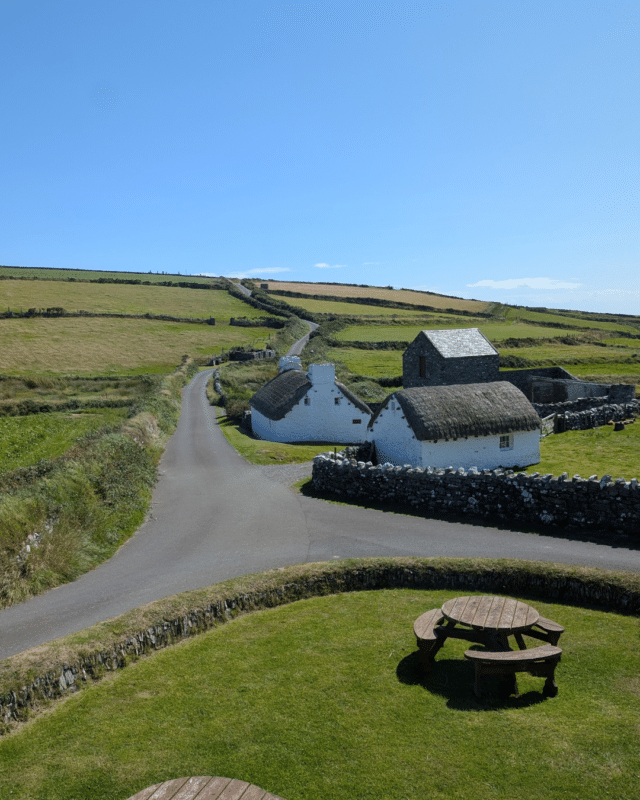
Creagneash was one of the last outposts of the Manx language before its initial decline. It nowadays serves as a living museum, with cottages spread out around the compound. We actually went here straight from the airport (the Isle of Man is not a big place!) and it was a beautiful drive with some sunshine!
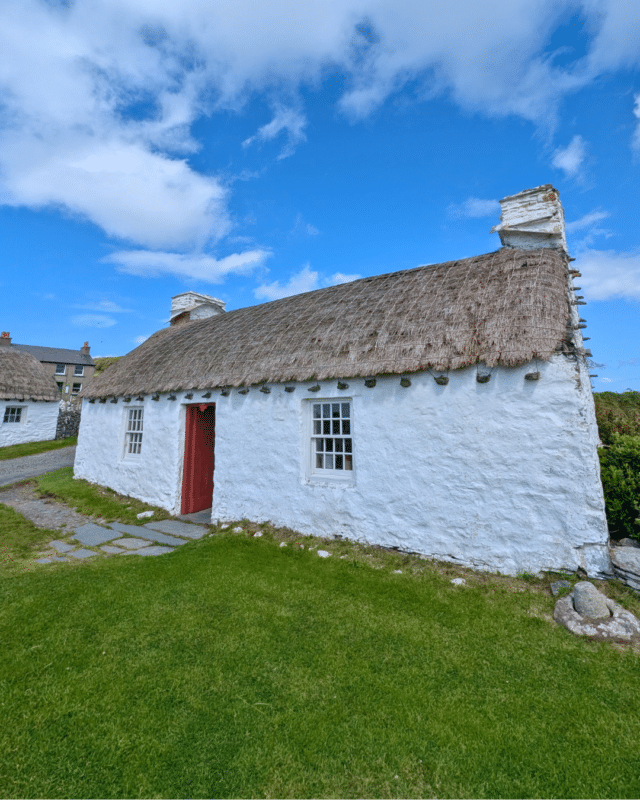
One of the most notable is Harry Kelly’s cottage. This was where a man called (you guessed it!) Harry Kelly lived. He lived a simple life here, with no electricity or running water. We popped in and spoke to someone who was working there, who told us that Harry died in 1935 with no children, and his nephew donated the cottage to the government.
10. Meet the Loaghtan sheep and look out for the Manx cat
The Isle of Man has some of its own native animals! At Creagneash, we met some Loaghtan sheep. They’re native to the islands and are among the rarest sheep breeds in the British Isles, nearly becoming extinct in 1950. We heard that they have two to six horns; the ones we saw had four!
There’s also the Manx cat, which is a tailess cat that’s native to the island. I have no idea how you find one, however – we didn’t see one during our trip!
11. Visit Port Erin beach and town
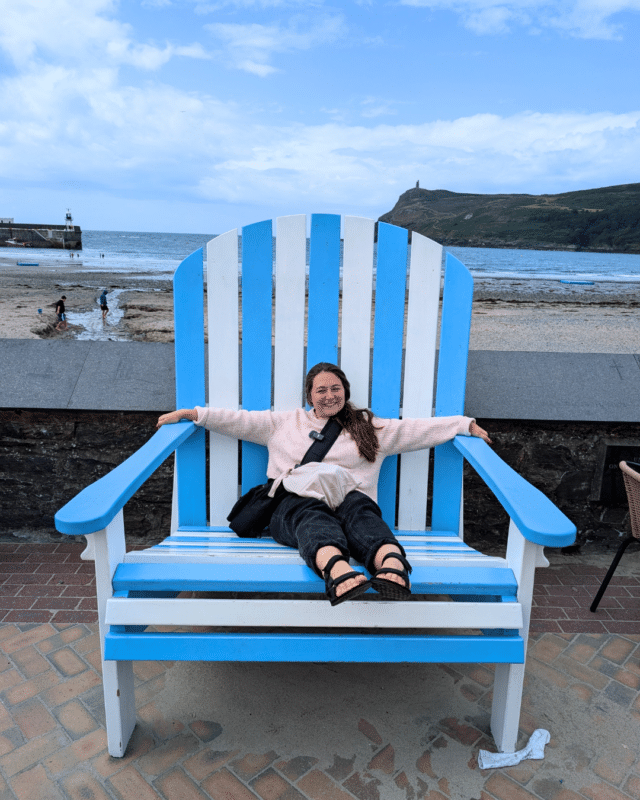
Sadly, the weather wasn’t playing ball when we visited Port Erin. Despite it being the first week of August, we were freezing!
Port Erin is a sleepy little fishing hamlet; it had only about 300 residents before the railway arrived in 1874. As people could get from Douglas quite easily after it arrived, the town became a popular seaside break.
Port Erin sits at the end of a railway line, and it is a seaside resort village. It’s a beautiful beach, and I was planning a dip on, but the weather was foreboding. We were graced with 40mph winds and grey, unrelenting skies.
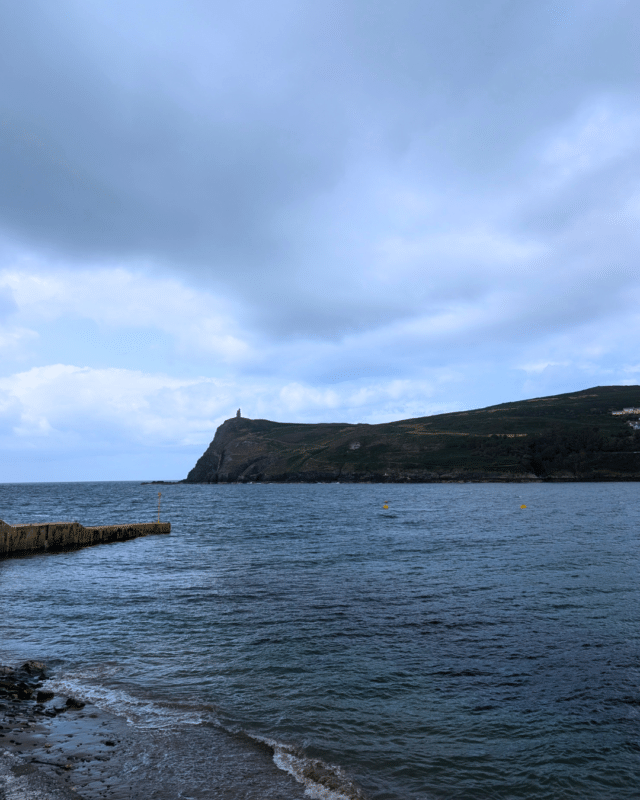
We found quite a few things to do in Port Erin. There’s Kishtey Çheh Beach Sauna, La Gusto Pizza and Foraging Vinters Winery. However, we were there on a Tuesday, and all of these are only open at the end of the week/ weekend – so I’d highly recommend visiting at the weekend if you can!
12. Visit the Port Erin Railway Museum
Another spot in Port Erin is the Isle of Man Railway Museum, which sits right by the station. There’s loads of memorabilia from the railway’s origins, with a fares list and tickets! We climbed up the steps to one of the original train engines on the route, and we saw where the fire would have been in the cab!
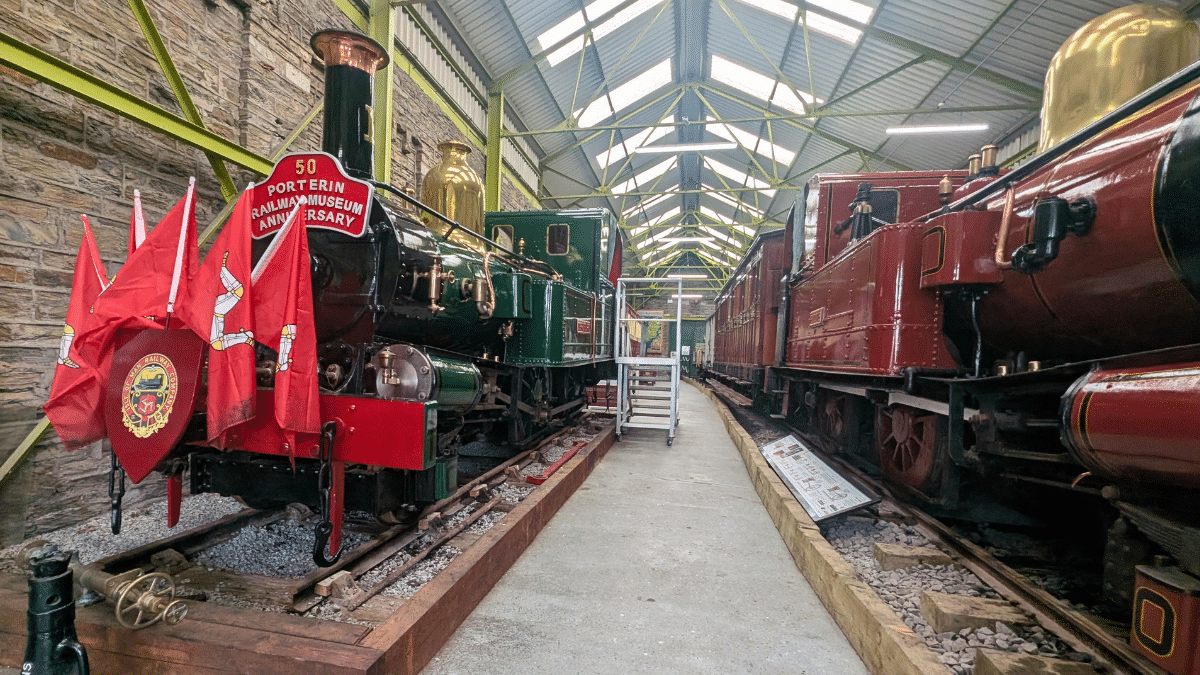
There’s also a Victorian carriage that we climbed into, and we looked at the British Rail ads for visiting the Isle of Man, and GWR ads! GWR actually used to run services close to Liverpool, so you could take a GWR train most of the way and then board the paddle steamer to the island.
It’s £2 to visit the Isle of Man Railway Museum, but we got in for free as we had the Go Explore passes.
13. Browse the Manx bookshop in Port Erin
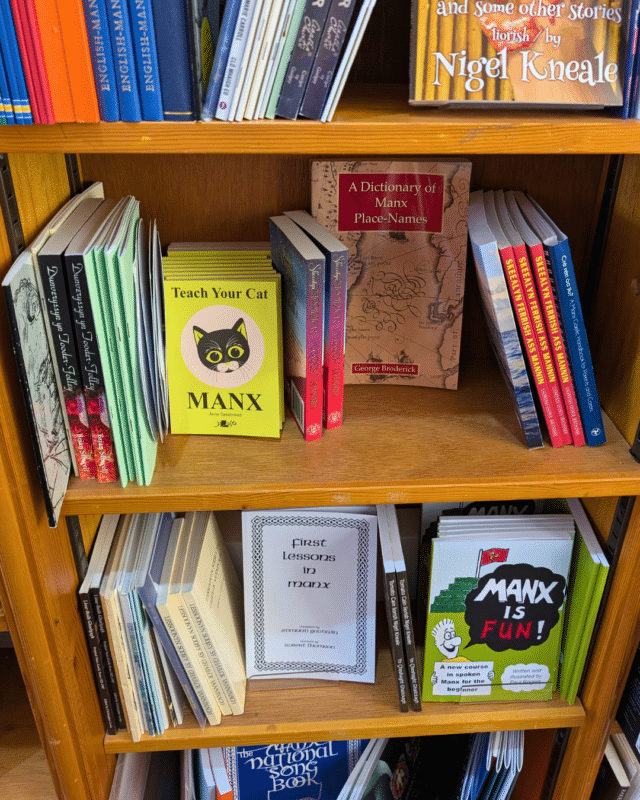
Also in Port Erin is Bridge Bookshop – and we thought this is a fantastic place to learn about the Manx language! This bookshop sells many Manx books – mainly educational books, although there were a few stories. One we noticed was “teach your cat Manx”!
We chatted to the shop owner for a while, who told us that there’s one entirely Manx-language primary school on the island these days. She explained that every primary school teaches Manx as a language. It’s optional in secondary, but many students choose French or Spanish instead.
It’s emerging with the younger generation though; “my kids speak more Manx than me!”, she explained. It’s only spoken by a few hundred people today, but it has recently had a resurgence, with active groups across the island and bilingual street signs.
14. Get coastal views and lunch at The Sound
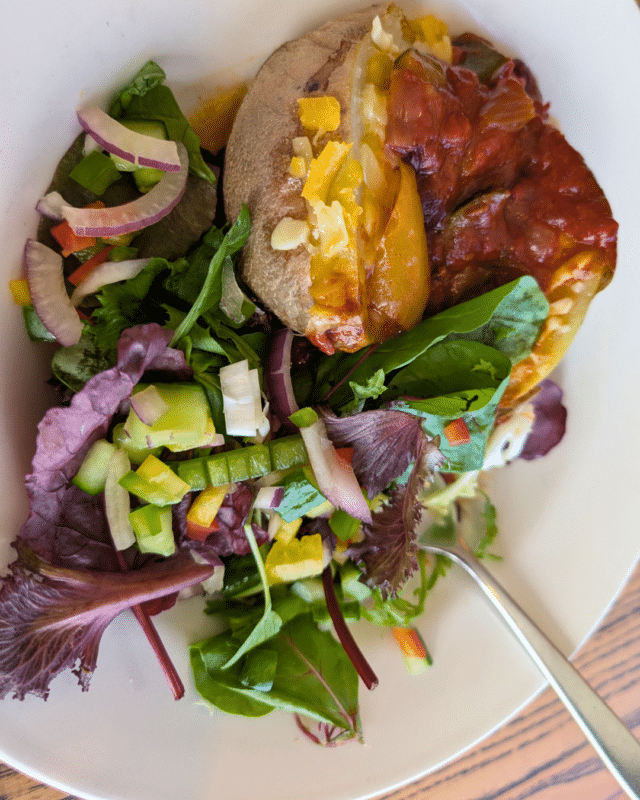
Sitting at the very south of the island, the remote and rugged Sound overlooks clifftops. There are a few walks around here, but it was so blustery when we were there (a common occurrence on the Isle of Man!) that we only managed a small walk.
We did head to The Sound Cafe for an early dinner, and did think it was expensive; around £30 for two large jacket potatoes with fillings and one coffee – Rich just had a tap water. We’d arrived to the cafe at around 4pm and it had closed at 5pm!
15. Walk the Douglas promenade
The capital of the Isle of Man, Douglas was historically where most visitors would have arrived here (until the airport became popular!). Because so many people were arriving, Douglas was made the new capital (it moved from Castletown), and it built up. Nowadays, you’ll find Victorian buildings along the promenade.
We enjoyed walking along and taking in the sea views; there’s a Beegees statue along the esplanade because the Gibb Brothers were born in Douglas!
Today, Douglas is home to the parliament, including the House of Keys and the legislative council, plus the Manx civil service, education, health and policing.
17. Visit the Manx Museum and Gaiety Theatre in Douglas
There are a few points of interest in Douglas as well! We popped into the Manx Musuem, which documents the history and culture of the island.
Rich’s parents enjoyed a tour around the Gaiety Theatre when they were there. This theatre has some Manx language plays. I’m not sure if it’s worth going to any if you don’t speak Manx, however!
See my Isle of Man video below!
18. Take out Manx pounds
Bit of a random one, but I very much enjoyed taking Manx pounds out of the ATM! They’re not legal tender in the UK, so don’t take any back with you expecting to spend them, but you can spend to your heart’s content on the island!
19. See the TT course
The Isle of Man is most famous for the TT, and I’ve tried to mention it as little as possible if I’m honest, as there are so many other things to do. However, even if you’re not into the TT at all (like me!), it’s still worth taking a look at the course, wherever you are!
We saw it from the Snaefell railway; the stop before the top of the mountain is for the TT course. It was August, so out of season for the TT, which is in early June. There wasn’t much going on, but I imagine for TT fans it’s worth a stop!
20. Walk to the Great Laxey Wheel
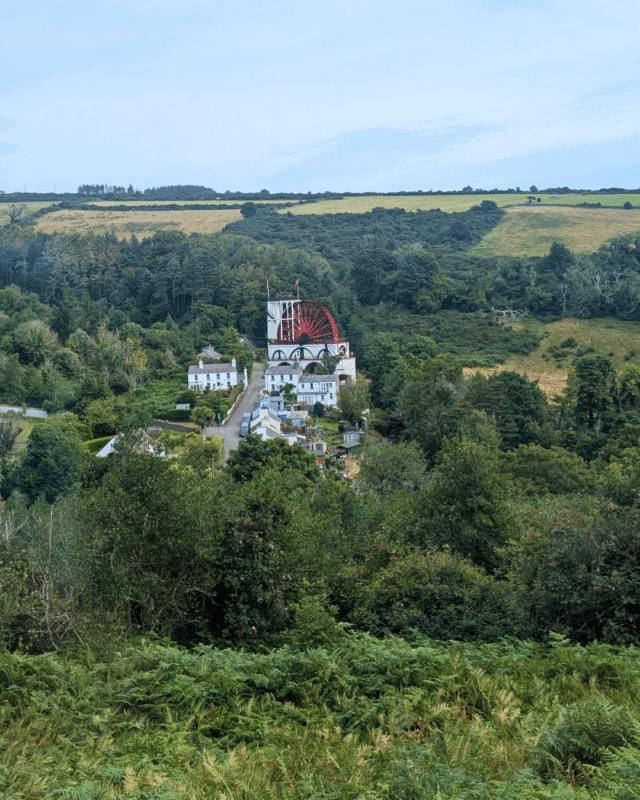
The Great Laxey Wheel, dating back to 1854, is walking distance from Laxey, and is the the largest working waterwheel in the world! We spotted it from the Snaefell Railway, too. It was built to pump floodwater from the mines.
You can climb up a spiral staircase and see the wheel – and the view – from the top.
Visiting the Isle of Man FAQs
What is there to do in the Isle of Man?
The highlights of the Isle of Man include:
- the heritage railways
- the view of four countries from the top of Snaefell
- learning about Manx culture in Douglas
- the seaside town of Port Erin
- the history of Castletown
- the nature and Manx culture of Creagneash
How many days are enough for the Isle of Man?
I think three or four days for the Isle of Man is perfect. You can take all the trains, experience history and culture in Douglas, Creagneash and Castletown, and mauve even spend a bit of time by the coast as well!
Is the Isle of Man part of the UK?
No, the Isle of Man is not a part of the UK. It is a Crown Dependency. That said, it’s also not independent!
Do you need a car for the Isle of Man?
Not necessarily – you can see a lot with the train network! However there are some places, such as Creagneash and Tynwald Hill, that you will need a car for.
Are there trains on the Isle of Man?
Yes, there are amazing trains on the Isle of Man! It’s a train-lovers paradise. There’s a steam railway, electric railway, and the glorious mini Groudle Glen train!
What is the Isle of Man known for?
The Isle of Man is largely known for the TT, but also for its Manx culture and heritage – and its trains!
