
The Belgrade to Bar train is thought by many to be the most scenic in Europe. Here’s all you need to know about taking it!
I’d only been in Montenegro for five minutes, and my jaw was already on the floor.
The country’s name translates to “Black Mountain”, due to its densely forested peaks – over 60% of the nation sits higher than 1,000 metres above sea level.
There are, of course, many ways to explore this mountain scenery. Hikes and scenic road trips are popular, but when I learned that you can take a train through the Dinaric Alps, all the way from Belgrade in Serbia to the Adriatic Sea, it found a place firmly on my bucket list.
Even more so when I realised that many sources, including The Man in Seat 61, call this train journey “the most scenic in Europe!”.
So, after travelling to Croatia and then Serbia overland, and spending a day in Belgrade, I set off to the station to take the Belgrade to Bar train. However, this adventure had started a couple of days earlier, when I attempted to purchase a ticket…
Quick Facts: Belgrade to Bar Train
- 🚆 Route: Belgrade, Serbia → Bar, Montenegro
- ⏱️ Duration: ~11 hours (day train)
- 💰 Price: ~€25 standard fare (Interrail/Eurail pass holders pay a small reservation fee only — around €3)
- 📏 Distance: 476 km (301 km in Serbia, 175 km in Montenegro)
- 🌞 Day train: Summer only — departs Belgrade ~9am, crosses the border around 4–5pm
- 🌙 Night train: Runs year-round
- 🎫 How to book: In person only at Belgrade Centre station — can’t be booked online or in advance from outside Serbia
- 🏔️ Highlight: Mala Rijeka Viaduct — once the world’s highest railway bridge (498m long, 198m high)
- 🕳️ Along the way: 254 tunnels, 435 bridges
How to buy tickets for the Belgrade to Bar train
Note: Since I took the train in June 2026, it seems that some people have been able to buy tickets online, with mixed success! However, until the last few weeks, the only way to buy tickets has been in person.
I’d discovered that I could only buy the tickets when I arrived in Belgrade OR I could pay a booking agent in the city to do so. I was quoted £57 – more than double the ticket price at €25/ £22 – and I had an interrail pass that I was planning on using.
So, I decided to wait until I arrived into Belgrade, on a 60 hour trip across Europe, and buy the tickets for two days time upon my arrival.
My Flixbus from Zagreb rolled into Belgrade’s new bus station, which sits next to “Beograd Novi” (Belgrade New) station. The station’s name is a misnomer; it’s not new anymore, and “Belgrade Center” is the actual new station and the one that the Belgrade to Bar train departed from.
I tried to buy tickets at Belgrade New Station, but couldn’t find a ticket office, and with the sun starting to set and my body feeling incredibly weary after sleeping on public transport for two nights in a row, I decided to put my ticket-buying quest on hold until the following morning.
Then, I ran to Belgrade Center Station, located the ticket office and reserved my ticket. As I used my Interrail pass, it cost me around £2 for the reservation.
Arriving at the station
Belgrade Center Station is reachable from the city centre by bus (again, a misnomer – it’s around 4km from the centre of Belgrade). I took the 41A from Republic Square. Buses in Belgrade centre are free, you just walk on!
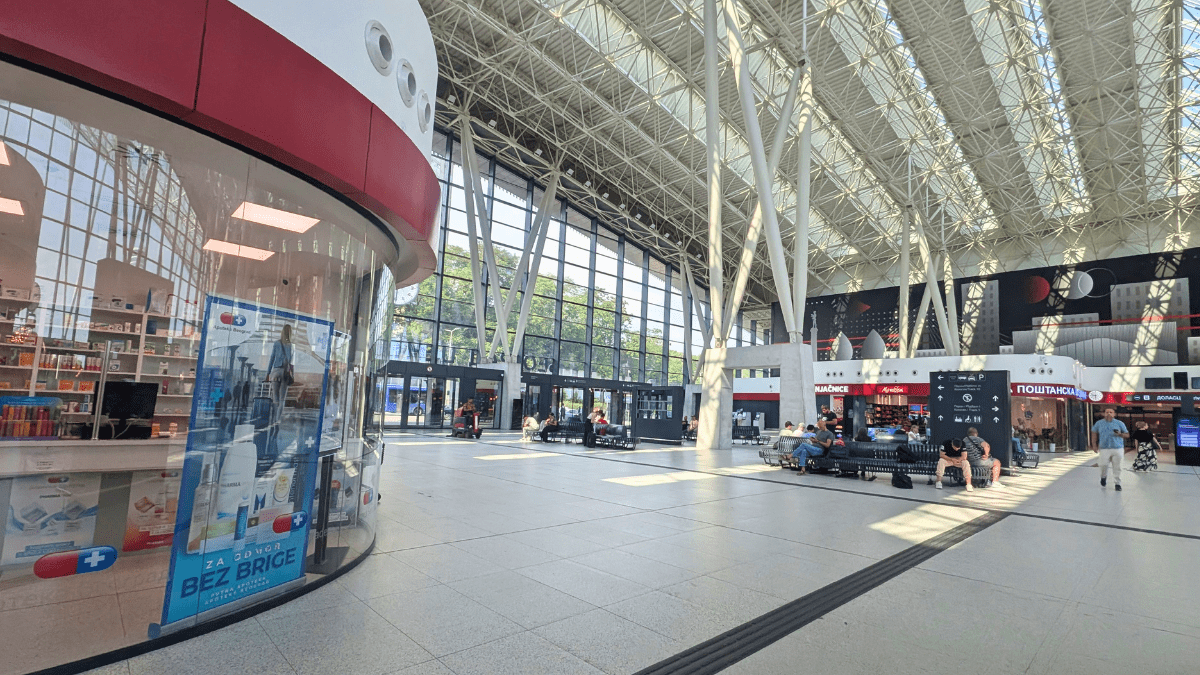
The station has a few eateries, although I’d done a Lidl shop the day before. The trains and platforms are listed on a board, and you need to scan your ticket to go down to the platforms.
When I arrived, the train on the platform was actually the sleeper service that had travelled from Bar overnight. It departed, and 10 minutes later, the Stadler train that would take me to the Montenegrin border arrived.
How the trains work
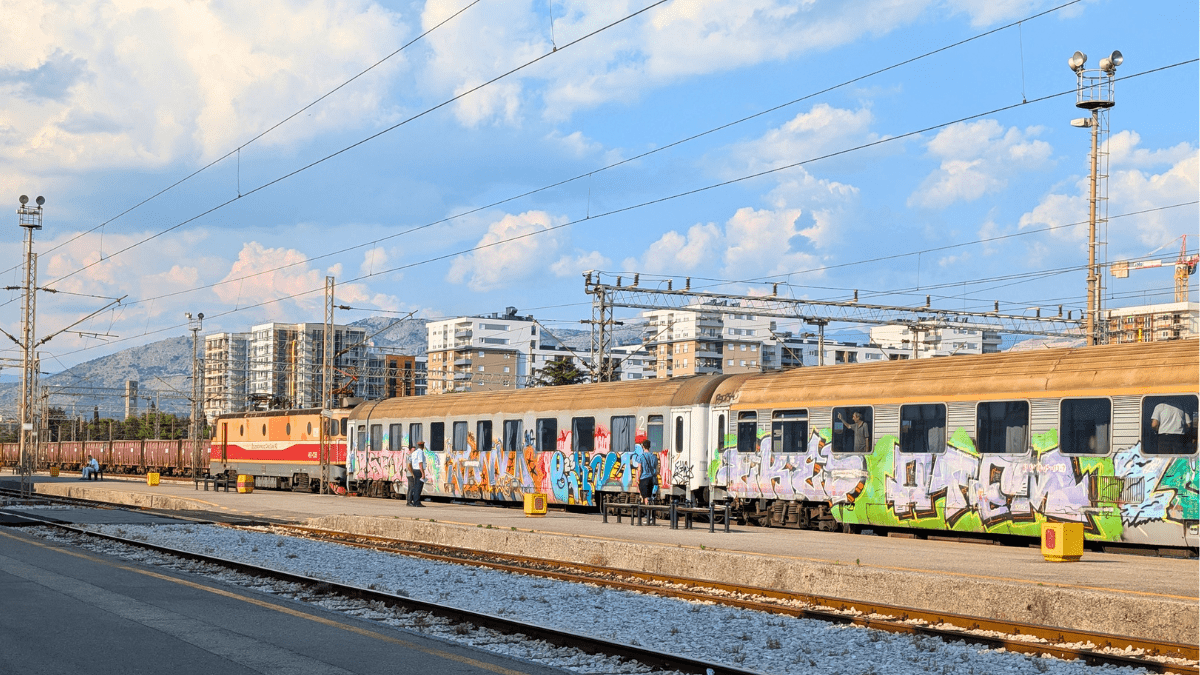
There’s a night train connecting Belgrade and Bar year-round, and a day train in the summer months.
The day train runs just over the border with Montenegro, where immigration agents for both countries come onto the train. They check passports and stamp passengers out of Serbia and into Montenegro.
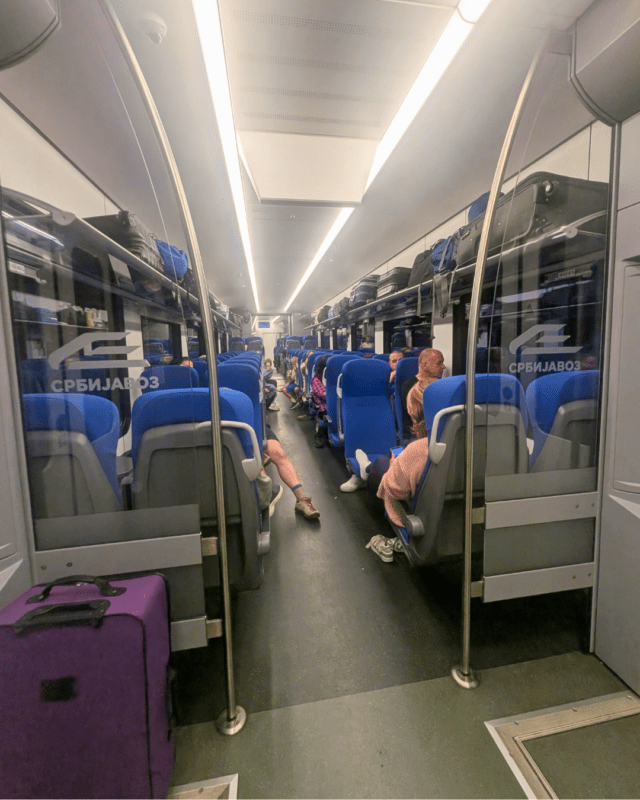
The train in Serbia is a Stadler train, to me it looked like a commuter train. It was modern and had AC and WCs, but limited bag space and the seats weren’t super comfy.
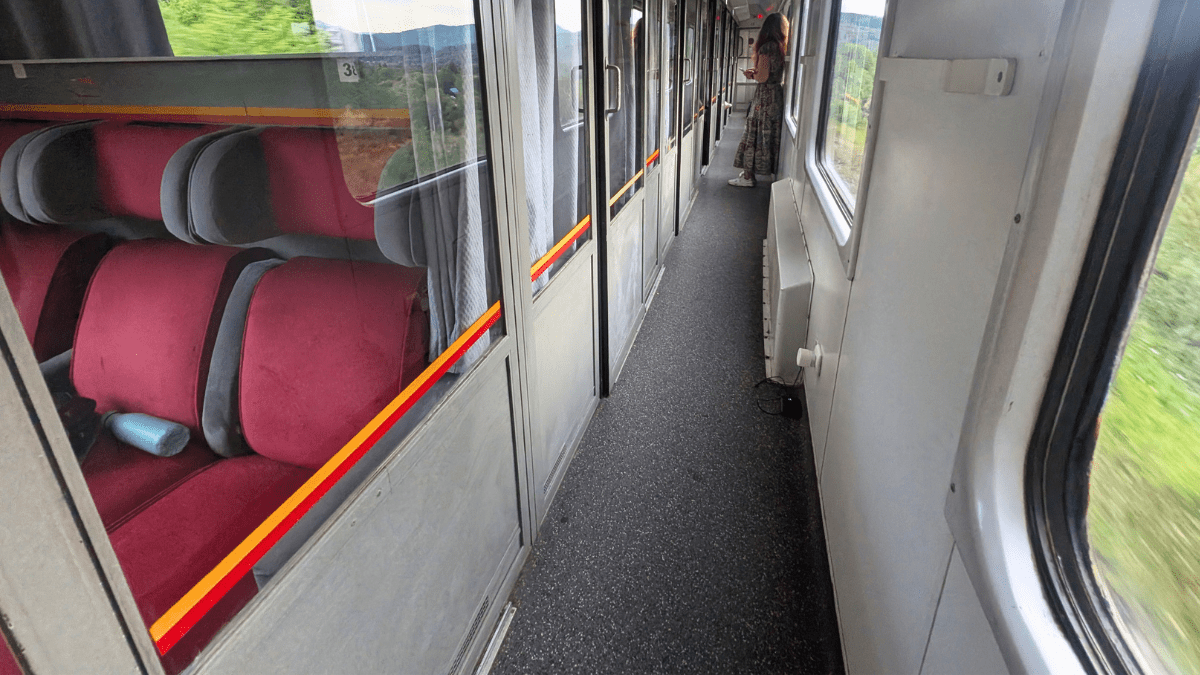
The Montenegrin train was much older and had compartments of six seats. However, it felt more spacious, and the seats were squashier! There were WCs at each end. There was AC/ cool air to an extent, but it wasn’t as strong as the train in Serbia.
The scenery
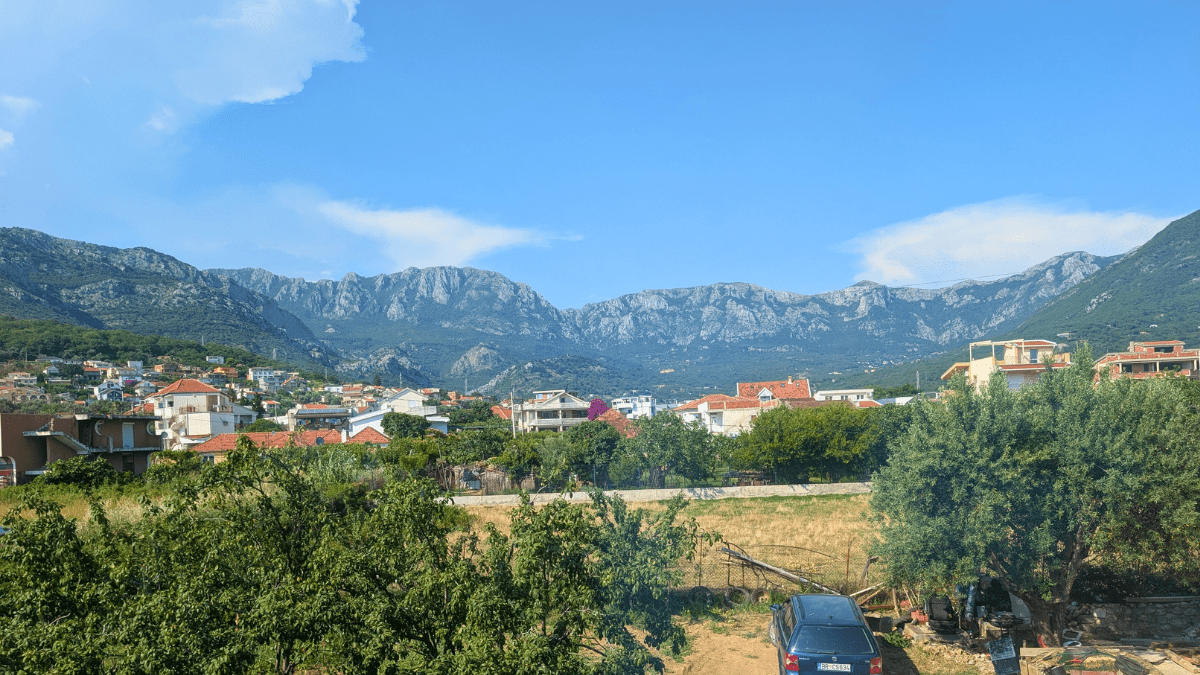
The Serbian countryside, particularly after Užice, is scenic, but it’s the Montenegrin mountains that are the main draw to this train journey.
After the border, the landscape shifts dramatically as the train trundles right through the Dinaric Alps. The highest point of the whole route is Kolašin, which is at 1,032 metres and is at the foot of the Bjelasica and Sinjajevina mountains. Near here is the Biogradska Gora National Park, which is one of Europe’s last patches of ancient forest.
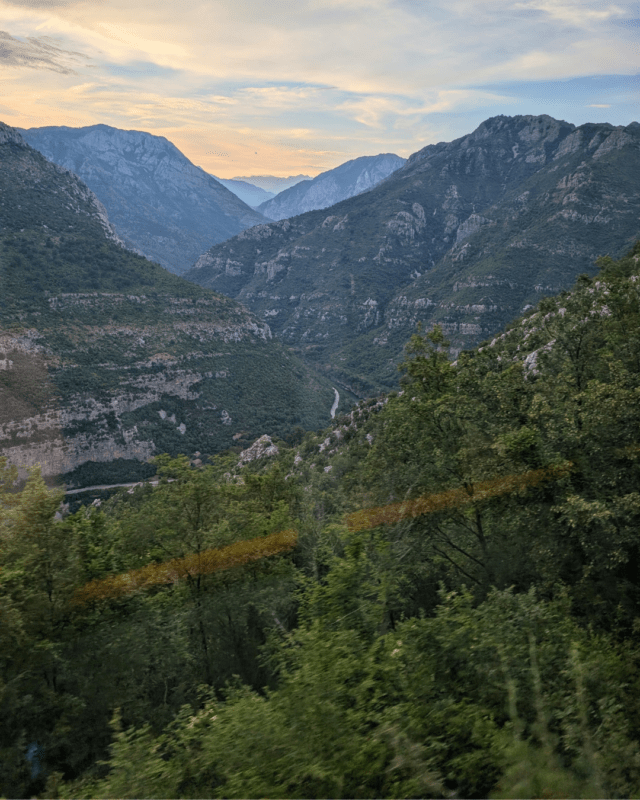
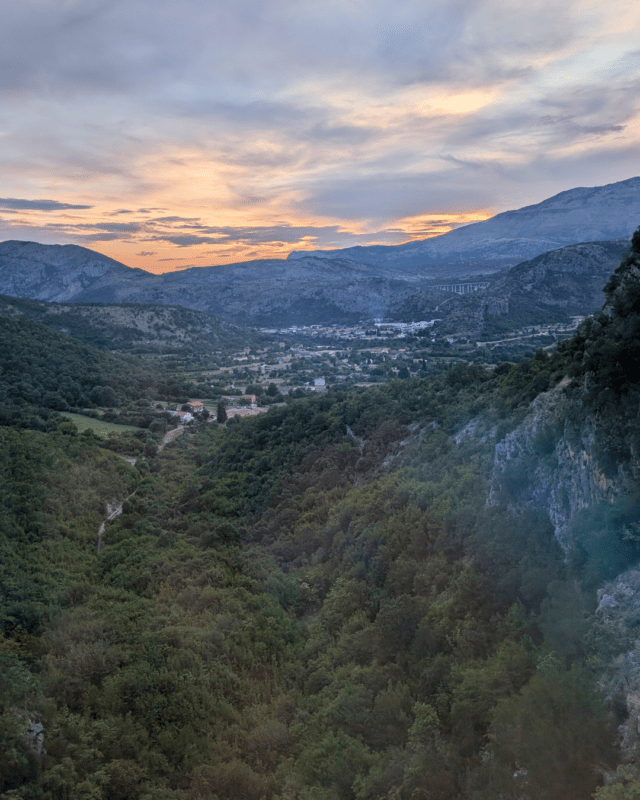
This train line, which was built in the days of Yugoslavia, took 25 years from start to finish because of the terrain. The result is this entrancing train line that delves over the mountains – the pinnacle being the Mala Rijeka Viaduct which – when it was completed in 1973 – was the highest viaduct in the world at 498m long and 198m high.
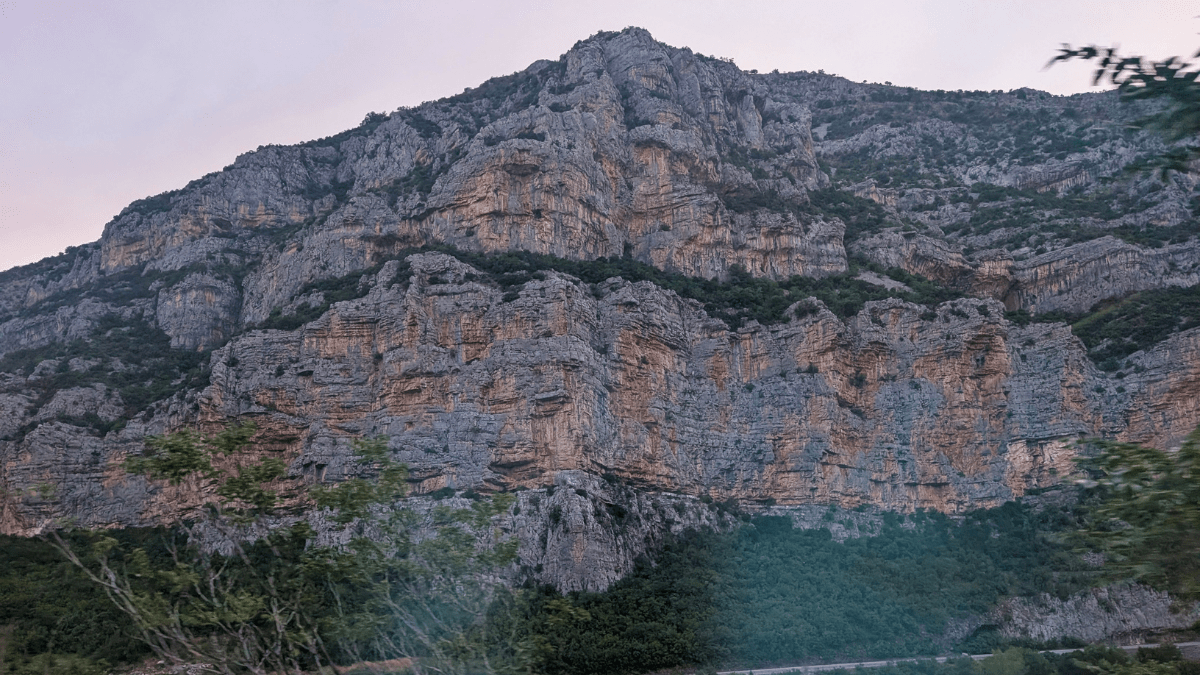
Even just outside of Podgorica, the capital of Montenegro, the scenery delivers. As we arrived into Podgorica, the sun was setting, and the final hour (to Bar) was in darkness. However, I was fortunately taking the train in the other direction (Bar to Podgroica) the following day!
As the train pulls away from the mountains – although they remain in the background – the scenery flattens. The trainline travels on a bridge over Shkodra Lake, which forms the border of Montenegro and Albania.
Finally, the train turns and runs along the Adriatic Coast. When this route was constructed (between the 1950s and 1970s), it had the aim to link Belgrade, the then capital of Yugoslavia, to its biggest port in Bar.
Arriving in Bar
I took a taxi from the station to Bogumila Hotel, where I’d booked a room. The hotel was friendly and clean – a little retro in parts but I enjoyed my stay there. A tasty breakfast was included and it cost just £35 a night.
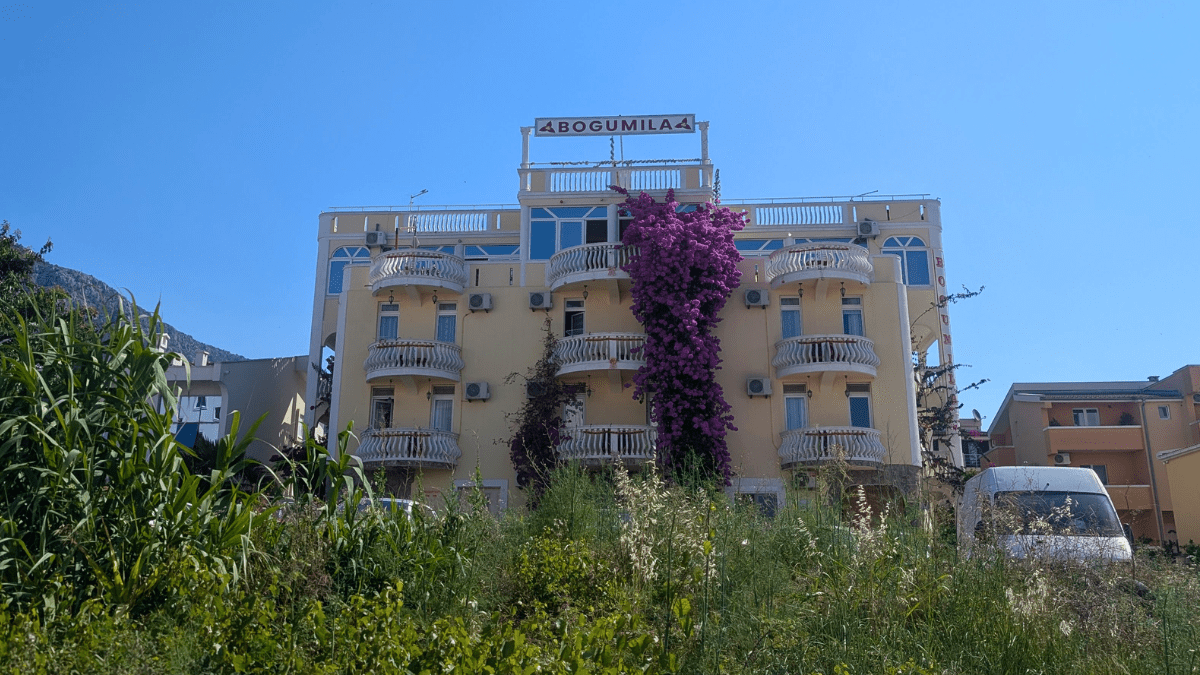
It’s right by Žukotrlica Beach, where I went for a swim and chill the next day. There are also a few beach restaurants lining the sands; it cost me about £8 for a bowl of pasta and glass of coke with a sea view.
Timings of the train
When I first begun researching this train, I thought it made logical sense to take the day train.
However, it’s worth noting that you don’t cross the border until around 4-5pm. While the day train only runs in the summer, later in the season this may mean that you’ll be in darkness for some of the mountainous scenery, especially if there are delays.
I travelled on June 22nd, so pretty much as long evenings as you can get, and was in darkness after Podgorica.
Some people suggest the alternative being to take the night train, sleep until the border and then stay up to watch sunrise. This does mean staying awake from around 4-5am, however!
Having taken the train, I think the best way to ensure you see the views is to take the day train from Bar. It leaves at 9am and travels through Montenegro all morning, departing Bijelo Polje (the border) at 12:52pm. This way, the scenery becomes less dramatic as you go, and the least scenic part will be in darkness.
FAQs about the Belgrade to Bar train
How much does the Belgrade to Bar train cost?
A standard one-way ticket costs around €25. If you’re travelling with an Interrail or Eurail pass, you’ll only need to pay a small reservation fee. Mine cost just a couple of pounds.
Can you book Belgrade to Bar train tickets online?
Until recently, no. Tickets could only be bought in person in Belgrade or Bar. Some travellers have reported being able to book online in the last few weeks, but with mixed success. I’d love to hear any updates!
Is the day train or night train better for scenery?
It depends on direction. If you take the day train from Belgrade, you won’t cross into Montenegro until 4–5pm, meaning the most dramatic mountain scenery risks being in darkness by the time you get to it. That said, the night train would involve waking up at around 4am to watch the sunrise! Taking the day train from Bar instead means the journey starts scenic and gradually flattens out, so you’re far more likely to catch the best parts in daylight.
How long is the Belgrade to Bar train journey?
About 11 hours, covering 476km. When the line first opened, the journey only took around seven hours, but but decades without a major upgrade mean speed restrictions now make it noticeably slower.
Do you need to change trains at the Serbia–Montenegro border?
Yes, you need to walk across the platform to a different train. The Serbian train is a modern Stadler train, more like a commuter train with AC and limited luggage space. Once you cross into Montenegro, you’re on an older train with six-seat compartments. It’s less modern, but more spacious!
Is the Belgrade to Bar train worth it?
Yes! This is one of the most dramatic train journeys I’ve taken. Most people assume Switzerland has Europe’s best scenic railways, but this route through the Dinaric Alps rivals it at a fraction of the price.
To see more views and check out what the train was actually like, make sure you watch my YouTube video!
